Becoming an Architect: The Best Books on the Career, in Order
Architecture the profession and architecture the art are different subjects, and most people who abandon the career do so because they only read about the second one. This path runs through both, in the order the decision actually happens: first the candid accounts of what the job pays and how long it takes, then the books that train the way architects see, then the drawing and construction skills school will test, then the business of practice — contracts, fees, clients, running a firm. One caution about the last stage: licensure requirements are set jurisdiction by jurisdiction and are revised regularly, so treat what these books say about exams and internship hours as a description of how the system is shaped rather than as a current checklist. Verify the specifics with the registration board where you intend to practise.
What the Job Actually Is
BeginnerGet an honest picture of the length of training, the money, the hours and the daily work, and decide whether to continue before spending anything.
▸ Study plan for this stage
Pace: 2 weeks. Lewis's Architect? is about 270 pages of readable prose and takes a week; read Waldrep's Becoming an Architect alongside it in the second week and treat 101 Things I Learned in Architecture School as a single evening, since it is one idea per spread. Lewis is explicit that he wrote the book
- The actual sequence to licensure: accredited degree, a logged internship or experience period, and a multi-division registration exam — Waldrep lays out the routes, Lewis explains why people fall off each one
- Design studio as the core of architectural education, and the critique ('crit') as its assessment method — 101 Things is a preview of studio's habits of mind
- The gap between architecture the art and architecture the service business, which Lewis returns to in nearly every chapter
- What architects earn relative to the length and cost of training, and the roles inside a firm (intern, project architect, project manager, principal) that determine it
- The range of careers an architecture degree leads to that are not designing buildings — Waldrep's interviews cover several
- Why Lewis argues that the wrong reasons for entering (a love of drawing, a general interest in 'creativity') predict attrition
- What are the three components of licensure in Lewis's and Waldrep's accounts, and roughly how long does each take?
- What does Lewis identify as the most common misconception people hold about the profession before they enter it?
- What is a design studio crit, and what is being assessed in it?
- Which of Waldrep's interviewees works outside conventional practice, and what did their degree let them do instead?
- After Lewis, can you state one specific thing about the daily work that would make you not want the job?
- Write out the licensure path for the jurisdiction you would actually practise in, using Waldrep's chapter on degree routes as the template, and note where his account is out of date — both books describe exam and experience structures that have since been revised
- Take ten of the entries in 101 Things I Learned in Architecture School and, for each, write one sentence on whether it is a design principle, a drawing convention, or a piece of studio etiquette; the mixture is the point
- Read Lewis's chapters on compensation and hours, then find three current job postings for entry-level architectural staff and compare the salary bands to what Lewis describes — record the gap in writing rather than in your head
- From Waldrep's interviews, pick the practitioner whose career most resembles what you imagine wanting, and list the specific decisions in their path that you would have to replicate
Next up: Once you have decided the career is worth the training, the next stage builds the perceptual habit that all of that training is trying to install.
The frankest book ever written about entering this profession — Lewis wrote it to talk people out of it if they were going in for the wrong reasons, and it works. Note that it exists in several editions under a longer subtitled title; any of them is the same book, so buy the most recent you can find.

The systematic companion to Lewis: degree routes, portfolios, internship structures, career paths inside and outside practice, with interviews from architects at every stage. Read it second, once Lewis has established the tone.

One idea per page, and the fastest possible preview of how a design studio thinks. Deceptively slight — it is the book most architecture students say they wish they had read before first year rather than during it.
Learning to See
BeginnerBuild the perceptual habits studio will demand — reading buildings for scale, light, sequence and material — and be able to talk about a building in more than adjectives.
▸ Study plan for this stage
Pace: 3 weeks. Rasmussen's Experiencing Architecture is short but dense and rewards a slow first week; Goldberger's Why Architecture Matters is a fast week; Zumthor's Thinking Architecture is a set of very short essays you can finish in two sittings but should reread. Do this stage in a city, not at a des
- Rasmussen's solids-and-cavities distinction: reading a building as mass or as carved-out volume, and the fact that the same building can be read either way
- Scale as a relationship to the human body rather than a size, which Rasmussen demonstrates with stairs, doors and window sills
- Daylight as a material — direction, intensity and the surfaces it lands on — from Rasmussen's chapter on light and Zumthor's essays on atmosphere
- Rhythm and sequence: how a building is experienced in time as you move through it, not as a single image
- Goldberger's distinction between a building as object and a building as part of a street, and why most architectural judgement is really about the second
- Zumthor's 'atmosphere': the claim that material, temperature, sound and light produce a felt quality before any idea is read
- Acoustics as an architectural property, which Rasmussen treats seriously and almost nobody else on this path does
- What does Rasmussen mean by reading a building as cavity rather than as solid, and which of his examples makes the distinction clearest?
- What is Goldberger's argument for why buildings deserve criticism rather than just preference?
- How does Zumthor describe the process of arriving at a design, and how is that different from how Rasmussen and Goldberger describe a finished one?
- What does Rasmussen say you can hear about a room before you can see it?
- Can you describe a building you know using scale, light, sequence and material, without using the words beautiful or ugly?
- Take Rasmussen's chapter on colour and daylight to one interior and sit in it for an hour at two different times of day, writing what changes; Rasmussen's whole method is that this is where architectural knowledge comes from
- Pick one building and write two 300-word descriptions of it — one following Rasmussen's perceptual categories, one following Goldberger's critical register — and note what each one cannot say
- Read one Zumthor essay, then visit a building and list only the material and sensory facts (surface, temperature, sound, smell) before you allow yourself a single judgement
- Walk a single street and map its rhythm — bay widths, entrances, window sizes — as a strip drawing; this is Goldberger's street-as-subject argument turned into a drawing exercise
- Compare Rasmussen's account of a specific building with a photograph of it, and write down everything the photograph fails to carry
Next up: Having learned to describe buildings in words, you now need the conventions that let you describe them in drawings, which is what school will actually test.
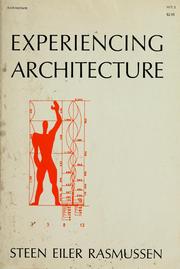
Written in 1959 and still the best book on how buildings feel from the inside: solids and cavities, rhythm, daylight, even acoustics. Start here because everything after it is a specialisation of what Rasmussen teaches you to notice.
A critic's argument for why buildings deserve serious attention, written for a general reader. Read it after Rasmussen: it gives you the vocabulary for defending a judgement, which is what a studio crit consists of.
Short essays by a practising architect on atmosphere and material, and the counterweight to the two books above — Zumthor is describing how a design actually gets made rather than how a finished one is read.
The Skills School Will Test
IntermediateLearn architectural drawing conventions and basic construction well enough to produce a coherent portfolio and survive first-year technology.
▸ Study plan for this stage
Pace: 8-10 weeks, and this is the stage that takes real time because three of the four books are worked rather than read. Ching's Architecture (his Form, Space and Order) and Architectural Graphics are pencil-in-hand books — budget an hour a day with a drawing board. Building Construction Illustrated is o
- Ching's primary elements — point, line, plane, volume — and the organisational types (centralised, linear, radial, clustered, grid) he builds from them
- Plan, section and elevation as orthographic projections, and the discipline of keeping them consistent with each other
- Line weight as information: which lines are cut, which are seen, which are beyond — the core lesson of Architectural Graphics
- Scale and notation conventions, including dimensioning, north arrows, and what a drawing at 1:50 shows that one at 1:200 cannot
- Ching's proportion and ordering principles — axis, symmetry, hierarchy, datum, rhythm, transformation
- The assembly logic in Building Construction Illustrated: foundation, frame, envelope, finish, and how loads and water are handled at each junction
- The distinction Drawing for Architects makes between a drawing as an argument (persuading someone) and a drawing as an instruction (telling a builder what to do)
- What are Ching's ordering principles, and can you identify each one in a building you have visited?
- In Architectural Graphics, what determines line weight in a plan drawing, and what is being cut in a floor plan?
- What does Building Construction Illustrated show happening at a window head, and why is flashing drawn where it is?
- How does a wall section differ from a building section, and what is each one for?
- What does Drawing for Architects say a portfolio drawing is trying to do that a construction drawing is not?
- Work through Architectural Graphics with a pencil, redrawing every projection exercise by hand — this is Ching's stated intent for the book and reading it without drawing teaches nothing
- Take a house you can access and draw a measured plan, section and elevation of it at a consistent scale, using the line-weight hierarchy from Architectural Graphics; the three drawings must agree with each other
- Choose one organisational type from Ching's Architecture — say the linear or the centralised — and redraw three published plans that use it, annotating where each departs from the pure type
- Redraw two details from Building Construction Illustrated from memory, then check them against the book; the ones you get wrong are the ones you did not understand
- Assemble a six-drawing sequence for a single small project in the terms Drawing for Architects sets out, and label which drawings are arguing and which are instructing
Next up: You can now produce and read the drawings a project is made of; the last stage is about the contracts, fees and liabilities that surround them.
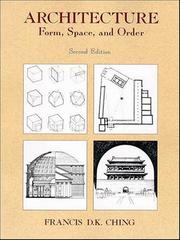
The standard first-year design text, and the one that gives you a working grammar for organising plan and section. Our catalogue shows it under the short title Architecture; it is Ching's Form, Space, and Order.
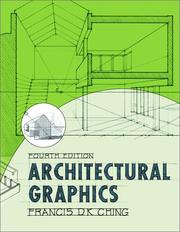
The drawing conventions themselves — line weights, projection, scale, notation. Thin and almost entirely diagrams; work through it with a pencil rather than reading it.

The modern complement to Ching, covering how drawings function as documents and arguments rather than only how to make them. Read it after Architectural Graphics.

How buildings are actually assembled, from footings to flashing, drawn rather than described. This is the book that separates students whose designs can be built from students whose cannot, and it stays useful for the whole career.
Practice: Contracts, Fees and Clients
IntermediateUnderstand how a project is procured and administered, how architects are paid, where the liability sits, and what running a firm involves.
▸ Study plan for this stage
Pace: 4-6 weeks of reading and then a permanent shelf life. Read The Architecture Student's Handbook of Professional Practice straight through over three weeks — it is written to be read, unlike its parent volume. Piotrowski's Professional Practice and the Architect's Essentials volume on starting and tra
- Project delivery methods — design-bid-build, design-build, construction management — and how each one redistributes risk between owner, architect and contractor
- The standard phases of an architect's services (schematic design through construction administration) and the percentage of fee conventionally assigned to each
- Fee structures: percentage of construction cost, stipulated sum, hourly with a cap, and what each one does to a firm when a project's scope grows
- Standard of care and professional liability — what an architect is legally promising, and why it is not perfection
- Contract administration: submittals, RFIs, change orders, certification of payment, and the architect's role as an impartial interpreter of the contract
- Firm economics from the Architect's Essentials volume: ownership structures, utilisation rates, valuation and succession
- Piotrowski's practitioner-level material on negotiating a fee and declining work, which the institutional texts do not cover
- What are the standard phases of service, and at which phase does an architect's exposure to liability rise sharply?
- How does a design-build arrangement change who the architect's client is, and what does that do to the impartiality assumed in contract administration?
- What is the difference between a stipulated-sum and a percentage-of-cost fee, and which one punishes a firm for a client's indecision?
- What does the Architect's Essentials volume say a design firm's value actually consists of, and why is that a problem at succession?
- In Piotrowski's account, what are the signs that a commission should be turned down?
- What question would send you to the full Architect's Handbook of Professional Practice rather than the student edition?
- Take a real project you know of and write out its delivery method, phases and likely fee basis using the student handbook's terminology; where you cannot fill something in, that is the part of practice you still do not understand
- Read the student handbook's treatment of an owner-architect agreement, then read the corresponding section of the full Architect's Handbook and list what the longer text adds — this teaches you what the reference volume is for
- Build a one-page fee estimate for a small project: phases, hours per phase, a multiplier, and a total, following the Architect's Essentials volume's method, then test what happens to it if the schematic phase doubles
- Write a short response to a hypothetical client request for extra work, in Piotrowski's register, that either prices it or refuses it — this is the specific skill she says nobody teaches
- Index the full Architect's Handbook for yourself: list ten practice questions you expect to face and note the chapter each is answered in, so the book is usable under pressure
Next up: This is the end of the path — you now have the career facts, the perceptual training, the drawing conventions and the business of practice, which is the whole of what the first years of an architect's working life consist of.

The student edition of the profession's reference work, and the correct entry point: project delivery, agreements, ethics, the shape of the path to registration. Treat its account of exam and experience requirements as a structural map, not as current rules.
Short, opinionated and written by a practitioner about the parts nobody teaches — negotiating a fee, choosing which work to refuse, what a contract administration role really costs you. Our record shows it as Professional Practice. Read it after the student handbook as the reality check.

The business questions in isolation: ownership structures, valuation, succession, what a firm is worth. Relevant much earlier than most students expect, because it explains the economics of the office you will be interviewing at.

The full professional reference, and the last book here because it is a desk resource rather than a read — the document you consult when a specific question about scope, insurance or a contract clause comes up in practice.
Discussion
Keep reading
Paths that share books, cover the same subject, or open a related topic.