Two questions decide whether architecture is the right career, and books can genuinely help with both: do you want to do the work architects actually do, and can you learn to draw and think spatially? The path below answers the first with candid career guides, then builds the second through the graphic and construction fundamentals, and finishes with the business of practice — which is where most architects spend their careers and where almost no student has read anything.
A caution that applies throughout. Registration and licensure are jurisdictional: the required degrees, the supervised experience, the examinations and the titles you may legally use differ by country and by state, and they change. Several books here are written to a particular national system and to a particular edition of its rules. Read them for what the process involves and verify the current requirements with the registration body that governs where you intend to practise.
Decide whether you want the job
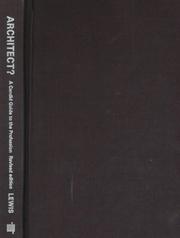
Roger Lewis's Architect? is subtitled as a candid guide for a reason and is the single most useful book on this path for someone still choosing: it covers what the training demands, what the profession pays relative to that demand, and what architects do all day. Lee Waldrep's Becoming an architect is the more procedural companion, walking through education routes, internship, examination and the range of career directions the degree opens; it is US-centred, so read it as a description of one system.
Matthew Frederick's 101 things I learned in architecture school is a hundred-odd single-page lessons and takes an hour. It is not a substitute for anything, but it is the fastest way to find out whether the way architects think about space appeals to you at all.
Learn to see buildings
Steen Eiler Rasmussen's Experiencing architecture, first published in the 1950s, teaches perception rather than history — solids and cavities, texture, daylight, acoustics — and remains the classic assignment for a first-year student. Paul Goldberger's Why architecture matters comes from a critic and is about how buildings make meaning. Peter Zumthor's Thinking architecture is a short book of essays by a practising architect on atmosphere and material, and reads more like a manifesto than instruction.
Build the technical foundation
Francis Ching is on this path three times because his books are the standard tools. Architecture, his book on form, space and order, is the visual grammar of the discipline and is set in more first-year studios than any other title. Architectural Graphics teaches the conventions of drawing — line weight, projection, section, orthographic and paraline drawing — and Julia McMorrough's Drawing for architects covers similar ground from a more contemporary, digitally aware angle. Building Construction Illustrated is the assembly reference: how walls, roofs, foundations and stairs actually go together, drawn rather than described.
The part nobody reads until too late
Practice is a business, and the profession's own literature is good on it. The Architecture Student's Handbook of Professional Practice is the AIA's abridged, teaching-oriented edition; The Architect's Handbook of Professional Practice is the full professional reference on contracts, project delivery, liability and firm management. They cover the same territory at different depths, so read the student edition while studying and buy the full handbook when you are practising rather than both at once. Both are US-specific and edition-dated.
Paul Segal's Professional practice is a shorter, plainer guide to running projects and firms, and Peter Piven's Architect's essentials of starting, assessing, and transitioning a design firm is the book for the moment you consider going out on your own.
Follow the path in order and you will have made the career decision on evidence, arrived at school able to draw, and be one of the few graduates who understands a fee proposal. More reading sits on the becoming an architect hub.
Follow the full ordered path here: How to Become an Architect: A Reading Order for the Career.