Understand basketball: watch and play smarter
This curriculum takes a beginner from the basic rules and joy of basketball all the way through advanced strategy, analytics, and cultural history. Each stage builds on the last: you first learn to see the game clearly, then understand why teams do what they do, then appreciate the deeper stories and data that shape modern basketball.
Foundations: Rules, Fundamentals & Feeling the Game
BeginnerUnderstand how basketball is played, its core rules, basic positions, and fundamental skills — enough to watch a game and know what is happening and why.
▸ Study plan for this stage
Pace: 4–5 weeks total. Week 1–2: Read "The Art of a Beautiful Game" by Chris Ballard (~20–25 pages/day, savoring each player essay). Week 3–4: Read "Basketball (and other things)" by Shea Serrano (~15–20 pages/day, pausing to engage with the illustrations and hypotheticals). Week 5: Review notes, revisit
- The five basic positions (point guard, shooting guard, small forward, power forward, center) and their distinct roles on the court, as illuminated through Ballard's player portraits
- Fundamental individual skills — shooting mechanics, ball-handling, passing, footwork, and defense — explored through Ballard's close-up, craft-focused essays on elite players
- How basketball is *felt* as much as it is understood: the instinct, creativity, and improvisation that separate good players from great ones, a theme running through both books
- The flow and structure of a game: possessions, transitions, shot clock, fouls, and how momentum shifts — context Ballard builds implicitly through storytelling
- Basketball culture, history, and personality: how the sport's identity has been shaped by iconic players and moments, as Serrano explores through his irreverent, pop-culture-savvy lens
- How to *watch* basketball analytically: recognizing plays, appreciating off-ball movement, and understanding why a decision was right or wrong — a skill both authors model for the reader
- The joy and humor of basketball fandom: Serrano's book teaches beginners that engagement with the sport can be playful, argumentative, and deeply personal
- The relationship between individual brilliance and team context — a tension both Ballard and Serrano return to repeatedly in different ways
- After reading Ballard's essays, can you describe what makes each of the five positions unique — and name at least one player from the book who exemplifies each role?
- Ballard focuses on specific skills (e.g., shooting, passing, defense) through individual player stories. What are the two or three fundamental skills you feel you understand most deeply after his essays, and why?
- Serrano's book poses hypothetical and comparative questions about basketball. What does his approach reveal about how fans think about and debate the game?
- Can you watch a live or televised game and identify at least three things happening on the court — a pick-and-roll, a fast break, a defensive rotation — that either Ballard or Serrano helped you understand?
- Both authors write about basketball with a strong personal voice. How does each author's style shape what you learn — what does Ballard teach you that Serrano doesn't, and vice versa?
- What is one moment, player, or idea from either book that genuinely surprised you or changed how you think about basketball?
- **Active Reading Log:** For each chapter or essay in both books, jot down one skill, rule, or concept introduced. By the end, you'll have a personal glossary of basketball fundamentals grounded in real stories.
- **Watch-Along Sessions:** After every 3–4 essays in Ballard's book, watch a 10-minute highlight reel of the player being discussed. Pause and ask: 'Can I see the specific skill Ballard described?' (e.g., watch a Ray Allen shooting clip after his chapter).
- **Serrano Debate Club (Solo or with a Friend):** Pick any hypothetical question Serrano poses in 'Basketball (and other things)' and write or argue a 5-minute answer. This builds the habit of forming and defending basketball opinions — a core fan skill.
- **Court Sketch Exercise:** After finishing Ballard's book, draw a simple basketball court diagram and label where each position typically operates, what their primary job is, and one player from the book who plays that spot.
- **First Live Watch:** Attend a local game (high school, college, or recreational league) or watch a full NBA game on TV. Keep Serrano's book nearby — try to spot at least two scenarios his book discussed. Write three observations you couldn't have made before starting this stage.
- **'Beautiful Moment' Journal:** Inspired by Ballard's appreciation for craft, keep a running list of 5–10 basketball moments (from highlights, games, or the books themselves) that struck you as genuinely beautiful or clever. Reflect on *why* — this trains aesthetic appreciation of the game.
Next up: By grounding basketball knowledge in vivid storytelling and joyful fandom, these two books give the reader an emotional and intuitive feel for the game that makes the tactical and strategic concepts of the next stage — plays, systems, and team dynamics — feel meaningful rather than abstract.

A Sports Illustrated writer breaks down the specific skills of elite players — shooting, passing, defense — in vivid, accessible prose. Perfect first read because it builds vocabulary around the game's building blocks without assuming prior knowledge.

Funny, enthusiastic, and deeply knowledgeable, Serrano answers quirky basketball questions in a way that teaches you how to think about the game. Reading it second cements the fundamentals from Ballard in a memorable, entertaining way.
History & Culture: Where the Game Came From
BeginnerTrace basketball's evolution from its origins through the NBA's golden eras, and understand the cultural forces — race, city, identity — that shaped the sport into what it is today.
▸ Study plan for this stage
Pace: 8–10 weeks total: Weeks 1–5 for "The Breaks of the Game" (~25–30 pages/day, ~350 pages), Weeks 6–10 for "Soul of Basketball" (~20–25 pages/day, ~350 pages). Allow 5–6 days of reading per week, leaving one day for reflection journaling and discussion.
- Basketball as a mirror of American society — Halberstam uses the 1979–80 Portland Trail Blazers season to expose how race, labor, money, and media were already reshaping professional sports at the dawn of the modern NBA era.
- The player-as-commodity tension — both books examine how athletes navigate being simultaneously celebrated cultural icons and controlled business assets within league and team power structures.
- Race and identity on the court — from Halberstam's unflinching look at the racial dynamics inside locker rooms and front offices in 1980, to Thomsen's exploration of how LeBron James, Gregg Popovich, Doc Rivers, and Dirk Nowitzki each carried cultural weight beyond their statistics.
- The evolution of NBA power structures — Halberstam documents the pre-salary-cap, pre-global era; Thomsen picks up decades later showing how globalization, superteams, and player empowerment transformed those same structures.
- Coaching philosophy and organizational culture — Bill Fitch and Jack Ramsay in Halberstam; Popovich and the San Antonio Spurs system in Thomsen illustrate how leadership styles define eras.
- The cultural meaning of basketball in American cities — both books treat franchises as civic institutions, exploring how teams reflect and affect the identity of their communities.
- Media, narrative, and the making of basketball mythology — Halberstam's journalism-driven fly-on-the-wall method and Thomsen's access reporting both show how storytelling constructs the legends fans inherit.
- Legacy and transition — Thomsen's framing of the 2015–16 season as a hinge point between the Jordan/Kobe era and the LeBron/Durant era connects directly to Halberstam's earlier documentation of another such hinge point in 1980.
- According to Halberstam, what specific economic and racial pressures were fracturing the NBA in 1979–80, and how did the Trail Blazers' season embody those larger tensions?
- How does Thomsen use the four central figures — LeBron James, Gregg Popovich, Doc Rivers, and Dirk Nowitzki — to argue that basketball's cultural meaning extends far beyond wins and losses?
- In what ways do both books suggest that the relationship between players and management has been a defining, ongoing conflict in the sport's history?
- How does Halberstam's portrait of race inside the NBA locker room and front office in 1980 compare to the racial dynamics Thomsen describes three decades later?
- What does each author argue about the role of a single season as a lens for understanding a much longer arc of basketball history?
- How do both books treat the city or franchise as a character — and what does that reveal about basketball's role in shaping local and national identity?
- Timeline mapping: After finishing each book, build a single visual timeline (paper or digital) that plots key events, rule changes, labor disputes, and cultural moments mentioned across both books — then annotate where the two books' timelines overlap or speak to each other.
- Character comparison chart: Create a two-column chart pairing figures from each book who occupy similar roles (e.g., a star player, a coach, a front-office executive) and write 3–4 sentences comparing how their situations reflect the era each author is documenting.
- Close-reading journal: Choose one passage per week (roughly 10 total) where the author connects an on-court moment to a broader social or cultural force. Write a short paragraph explaining the connection in your own words — this trains the habit of reading sports writing as cultural criticism.
- Perspective flip exercise: Pick one event described in either book (a trade, a losing streak, a contract dispute) and rewrite a brief paragraph about it from the perspective of a different stakeholder than the one the author focuses on — this deepens understanding of the power dynamics both authors analyze.
- Decade soundtrack: For each of the two eras covered (early 1980s NBA via Halberstam; 2010s NBA via Thomsen), curate a short playlist of 5 songs that were culturally prominent at the time. Write two sentences per era explaining how the music reflects the cultural mood each author describes.
- Discussion or written reflection prompt: After completing both books, write a 400–500 word response to this question — 'What has changed most fundamentally about professional basketball between the world Halberstam describes and the world Thomsen describes, and what has stayed the same?'
Next up: By grounding the reader in basketball's social history and the human forces that shaped the professional game, this stage builds the cultural literacy needed to appreciate the tactical and strategic evolution of how the sport is actually played — making the reader ready to engage with more X-and-O-focused material with a richer sense of why the game looks the way it does.
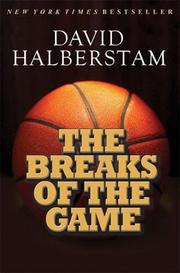
Halberstam's masterpiece follows the 1979–80 Portland Trail Blazers and is widely considered the greatest basketball book ever written. It introduces the NBA's inner workings — player–management tension, race, money, and ambition — in novelistic depth.
A visually rich, era-by-era cultural history of the NBA that covers personalities, style, and societal context. Reading it after Halberstam gives historical breadth to complement the deep single-season portrait.

Follows the 2010–11 NBA season through the eyes of LeBron James, Kobe Bryant, Dirk Nowitzki, and Doc Rivers, exploring what the game means to its greatest players. A bridge between history and the modern era.
Strategy & Coaching: How the Game Is Designed
IntermediateUnderstand how coaches build offenses and defenses, how players are developed, and how strategic systems have evolved — giving you the ability to watch a game and see the chess match beneath it.
▸ Study plan for this stage
Pace: 3–4 weeks, ~20–25 pages/day (the book is roughly 250 pages); read each chapter in one sitting where possible, then pause to reflect before moving on
- The analytical framework for evaluating basketball decisions — why 'good process' matters more than outcomes in any single possession
- Midrange shot theory: when, why, and for whom the midrange jumper is actually efficient, and how context collapses simple 'avoid midrange' rules
- Roster construction philosophy: how front offices balance skill redundancy, positional versatility, and role clarity when building a team
- The concept of 'shot quality' vs. shot volume — how coaches design offensive systems to generate high-value looks rather than just open ones
- Spacing and floor balance as a coaching tool: how player placement forces defensive trade-offs and creates decision trees for ball-handlers
- Player development as a strategic asset: how organizations identify, project, and shape players to fit system needs rather than drafting in a vacuum
- The tension between individual player agency and systemic constraints — how great coaches align player strengths with team structure
- Data literacy in basketball: how to read and critically question advanced metrics (TS%, eFG%, ORTG, DRTG, etc.) rather than accept them uncritically
- According to Partnow's framework, under what specific circumstances does a midrange shot become a rational, high-value offensive choice rather than a strategic mistake?
- How does Partnow argue that oversimplified analytics rules (e.g., 'never shoot midrange') can mislead coaches and front offices, and what does he propose instead?
- What does Partnow identify as the key variables a front office must weigh when constructing a roster around a particular offensive or defensive system?
- How does the book illustrate the relationship between player development timelines and team-building windows — and what are the risks of misaligning them?
- In what ways does Partnow suggest that watching film or live basketball changes once you understand the underlying decision-making frameworks coaches use?
- What is Partnow's critique of how basketball statistics are commonly communicated to the public, and how does he recommend a more nuanced reading of the numbers?
- **The Possession Audit:** Watch one full NBA game and log every midrange attempt by both teams. For each shot, note the shooter, the defensive coverage, the shot clock, and the game situation. After the game, apply Partnow's framework to judge whether each attempt was a 'good process' decision — regardless of whether it went in.
- **System Mapping:** Pick one NBA team and, using publicly available box scores and play-by-play data (Basketball-Reference, Cleaning the Glass), identify their top 5 most frequent shot zones. Write a one-page memo arguing whether their shot diet reflects a coherent offensive philosophy or a collection of individual habits.
- **The Roster Construction Exercise:** Imagine you are a GM with a star player who thrives in midrange and pick-and-roll situations. Using Partnow's roster-building principles, draft a 5-man starting lineup (from any current or historical players) that maximizes that star's value — and write 2–3 sentences justifying each supporting piece.
- **Metric Stress-Test:** Take a player who ranks highly in one advanced metric (e.g., high TS%) but poorly in another (e.g., low ORTG). Write a short analysis explaining what each number captures, what it misses, and what Partnow would say about using either in isolation to evaluate the player.
- **Coach's Clipboard:** Watch a half of basketball with the sound off. Every time you notice a set play, a defensive rotation, or a spacing adjustment, pause and write down what decision-tree you think the coach built into that action — what is the offense trying to force the defense to choose between?
- **Chapter Reflection Journal:** After finishing each major section of *Midrange Theory*, write a 3–5 sentence summary in your own words and one question the chapter left unanswered for you. Revisit these questions at the end of the book and see how many Partnow ultimately addresses.
Next up: Partnow's analytical lens for reading systems and decisions equips the reader to move beyond 'what happened' to 'why it was designed that way,' which is the essential foundation for studying the historical evolution of basketball tactics, team dynasties, and the personalities — coaches, players, and executives — who shaped the modern game.

A former NBA front-office analyst explains how modern teams actually think about building rosters and running offenses. Accessible but rigorous — the ideal entry point into basketball strategy for someone who has the cultural and historical context from Stage 2.
Analytics & the Modern Game: Numbers, Data & Decision-Making
ExpertUnderstand how analytics have transformed basketball — from shot selection and lineup construction to player evaluation — and be able to engage critically with the statistical arguments that now drive the sport.
▸ Study plan for this stage
Pace: 8–10 weeks total: Weeks 1–4 cover SprawlBall (~25–30 pages/day, including time to study its maps and shot charts carefully); Weeks 5–9 cover Basketball on Paper (~20–25 pages/day, pausing frequently to work through formulas and verify calculations); Week 10 is a synthesis and review week with no new
- The geography of shot value: how SprawlBall uses spatial cartography to reveal that not all two-point shots are created equal, and why the corner three is the sport's most efficient shot
- The three-point revolution and its strategic consequences: how teams like the Houston Rockets operationalized shot-value logic to reshape roster construction, play design, and the physical layout of the modern offense
- The mid-range shot as an inefficiency: Goldsberry's argument that the mid-range jumper — once the hallmark of great scorers — is statistically the worst shot in basketball and how this reframing changed player valuation
- The Four Factors of basketball success (Dean Oliver): effective field goal percentage, turnover rate, offensive rebounding rate, and free throw rate — and how their weighted combination explains winning better than any single statistic
- Individual offensive and defensive ratings: Oliver's framework for translating team-level efficiency metrics down to the individual player, including the methodological challenges of crediting defense statistically
- Possession-based analysis: Oliver's foundational shift from per-game statistics to per-possession statistics, which corrects for pace and allows fair cross-era and cross-team comparisons
- Player evaluation beyond box scores: how both authors challenge traditional counting stats (points, rebounds, assists) as incomplete or misleading, and what more context-sensitive metrics reveal
- The tension between analytics and aesthetics: Goldsberry's visual and cultural critique of how optimization has made basketball more efficient but arguably less varied, and how readers should hold quantitative arguments alongside qualitative basketball judgment
- According to Goldsberry's shot-value maps in SprawlBall, which zones of the court produce the highest expected points per attempt, and why does the corner three occupy a uniquely privileged position in that geography?
- How did the analytical movement — as documented in SprawlBall — change the way franchises evaluate and deploy players like stretch bigs and three-and-D wings, and what does Goldsberry identify as the cultural cost of this optimization?
- What are Dean Oliver's Four Factors, what is the approximate weight he assigns to each, and how would you use them to diagnose why a specific team is winning or losing?
- How does Oliver's per-possession framework differ from traditional per-game statistics, and in what scenarios does the distinction matter most (e.g., comparing a fast-paced team to a slow-paced one)?
- Oliver constructs individual offensive ratings from team data — what are the core assumptions and known limitations of this method, and how should an analyst communicate those limitations when presenting conclusions?
- Both Goldsberry and Oliver argue that conventional basketball wisdom is often statistically wrong. Choose one specific conventional belief each author challenges and evaluate the strength of the evidence they each marshal.
- Shot-chart audit: Using publicly available NBA shot-location data (e.g., Basketball-Reference or NBA Stats), recreate a simplified version of Goldsberry's zone-efficiency maps for one current team. Identify their three most and least efficient shot zones and write a one-page scouting memo in Goldsberry's style.
- Four Factors diagnosis: Pull a full NBA season's team stats from Basketball-Reference. Calculate the Four Factors for five teams (mix of playoff and lottery teams) using Oliver's formulas. Rank each factor by its contribution to point differential and write a paragraph explaining which factor best predicts winning in your sample.
- Pace-adjustment drill: Take a player's raw per-game stats from two different eras (e.g., a 1980s player vs. a 2020s player) and convert both to per-100-possession figures using Oliver's method. Write a structured comparison arguing which player was more efficient, citing the numbers.
- Mid-range autopsy: Watch a full game of a current NBA team and manually log every shot attempt by zone (restricted area, paint non-RA, mid-range, corner three, above-the-break three). After the game, calculate each zone's share of total attempts and compare to the team's season averages on NBA Stats. Did the game reflect their typical tendencies?
- Analytical rebuttal essay: Choose a traditional basketball argument you have heard from a coach, commentator, or fan (e.g., 'you have to establish the paint before the three-pointer works' or 'winning teams always control the boards'). Using frameworks from both SprawlBall and Basketball on Paper, write a 400–600 word evidence-based rebuttal or defense of that claim.
- Lineup construction memo: Using Oliver's individual rating methodology as a guide, select five players from a current NBA roster and argue — with per-possession and shot-quality data — that they form an analytically optimal five-man unit. Anticipate and address one counter-argument a traditional scout might raise.
Next up: Mastering shot-value geography and possession-based efficiency gives the reader the quantitative vocabulary to move into deeper player-evaluation systems — such as RAPTOR, EPM, or wins-above-replacement models — and the tactical literature on how coaches actually translate these numbers into in-game schemes and roster decisions.

A geographer and ESPN analyst uses stunning court maps and spatial data to show how the three-point revolution reshaped where and how basketball is played. The visual approach makes advanced analytics intuitive and immediately applicable to watching games.
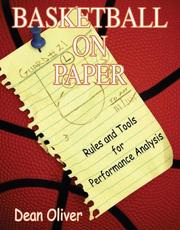
The foundational text of basketball analytics, introducing the Four Factors and the statistical frameworks that every modern front office now uses. Reading it after Goldsberry gives the underlying math a concrete, visual context you've already built.
Mastery: Playing, Competing & Seeing Like an Expert
ExpertSynthesize everything — strategy, culture, analytics, and skill — into a complete, expert understanding of basketball, whether as a player, coach, or deeply informed fan.
▸ Study plan for this stage
Pace: 6–8 weeks total: Weeks 1–3 on "The Mamba Mentality" (~20–25 pages/day, with journaling time built in); Weeks 4–7 on "Showtime" (~25–30 pages/day, a richer narrative requiring slower digestion); Week 8 reserved for synthesis, cross-book reflection, and completing exercises.
- The Mamba Mentality as a philosophy of obsessive preparation, film study, and deliberate practice — not just a motivational slogan
- Kobe's framework for deconstructing and reverse-engineering opponents' tendencies, footwork, and shot selection through relentless observation
- The psychology of elite performance: embracing failure, managing pain, and sustaining focus across a long career
- How individual mastery intersects with team dynamics — Kobe's evolving understanding of leadership, sacrifice, and trust
- The 1980s Showtime Lakers as a case study in organizational excellence: the synergy of Jerry Buss's ownership vision, Pat Riley's coaching system, and superstar talent (Magic, Kareem, Worthy)
- Transition offense and pace-and-space as strategic identity — how Showtime's fast-break philosophy was a deliberate, practiced system, not just raw athleticism
- The human cost of winning: ego clashes, locker-room politics, substance abuse, and the fragility beneath championship dynasties
- Expert pattern recognition — how both books, read together, reveal that basketball mastery is built on thousands of hours of intentional study of the game's details
- According to Kobe Bryant in 'The Mamba Mentality,' what specific pre-game, in-game, and film-study habits separated him from other elite players, and how do those habits form a repeatable system any serious student of the game can adapt?
- How did the Showtime Lakers' fast-break offense function as a designed strategic system under Pat Riley, and what personnel decisions and practice habits made it sustainable across multiple championship runs?
- Both books deal with the tension between individual greatness and team success — how did Kobe and Magic Johnson each navigate that tension differently, and what does the contrast reveal about leadership in basketball?
- What does 'The Mamba Mentality' teach about the role of failure, injury, and adversity in building expertise, and can you find parallel examples of resilience or its absence in 'Showtime'?
- Using evidence from both books, how would you define what it means to truly 'see' basketball like an expert — in terms of preparation, in-game awareness, and post-game analysis?
- How do the organizational and cultural elements described in 'Showtime' (ownership, coaching staff, team chemistry) either support or undermine the kind of individual mastery Kobe describes — and what does that suggest about the system a player needs around them to reach their ceiling?
- Mamba Film Study Session: Choose any full NBA game (live or archived) and watch it the way Kobe describes in 'The Mamba Mentality' — pause frequently, study footwork in the post, track off-ball movement, and write a one-page scouting report on one player's tendencies as if you were preparing to guard them.
- Mentality Journal: After finishing 'The Mamba Mentality,' write a personal 'preparation manifesto' of 500–700 words that translates Kobe's principles into your own domain (playing, coaching, or analysis) — be specific about daily habits, not abstract about mindset.
- Showtime Breakdown Diagram: Using the fast-break sequences described in 'Showtime,' draw or digitally map the spacing, roles, and decision trees of the Showtime Lakers' transition offense — label each player's responsibility and annotate where the system demanded improvisation vs. structure.
- Cross-Book Character Study: Select one figure who appears or is referenced in both books (e.g., Magic Johnson, Jerry West, or the archetype of the demanding coach) and write a 400-word comparative analysis of how each author frames that figure's role in basketball excellence.
- Expert Synthesis Essay: Write a 700–1,000 word essay answering the question: 'What does it take to master basketball — as a player, coach, or analyst?' Draw specific evidence from at least three chapters of each book, and argue a clear thesis rather than simply summarizing.
- Teach-Back Exercise: Prepare and deliver (or record) a 10-minute verbal explanation of the Showtime Lakers' dynasty to someone unfamiliar with it, using only what you learned from Pearlman's book — then do the same for Kobe's philosophy using 'The Mamba Mentality.' Reflect on where your explanations felt thin and revisit those sections.
Next up: By internalizing both the interior psychology of a singular player in "The Mamba Mentality" and the systemic, organizational forces of a dynasty in "Showtime," the reader has now built a complete expert framework — making them fully equipped to engage with advanced basketball discourse, original analysis, coaching application, or any further specialized study in sports science, front-office strate

Kobe's detailed breakdown of his own preparation, film study, and on-court decision-making is the closest thing to a masterclass in how an elite player thinks. It rewards readers who already have strategic and analytical context from earlier stages.

A definitive, deeply reported narrative of the Showtime Lakers dynasty — the perfect capstone that weaves together history, culture, strategy, and personality into one complete story, letting you apply everything you've learned to one of basketball's greatest chapters.
Discussion
Keep reading
Paths that share books, cover the same subject, or open a related topic.