Understand American football: the thinking fan's guide
This curriculum takes a complete newcomer from "what is a first down?" to understanding the chess-match of play-calling, scheme design, and football culture. Each stage builds on the last: you first learn the language and rules, then study how offenses and defenses are schemed, then zoom into the strategic minds of coaches, and finally absorb the cultural and historical soul of the sport.
Foundations — Rules, Positions & the Basic Game
BeginnerUnderstand how the game is played, what every position does, and the core rules well enough to watch a game and follow the action without confusion.
▸ Study plan for this stage
Pace: 6–8 weeks total. Week 1–4: "Football for Dummies" by Howie Long (~20–25 pages/day, reading all core chapters on rules, scoring, positions, and game flow before moving on). Week 5–8: "The Essential Smart Football" by Chris B. Brown (~15–20 pages/day, reading selected essays that build on the foundati
- The structure of a game: four quarters, two halves, the play clock, and the game clock — as laid out in Football for Dummies
- Downs and distance: the four-down system, the 10-yard first-down chain, and how possession is gained or lost (Football for Dummies)
- Scoring: touchdown (6 pts), extra point/two-point conversion, field goal (3 pts), and safety (2 pts) — Football for Dummies breaks each down with clear examples
- The offense: the roles of the quarterback, running backs, wide receivers, tight ends, and the offensive line as described in Football for Dummies
- The defense: the roles of defensive linemen, linebackers, cornerbacks, and safeties, and the concept of a defensive 'front' (Football for Dummies)
- Special teams: punting, kickoffs, field goals, and the players involved — covered in Football for Dummies and reinforced by context in Smart Football
- Basic offensive concepts — the run vs. pass distinction, the pocket, routes, and the idea of 'reading a defense' introduced in Football for Dummies and expanded in The Essential Smart Football
- How strategy emerges from rules: Chris B. Brown's essays in The Essential Smart Football show how formations, coverages, and play-calling are direct responses to the rulebook the reader learned in book one
- After reading Football for Dummies, can you explain what happens on a typical offensive series — from the snap to either a first down, a punt, or a turnover?
- What does each position on the offensive line do, and why does Football for Dummies emphasize that they are the foundation of every play?
- How does the defense try to stop the run differently from how it tries to stop the pass, based on what Football for Dummies describes about defensive alignments?
- After reading The Essential Smart Football, can you explain in plain language what a 'coverage' is and why a quarterback must identify it before or after the snap?
- How do the essays in The Essential Smart Football reframe rules you learned in Football for Dummies — for example, how do rules about eligible receivers shape the passing game?
- Can you watch a single drive of a real NFL game and correctly identify: the down and distance, the offensive formation, whether the play was a run or pass, and the approximate outcome?
- 'Live annotation' drill: Watch any 30-minute NFL broadcast clip (or a full quarter on YouTube) with Football for Dummies open. Each time a term appears on screen (blitz, tight end, red zone, etc.), find it in the book and read the definition aloud before the next play starts.
- Position flashcards: After finishing the positions chapters in Football for Dummies, make one flashcard per position (22 total). Front: position name and abbreviation. Back: one-sentence role, which side of the ball, and one player example Howie Long mentions.
- Down-and-distance tracker: Pick a recorded game and, using only the broadcast, track every down and distance for one full drive on paper. Check your work against the on-screen graphic. Repeat until you can anticipate the graphic before it appears.
- Scoring scenario quiz: Write out 10 hypothetical end-of-drive scenarios (e.g., 'ball on the 3-yard line, down by 5, 0:08 left') and decide — based on Football for Dummies' scoring chapter — what the offense should attempt and why.
- Smart Football essay map: For each essay you read in The Essential Smart Football, write two sentences: (1) which rule or position from Football for Dummies the essay is built on, and (2) what strategic idea Brown adds on top of it. This forces the two books into direct conversation.
- 'Explain it to someone' test: After completing both books, explain the game — rules, positions, and one strategic concept from Smart Football — out loud to a friend, family member, or even a voice recording, without notes. Flag every moment you hesitate; those are your review targets.
Next up: Mastering the rules and positions from these two books gives you the essential vocabulary and mental map of the game, which is the prerequisite for the next stage's focus on deeper strategy, play design, and historical/cultural context — without it, advanced tactical or historical reading would be abstract and overwhelming.
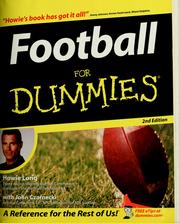
The single most accessible entry point for a complete newcomer — covers rules, positions, scoring, and game flow in plain language. Read this first to build the vocabulary every other book assumes you have.

A concise, fan-friendly collection of football concepts by one of the best football explainers writing today. It bridges the gap between casual fan knowledge and real strategic literacy, making it the perfect second read before diving into schemes.
Offense & Defense — Schemes and Play-Calling
IntermediateUnderstand why coaches call specific plays, how offensive and defensive systems are designed to attack each other, and how to read a game at the schematic level.
▸ Study plan for this stage
Pace: 10–12 weeks total, roughly 20–25 pages/day. Week 1–4: "Take Your Eye Off the Ball" (read one positional chapter per session, pausing to watch film after each); Week 5–8: "The Art of Smart Football" (one essay per sitting, re-read dense tactical essays twice); Week 9–12: "Blood, Sweat, and Chalk" (on
- Down-and-distance logic: how the down, yards-to-go, field position, and score combine to constrain and predict play-calling (core framework from Kirwan)
- Personnel groupings and formation vocabulary: how the number of backs, tight ends, and receivers on the field signal offensive intent before the snap (Kirwan, Ch. 3–5)
- The run-pass conflict: how offenses force defenders to be wrong — either stopping the run or the pass — and how defenses try to disguise their answer (Brown, multiple essays)
- Defensive front structures and coverage shells: the relationship between the box count, the front (3-4 vs. 4-3 and their hybrids), and the coverage behind it (Kirwan + Brown)
- Scheme evolution as an arms race: how every dominant offensive or defensive innovation in football history triggered a counter-innovation, traced through real coaches and eras (Layden throughout)
- Leverage and spacing concepts: how offenses use alignment and motion to create numerical or positional advantages at the point of attack (Brown, essays on spread and option concepts)
- Pre-snap reads and the quarterback's decision tree: identifying coverage, identifying the Mike linebacker, and how play-callers script the first 15 plays (Kirwan, Ch. 8–10)
- The West Coast Offense, the Air Raid, the Flexbone, and the 46 Defense as case studies in schematic philosophy — their core principles and why they worked (Layden, multiple chapters)
- After reading Kirwan, can you explain why a team in 2nd-and-1 near midfield might call a play-action pass rather than a run, using down-and-distance logic and defensive tendency?
- How does a defense's box count (the number of defenders near the line of scrimmage) communicate its run-stop commitment, and how can an offense exploit an incorrect box count according to Brown?
- Using Layden's historical narrative, trace one offensive innovation (e.g., the West Coast Offense or the Air Raid) from its origin to its mainstream adoption — what problem was it designed to solve?
- What is the difference between a 'base' defensive call and a 'situational' defensive call, and how does the offense's personnel grouping influence which one a coordinator chooses (Kirwan)?
- Brown argues that modern football is built on creating conflict for the defense. Pick one specific concept from his essays (e.g., the run-pass option, four-verticals, or mesh) and explain the conflict it creates and how a defense attempts to resolve it.
- How did the coaches profiled in 'Blood, Sweat, and Chalk' adapt their schemes when opponents began to solve them — and what does that reveal about the iterative nature of football strategy?
- Film + Kirwan drill: After each positional chapter in 'Take Your Eye Off the Ball,' pull up a full NFL game on YouTube or NFL Game Pass. Mute the broadcast and call out the personnel grouping and likely play type before each snap, then verify after the play.
- Play-call journal: While reading Brown's essays, keep a running one-page 'conflict map' for each concept — draw the offensive formation, label the defensive conflict it creates, and write the two ways the defense can be wrong.
- Scheme family tree (Layden exercise): After finishing 'Blood, Sweat, and Chalk,' build a visual timeline/family tree on paper or a whiteboard showing how each scheme in the book descended from or reacted to a previous one. Include the coach, the decade, and the core innovation.
- Down-and-distance prediction game: Watch any 30-minute stretch of a live or archived game before the snap, predict the play type (run, short pass, deep pass, play-action) using Kirwan's down-and-distance framework, and track your accuracy over a full game.
- Coordinator's memo: Choose one offensive scheme from Layden (e.g., the Air Raid) and write a one-page defensive game-plan memo — as if you are a coordinator — identifying its two biggest strengths and the specific coverage/front adjustments you would use to attack it, drawing on Brown's conflict concepts.
- Glossary self-test: Compile a 30-term glossary of scheme vocabulary encountered across all three books (e.g., 'Cover 2 Tampa,' 'RPO,' 'pistol formation,' '46 defense,' 'Mike linebacker'). Without looking at the books, write a one-sentence definition and a real-world example for each term.
Next up: Mastering why plays are called and how schemes attack each other sets the foundation for the next stage, where the focus shifts to personnel evaluation and roster construction — understanding not just what a scheme demands, but which player traits and skills make those schemes succeed at the highest level.

Teaches you to watch the whole field — offensive line play, defensive fronts, personnel groupings — rather than just following the ball. This is the key mental shift from casual viewer to informed analyst.

Goes deeper than Brown's first collection, examining modern offensive and defensive concepts like spread offense, zone coverage, and the evolution of NFL schemes. Read after Take Your Eye Off the Ball so you can apply the vocabulary immediately.

A history of football's great offensive and defensive innovations told through the coaches who invented them — the Wing-T, the West Coast Offense, the 46 Defense. It shows how schemes evolved and why, giving strategic concepts a living, narrative context.
The Coaching Mind — Strategy, Leadership & Decision-Making
IntermediateGet inside the minds of elite coaches to understand how they build systems, manage players, prepare for opponents, and make in-game decisions under pressure.
▸ Study plan for this stage
Pace: 6–8 weeks total: Weeks 1–3 on "The Education of a Coach" (~25–30 pages/day, including reflection pauses after key chapters on Belichick's formative years and mentorship under Parcells); Weeks 4–8 on "Finding the Winning Edge" (~20–25 pages/day — this is a dense, manual-style text requiring slower, n
- The apprenticeship model of coaching: how Belichick absorbed and synthesized football knowledge across decades of mentorship, film study, and low-level grunt work before achieving head-coaching success
- Systems thinking vs. star-player dependency: Belichick's philosophy that a cohesive, role-defined system consistently outperforms talent-first roster construction
- Bill Walsh's 'Standard of Performance': the idea that organizational excellence — not scoreboard outcomes — is the primary object of a coach's daily attention
- Scripting and structure under pressure: Walsh's innovation of scripting the first 15–25 offensive plays to reduce in-game cognitive load and establish early tempo
- Organizational architecture: Walsh's detailed frameworks for staff hierarchy, role clarity, communication protocols, and how a head coach builds and sustains a winning culture from the front office down
- Opponent preparation and the weekly game plan cycle: how elite coaches break down film, identify opponent tendencies, and build a tailored game plan within a compressed weekly schedule
- In-game decision-making under uncertainty: how both coaches managed clock, personnel, and situational football (down-and-distance, red zone, two-minute drill) with pre-committed logic rather than reactive emotion
- Leadership and player psychology: motivating diverse personalities, delivering hard truths, managing egos, and maintaining locker-room trust across a long season
- How did Belichick's years as an assistant — particularly under Bill Parcells — shape the specific defensive and organizational philosophies he later deployed as a head coach, and what does Halberstam suggest about why that apprenticeship path produced a different kind of coach than the direct-promotion route?
- Walsh argues that a coach's primary job is to build and maintain a 'Standard of Performance' rather than to chase wins directly. What does that standard look like in practice across his staff management, practice design, and player communication chapters in 'Finding the Winning Edge'?
- What is the strategic logic behind Walsh's play-scripting approach, and how does it reflect a broader principle about decision-making under stress that applies beyond football?
- Both books deal with the tension between a coach's system and the individual talent on the roster. How do Belichick (as portrayed by Halberstam) and Walsh (in his own voice) each resolve that tension differently, and where do their philosophies converge?
- Using Walsh's game-planning frameworks, what are the key steps a coaching staff should execute between Sunday night and the following Saturday to be fully prepared for an opponent?
- What leadership failures or near-failures appear in each book, and what do they reveal about the limits of even elite coaching systems when human variables — injuries, ego, front-office conflict — intervene?
- **Coach's Journal (ongoing):** After each reading session, write a 1-paragraph 'coaching memo' as if you are the head coach — summarizing one decision, philosophy, or system detail from that day's reading and explaining how you would apply or adapt it to a team you manage (a sports team, a work team, or a classroom). This builds the habit of translating abstract philosophy into actionable leadersh
- **Play-Script Exercise:** Using Walsh's scripting concept from 'Finding the Winning Edge,' design a 'first-15 script' for a high-stakes situation in your own life (a job interview, a sales call, a difficult conversation). Map out the first 15 moves/talking points in advance, then reflect on how pre-commitment changed your performance and anxiety level.
- **Comparative Philosophy Chart:** Create a two-column reference document — Belichick (via Halberstam) vs. Walsh (in his own words) — tracking their stances on: roster construction, staff hierarchy, in-game adjustments, player discipline, and preparation routines. Use direct page references. Identify 3 genuine disagreements and 3 deep agreements.
- **Film-Room Simulation:** Pick any freely available NFL All-22 or broadcast game film (or any recorded team competition). Watch one full half and take notes the way a coordinator would: chart every play, identify 3 opponent tendencies, and write a one-page 'game-plan memo' recommending 3 schematic adjustments — mirroring the opponent-prep process Walsh outlines.
- **Organizational Chart Reconstruction:** From Walsh's staff-management chapters in 'Finding the Winning Edge,' reconstruct his ideal organizational chart for a football program (or adapt it to a non-football organization). Annotate each role with its key responsibility and the communication protocol Walsh prescribes for it.
- **Decision Audit:** Identify a real past decision you made under pressure (time-constrained, high-stakes, incomplete information). Re-examine it through the lens of both books: Did you have a pre-committed framework (Walsh) or were you reacting emotionally? What would Belichick's preparation-first approach have changed in your process? Write a 1-page post-mortem.
Next up: By internalizing how elite coaches think, build systems, and make decisions, the reader is now equipped to move from the sideline to the field — examining how those systems are actually executed by players in real game conditions, making the next stage's focus on in-game tactics, scheme, and player performance a natural and richly contextualized progression.
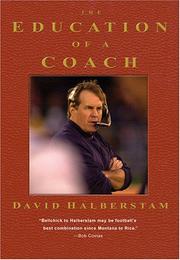
A masterful biography of Bill Belichick that doubles as a study of how a football mind is built over decades. It reveals the obsessive preparation, personnel philosophy, and situational thinking behind the most successful coaching career in NFL history.
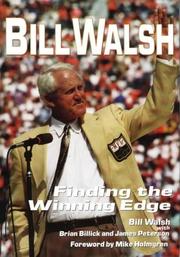
Walsh's own detailed manual on building a championship organization and the West Coast Offense. Dense and demanding, it rewards the reader who has already absorbed the earlier stages — this is how a coaching genius documented his own system.
Culture, History & the Soul of the Game
ExpertUnderstand American football as a cultural institution — its history, its mythology, its racial and social dimensions, and why it holds such a powerful grip on American life.
▸ Study plan for this stage
Pace: 8–10 weeks total: Weeks 1–5 for "When Pride Still Mattered" (~25–30 pages/day, ~400 pages), and Weeks 6–10 for "League of Denial" (~20–25 pages/day, ~370 pages). Allow extra days at the end of each book for reflection and journaling before moving on.
- The Lombardi Myth and the construction of football's moral mythology — how Vince Lombardi became a symbol of American will, discipline, and masculine virtue far beyond the sport itself
- Football as a Cold War cultural artifact — how the NFL's rise in the 1950s–60s mirrored American anxieties about toughness, hierarchy, and national identity
- Race, labor, and power in the NFL — the racial dimensions of coaching, player treatment, and institutional control explored across both books
- The NFL as a corporate and media institution — how television money, league politics, and ownership interests shaped the game's identity and public image
- Traumatic brain injury (CBI/CTE) and the NFL's systematic suppression of science — the central argument of League of Denial and its ethical implications
- The tension between the game's romance and its human cost — how fans, players, families, and the league itself navigate the cognitive dissonance of loving a dangerous sport
- Institutional denial and the tobacco-industry playbook — how the NFL used funded research, PR strategy, and political leverage to delay accountability
- Legacy, memory, and mythology — how football history is selectively remembered, heroized, and commodified to protect the sport's cultural dominance
- According to Maraniss, in what specific ways did Lombardi's biography get mythologized, and what does that mythologization reveal about what Americans wanted football to represent?
- How does 'When Pride Still Mattered' use Lombardi's personal contradictions — his faith, his temper, his relationships with Black players — to complicate rather than celebrate the legend?
- What was the NFL's institutional response to the early CTE research presented in 'League of Denial,' and what specific tactics did the league use to discredit Dr. Bennet Omalu and other researchers?
- How do the two books together illustrate a single arc: the building of a mythology in the mid-20th century and the unraveling of that mythology in the early 21st century?
- What does 'League of Denial' argue about the complicity of media — including ESPN's relationship with the NFL — in suppressing or softening the concussion story?
- After reading both books, how would you articulate the core bargain American culture has made with football, and who bears the greatest cost of that bargain?
- Mythology Deconstruction Journal: After each major section of 'When Pride Still Mattered,' write a 1-paragraph entry identifying one element of the Lombardi legend Maraniss confirms, and one he complicates or debunks. By the end of the book you should have a nuanced, evidence-based portrait of the man vs. the myth.
- Parallel Timeline: Build a two-column timeline — one column tracking key moments in NFL cultural ascendancy drawn from 'When Pride Still Mattered' (e.g., the 1958 Championship Game, the Ice Bowl), and a second column tracking the CTE research timeline from 'League of Denial.' Visualizing these arcs together reveals how the myth was still being reinforced even as the medical crisis was emerging.
- Stakeholder Analysis for 'League of Denial': Identify the five key institutional actors in the concussion cover-up (NFL leadership, the MTBI committee, team doctors, the players' union, media partners). For each, write 2–3 sentences describing their specific role, their incentives, and their moral culpability as Fainaru-Wada presents them.
- Close Reading — The Language of Denial: Select three official NFL statements or quotes from league officials reproduced in 'League of Denial.' Analyze the rhetorical strategies used (e.g., false equivalence, appeals to authority, burden-of-proof shifting). Compare these to known tobacco-industry PR language to test the book's central analogy.
- Synthesis Essay (600–900 words): Write a response to this prompt — 'Lombardi's Green Bay and the NFL's concussion crisis are not separate stories; they are the beginning and the reckoning of the same story.' Use specific evidence from both books to argue for or against this claim.
- Contemporary Connection: Find one current news article (within the last two years) about either NFL player safety policy or a football cultural debate (e.g., youth football participation rates, a player's retirement decision). Write a one-page reflection on how the arguments and patterns in these two books illuminate or predict what you read in the article.
Next up: By exposing both the romantic foundation and the institutional rot of professional football, this stage equips the reader to engage critically with the game's on-field tactics, business structures, or player narratives in any subsequent stage — carrying a fully formed cultural and ethical lens into more technical or contemporary material.
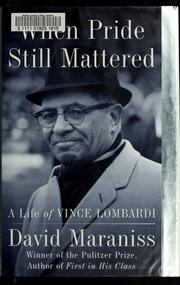
The definitive biography of Vince Lombardi and a portrait of the NFL's formative era. It captures the values, toughness, and mythology that shaped football's identity and explains why the sport means what it means to Americans.
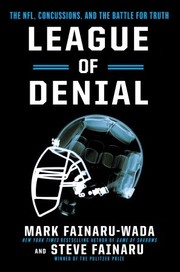
An investigative account of the NFL's concussion crisis that forces a reckoning with the sport's costs. Reading this last gives you the full, honest picture — the glory and the grave moral questions that define football in the 21st century.
Discussion
Keep reading
Paths that share books, cover the same subject, or open a related topic.