Anton Chekhov Reading Order: Where to Start
This curriculum moves from Chekhov's most accessible short stories through his major dramatic works and finally into his private voice via letters and notebooks. Each stage builds the reader's feel for Chekhov's signature tone — understatement, mood, the unspoken — so that by the time you reach the plays and the personal writings, you already inhabit his world.
First Encounters: The Essential Stories
BeginnerDevelop an intuitive feel for Chekhov's style — his economy of language, his sympathy for ordinary people, and his mastery of the 'slice of life' form — through his most celebrated and approachable short stories.
▸ Study plan for this stage
Pace: 6–8 weeks total. Week 1–3: Read "The Lady with the Dog and Other Stories" (9 stories) at a leisurely pace — roughly 2–3 stories per week, re-reading at least 2 favorites. Week 4–8: Read "Early Stories" (35 stories) at ~7 stories per week; treat it as a survey, slowing down for any story that resonat
- Economy of language: Chekhov's deliberate omission of explanation, moralizing, and resolution — trusting the reader to complete the meaning
- The 'slice of life' form: stories that begin in the middle of things and end without tidy conclusions, capturing a single mood or moment rather than a full plot arc
- Sympathy for ordinary people: Chekhov's non-judgmental, compassionate gaze at peasants, clerks, students, and provincial women — visible across both collections
- The Chekhovian epiphany: a quiet, internal shift in a character's awareness (e.g., Gurov's transformation in 'The Lady with the Dog') rather than a dramatic external event
- Subtext and the unsaid: what characters cannot or will not say aloud carries as much weight as dialogue — watch for pauses, deflections, and physical gestures
- Early vs. mature style: contrasting the comic sketches and broad humor of the 'Early Stories' with the restrained, lyrical tone of the nine mature stories in the first collection
- Setting as emotional atmosphere: how Chekhov uses weather, landscape, and interior spaces (the sea at Yalta, the grey Moscow streets) to mirror inner states
- The recurring Chekhovian theme of thwarted longing: characters trapped by circumstance, habit, or their own inertia who glimpse — but rarely reach — a fuller life
- After reading 'The Lady with the Dog,' how does Chekhov make Gurov's internal change feel earned without ever stating it directly? What specific details carry the emotional weight?
- How do the comic early stories (e.g., the bureaucratic and social sketches in 'Early Stories') differ in tone, structure, and intent from the mature stories in 'The Lady with the Dog and Other Stories'? What does this contrast reveal about Chekhov's artistic development?
- Choose any two stories from either collection in which nothing dramatically 'happens.' How does Chekhov create tension and reader engagement without conventional plot?
- How does Chekhov use physical setting — a specific room, a season, a body of water — to externalize a character's emotional state in at least two stories across the two books?
- What does Chekhov's treatment of women (Anna in 'The Lady with the Dog,' or female characters in the early sketches) reveal about his sympathy and his social critique?
- Identify a moment of subtext in any story where what a character does NOT say is more important than what they do say. How does Chekhov signal this to the reader?
- Close-reading log: After each story, write 3–5 sentences — not a summary, but a record of the single image, line, or moment that lingered. Over time this log will reveal your own intuitions about what makes Chekhov work.
- Comparative style exercise: Pick one comic sketch from 'Early Stories' and one story from 'The Lady with the Dog and Other Stories.' Write a one-page side-by-side comparison of their opening paragraphs — sentence length, tone, what information is withheld. What does each opening 'promise' the reader?
- Rewrite an ending: Choose a story from either collection and write an alternative final paragraph that adds explicit explanation or moral resolution. Then reflect in writing on why Chekhov's original ending is more powerful.
- Subtext mapping: Select any dialogue scene (the conversations between Gurov and Anna work well) and annotate it line by line — mark what is literally said, what the character means, and what they are afraid to say. Draw arrows between the layers.
- Character sketch imitation: Write a 300–500 word original 'Chekhovian' sketch about an ordinary person in a mundane situation, consciously applying economy of language and ending without resolution. Use the early stories as your structural model.
- Reading journal prompt — thwarted longing: After finishing both books, list every character across both collections who wants something they cannot have. Note what stops them: society, another person, or themselves. Look for the pattern Chekhov keeps returning to.
Next up: Mastering Chekhov's short-story instincts — his compression, his sympathy, and his comfort with irresolution — gives the reader the essential interpretive lens needed to appreciate how he scaled and deepened these same qualities in his longer works and dramatic writing in subsequent stages.
![The Lady with the Dog and Other Stories [9 stories]](https://covers.openlibrary.org/b/id/12749981-M.jpg)
This single-volume collection contains many of Chekhov's most beloved late stories, including 'The Lady with the Dog,' 'The Bishop,' and 'Ward No. 6.' Starting here gives you his mature, distilled voice at its most emotionally resonant and readable.
![Early stories [35 stories]](https://covers.openlibrary.org/b/id/12750229-M.jpg)
Reading Chekhov's early comic and satirical sketches after the late masterpieces reveals how he developed his craft — the humor, the social observation, and the seeds of everything that came later.
Deeper into the Stories: The Middle and Late Masterpieces
IntermediateEncounter the full range of Chekhov's short fiction — his longer, more psychologically complex tales — and begin to see the recurring themes of longing, stagnation, and quiet revelation that define his worldview.
▸ Study plan for this stage
Pace: 8–10 weeks total; ~4–5 stories per week. Week 1–4: "The Steppe and Other Stories" (22 stories, roughly 5–6 stories per week, ~25–35 pages per sitting, 3 sittings per week). Week 5–10: "Ward No. 6 and Other Stories" (23 stories, ~4 stories per week, allowing extra time for the longer, denser tales).
- The Chekhovian 'slice of life': stories without conventional plot arcs — no clear climax or resolution, just a window into a moment or a life
- Psychological interiority: Chekhov's technique of revealing character through small gestures, silences, and indirect speech rather than explicit statement
- Stagnation and the 'superfluous man': characters trapped by inertia, social convention, or their own inability to act or change
- Longing and unfulfilled desire: the persistent gap between characters' inner dreams and their outward, constrained lives
- The epiphany of quiet revelation: subtle, often ambiguous moments of insight that replace dramatic turning points — the 'Chekhovian gun' used or pointedly not used
- The Russian provincial landscape as emotional mirror: how settings in 'The Steppe' and elsewhere reflect and amplify characters' inner states
- Institutional critique and the corrupting power of systems: explored most forcefully in 'Ward No. 6,' where a psychiatric ward becomes a metaphor for social and moral imprisonment
- Free indirect discourse and narrative distance: Chekhov's fluid movement between narrator's voice and character's consciousness, creating irony without judgment
- In 'The Steppe,' how does the vast landscape function as more than a setting — what does it reveal about the boy Yegorushka's inner world and about Russia itself?
- Chekhov rarely tells us what to feel about his characters. Choose two stories from either volume and explain how he guides the reader's sympathy through technique rather than authorial commentary.
- What does 'Ward No. 6' argue about the relationship between reason, freedom, and complicity? How does Dr. Ragin's philosophical detachment become a form of moral failure?
- Identify a moment of 'quiet revelation' in at least one story from each volume. What makes these moments land without melodrama, and what is left deliberately unresolved?
- How does Chekhov portray the lives of women across these 45 stories? Choose at least three female characters and trace the specific social and psychological forces that constrain them.
- What recurring images, objects, or motifs (e.g., windows, journeys, illness, money) appear across both volumes, and what thematic work do they perform?
- Keep a 'Story Log' for every story in both volumes: write 3–5 sentences capturing (1) what happens on the surface, (2) what is really happening underneath, and (3) one image or line that crystallizes the story's mood. This trains close attention and builds a reference for later synthesis.
- After finishing 'The Steppe,' write a one-page 'landscape portrait' in Chekhov's style: describe a real or imagined place so that it carries an emotional atmosphere without ever naming the emotion directly. Then annotate your own draft, identifying the techniques you borrowed.
- Select any five stories from 'Ward No. 6 and Other Stories' and map each protagonist on a 2×2 grid: one axis runs from 'self-aware' to 'self-deceived'; the other from 'capable of change' to 'trapped by stagnation.' Write a paragraph justifying each placement and look for patterns.
- Choose one story from each volume that share a common theme (e.g., loneliness, ambition, marriage). Write a 400–600 word comparative essay arguing what Chekhov's treatment of that theme reveals about his evolving worldview between the two collections.
- Re-read 'Ward No. 6' and annotate every passage where Dr. Ragin rationalizes inaction. Then write a one-page 'defense' of Ragin and a one-page 'prosecution,' using only evidence from the text. This sharpens your ability to hold Chekhov's moral ambiguity without collapsing it.
- Create a 'Chekhov Motif Map': on a single sheet, list 8–10 recurring images or situations you noticed across both volumes (e.g., a character staring out a window, an unexpected inheritance, a doctor figure). For each, note 2–3 stories where it appears and draft a sentence about what it seems to mean in context. Use this map as a study reference going forward.
Next up: By mastering Chekhov's short fiction across these two rich volumes — his techniques of restraint, psychological depth, and thematic recurrence — the reader is now equipped to encounter his dramatic work and letters, where the same worldview is expressed through dialogue, stage silence, and direct personal voice.
![The Steppe and Other Stories [22 stories]](https://covers.openlibrary.org/b/id/6808392-M.jpg)
The title novella is Chekhov's most lyrical and ambitious prose work; reading it here, after you have his shorter style in your ear, lets you appreciate how he sustains mood and landscape over a longer form.
![Ward No. 6 and Other Stories [23 stories]](https://covers.openlibrary.org/b/id/12750346-M.jpg)
This collection gathers his darker, philosophically charged stories — 'A Dreary Story,' 'The Black Monk,' 'Peasants' — which push his technique to its limits and prepare you for the existential weight of the plays.
The Major Plays
IntermediateUnderstand Chekhov as a dramatist: how he transferred his short-story techniques — subtext, inaction, the comedy of unhappiness — onto the stage, and why his four great plays revolutionized world theatre.
▸ Study plan for this stage
Pace: 6–8 weeks total: Week 1–2 — Read "Uncle Vanya" (full text + re-read key scenes); Week 3–4 — Read "Three Sisters" (Julius West translation, ~30–40 pages/day with scene annotations); Week 5–6 — Read "Chekhov's The Cherry Orchard" by Herbert Goldstone (critical companion, ~25–30 pages/day alongside the
- Subtext and the 'iceberg' principle on stage: characters say one thing and mean another, and Chekhov's dialogue must be read on two levels simultaneously
- Inaction as dramatic action: the absence of decisive events IS the plot — understand how Chekhov builds tension through stasis, missed opportunities, and paralysis of will (central to Uncle Vanya and Three Sisters)
- The comedy of unhappiness: Chekhov insisted his plays were comedies; trace how suffering, futility, and self-delusion are rendered absurd rather than tragic
- Ensemble dramaturgy: no single protagonist — all four plays distribute emotional weight across a group, mirroring the short-story technique of the 'slice of life'
- The passage of time and the elegiac mood: characters are trapped between a romanticized past and an imagined future, never inhabiting the present — especially foregrounded in Three Sisters ('To Moscow!') and The Cherry Orchard
- Symbolic staging and the Chekhovian 'mood play': sound (the breaking string, the axe), setting (the orchard, the provincial estate), and silence carry dramatic meaning equal to dialogue
- Goldstone's critical apparatus: how to use a scholarly guide to deepen textual analysis — identifying dramatic irony, character foils, and thematic motifs in The Cherry Orchard
- The revolution in theatrical form: how Chekhov broke with melodrama and the well-made play, influencing Stanislavski's method acting and the entire tradition of modern realism
- In Uncle Vanya, how does Chekhov use Vanya's failed revolt against Serebryakov to dramatize the theme of wasted life — and what makes this 'inaction' more dramatically powerful than a conventional climax?
- Julius West's translation of Three Sisters renders Chekhov's dialogue with particular colloquial rhythms. How does the repeated refrain 'To Moscow!' function as both character motivation and ironic symbol, and what does it reveal about Chekhov's technique of the unfulfilled desire?
- How does Goldstone's critical reading of The Cherry Orchard illuminate the play's dual tone — is the destruction of the orchard a tragedy (Ranevskaya's loss) or a comedy (Lopakhin's triumph, the characters' self-deception)? What evidence from the text supports each reading?
- Across all three works, how does Chekhov transfer the short-story technique of subtext onto the stage? Identify at least two scenes per play where what is NOT said carries more dramatic weight than the spoken dialogue.
- What role do minor and peripheral characters (Telegin in Uncle Vanya, Chebutykin in Three Sisters, Firs in The Cherry Orchard) play in Chekhov's ensemble structure, and how do they deepen the central themes?
- How does Chekhov use sound and environment as dramatic language? Trace the symbolic function of at least one non-verbal theatrical element in each of the three works.
- Scene annotation exercise (Uncle Vanya): Choose the Act III confrontation between Vanya and Serebryakov. Annotate every line with a 'subtext note' — write what you believe the character actually means beneath what they say. Then write a one-page reflection on how this dual layer creates dramatic irony.
- Translation comparison (Three Sisters): Take one scene from Julius West's Three Sisters and find one alternative translation online (e.g., Frayn or Hingley). Write a side-by-side comparison of 10–15 lines, noting how word choices shift tone, comedy, or emotional weight. What does this reveal about Chekhov's original ambiguity?
- Director's concept note (The Cherry Orchard): Using Goldstone's critical guide as your analytical foundation, write a 400–500 word 'director's concept' for a production of The Cherry Orchard. Decide: is your production a comedy or an elegy? Justify every major staging choice (set, sound, pacing) with textual evidence Goldstone highlights.
- Character paralysis map: For each play, create a simple diagram showing each major character's stated desire vs. their actual behavior. Label the gap between the two as their 'paralysis.' Compare the three diagrams — what pattern emerges about Chekhov's view of human will?
- The comedy of unhappiness journal: Keep a running log as you read all three works. Each time you encounter a moment that is simultaneously funny and painful, record the passage, identify the technique Chekhov uses (deflation, absurd non-sequitur, self-delusion, etc.), and rate the balance of comedy vs. pathos on a 1–5 scale. Review the log at the end of Stage to identify Chekhov's most-used tools.
- Comparative essay (500–700 words): Argue which of the three works most successfully stages the 'comedy of unhappiness.' Draw on specific scenes from Uncle Vanya, Three Sisters (West translation), and Goldstone's analysis of The Cherry Orchard to build your case.
Next up: Mastering how Chekhov's dramatic techniques grew from and fed back into his prose style prepares the reader to return to his short fiction with a far more sophisticated eye — recognizing subtext, inaction, and ensemble perspective as a unified artistic vision across all his work.

Read second among the plays, Uncle Vanya distills Chekhov's signature mood — wasted lives, paralysis, and beauty in suffering — into its purest dramatic form.

His most structurally ambitious play; having The Seagull and Uncle Vanya behind you, you can now fully appreciate how he orchestrates multiple voices and layers of longing without a conventional plot.
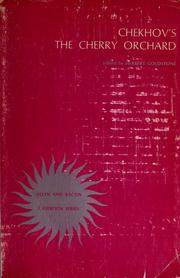
His final and most debated play — simultaneously a comedy and an elegy — is best read last among the dramas, when you can feel the full weight of everything he had been building toward.
The Private Voice: Letters and Notebooks
ExpertEnter Chekhov's inner workshop — his artistic philosophy, his self-criticism, his observations on writing, medicine, and life — and achieve a rounded, deeply personal understanding of the man behind the work.
▸ Study plan for this stage
Pace: 3–4 weeks, ~20–25 pages/day. The Notebooks are best read slowly and non-linearly — spend the first week on Chekhov's raw jottings, the second week on Gorky's Reminiscences, and the third week revisiting both with an analytical lens, cross-referencing entries against Chekhov's fiction you have alread
- Chekhov's artistic economy: the notebook as a laboratory where raw observations are distilled into the compressed, iceberg-like prose of his stories and plays
- The doctrine of non-interference: Chekhov's insistence that the writer must not judge characters or preach, only show — visible throughout his jottings as detached, clinical observations
- Medicine as epistemology: how Chekhov's training as a physician shaped his diagnostic gaze, his tolerance for ambiguity, and his refusal of easy moral diagnoses
- Self-criticism and humility: Chekhov's recurring dissatisfaction with his own work, his warnings against sentimentality and rhetoric, and his belief that art must be honest above all else
- The fragment as form: understanding how the notebook entries — character sketches, overheard phrases, plot seeds — reveal that Chekhov thought in images and situations rather than in arguments or themes
- Gorky's portrait as a literary document: reading the Reminiscences not as biography but as an act of creative interpretation, noting where Gorky projects his own revolutionary worldview onto Chekhov
- Chekhov's philosophy of ordinary life: his conviction that the drama of existence lies in the mundane, the half-spoken, and the unresolved — a philosophy reconstructed from both the notebooks and Gorky's anecdotes
- The gap between public persona and private voice: how the letters and notebooks reveal a Chekhov far more ironic, melancholic, and self-aware than the genial doctor-writer of popular legend
- What recurring types of characters, images, and social situations appear most frequently in Chekhov's notebook jottings, and how do these patterns illuminate the preoccupations of his finished work?
- How does Gorky's own ideological position as a socialist realist shape the Chekhov he portrays in the Reminiscences — where does admiration shade into appropriation?
- In what specific ways does Chekhov's medical background manifest in the style and stance of his notebook observations — and how does Gorky's account corroborate or complicate this?
- What does Chekhov say (directly or implicitly, through the notebooks and as reported by Gorky) about the responsibilities and limits of the writer's role in society?
- How does reading the notebooks change or deepen your interpretation of at least two specific Chekhov stories or plays you have encountered in earlier stages of this curriculum?
- What tensions or contradictions emerge between the artistic philosophy Chekhov articulates in his private notes and the man Gorky describes in person — and what do those tensions reveal?
- Seed-to-story mapping: Select 10 notebook entries that feel like embryonic story ideas. For each, write a one-paragraph hypothesis about how Chekhov might have developed it — then check whether any correspond to actual finished works you have read, noting what was kept, cut, or transformed.
- Gorky as unreliable narrator: Annotate the Reminiscences by flagging every moment where Gorky's language, emphasis, or framing seems to reveal more about Gorky than about Chekhov. Write a one-page reflection on what a 'corrected' portrait might look like.
- Imitate the notebook: Keep your own writer's notebook for one full week in the manner of Chekhov's jottings — no full sentences of analysis, only observed details, overheard dialogue, and fleeting images. At the end of the week, review what your fragments reveal about your own preoccupations.
- Diagnostic reading exercise: Choose one Chekhov story from an earlier stage and re-read it wearing the 'physician's lens' foregrounded in the notebooks and Gorky's account. Write a 500-word close reading focused exclusively on what Chekhov diagnoses but refuses to prescribe a cure for.
- Philosophical distillation: Synthesize Chekhov's implicit artistic credo from the notebooks and Gorky's Reminiscences into a single coherent manifesto of no more than 300 words, written in the first person as if Chekhov himself were speaking. Identify every claim you can anchor to a specific passage.
- Comparative voice analysis: Select three notebook entries written in very different registers (comic, melancholic, clinical) and write a short essay arguing how these registers coexist in a single Chekhov story of your choice — using the notebooks as primary evidence.
Next up: Having internalized Chekhov's private artistic philosophy and self-critical voice through his notebooks and Gorky's intimate portrait, the reader is now equipped to engage with scholarly and critical literature about Chekhov with genuine independence — able to test, challenge, and enrich external interpretations against a first-hand understanding of the man's own principles.

His private jottings — story seeds, aphorisms, observations — offer an unfiltered view of his creative mind and provide a perfect capstone, letting you trace ideas from raw note to finished masterpiece.
Discussion
Keep reading
Paths that share books, cover the same subject, or open a related topic.