Anita Desai Reading Order: Where to Start
Anita Desai wrote for sixty years, and her early novels are not where to begin: the first two are intense interior studies written in her twenties, and they read as apprentice work beside what came later. The reliable entry is Clear Light of Day, the first of her three Booker-shortlisted novels and the one where the interiority finally has a structure to hang on. Take the three shortlisted novels first, then work backwards to the early books and outwards to the later, more scattered fiction.
Start Here: The Booker Novels
IntermediateMeet Desai at her strongest, and get used to fiction where almost nothing happens externally and everything happens in the space between family members.
▸ Study plan for this stage
Pace: 2-3 weeks. Both books are short — Clear Light of Day 183 pages, In Custody 203 — and neither reads fast. Twenty pages a sitting is about right: Desai buries the plot inside descriptions of heat, dust and furniture, so skimming loses the story rather than saving time.
- Desai writes in English about Indian interior lives, and almost nothing happens externally in these novels; the events are shifts in what one family member is finally willing to say to another
- Clear Light of Day is built on a return — an adult sister comes back to the Old Delhi house — and moves backwards through its sections into the summer of Partition before coming forward again
- Partition stays offstage. It removes the neighbours and alters the family's prospects, and Desai declines to dramatise it directly, which is a deliberate decision about how much history a domestic novel can carry
- In Custody is the outlier of the pair: funnier, more plotted, and about one man rather than a household, though the humiliation it delivers has the same shape as Bim's
- The decline of Urdu in independent India is the real subject of In Custody, and the great poet turns out to be a shambling and expensive old man — the book is about what happens when a devotee finally gets access
- Three of Desai's novels were shortlisted for the Booker and none won; the shortlistings are a reliable map of her strongest work, and this stage holds two of the three
- Nobody in these books is a villain, but people are cruel in small maintained ways, and the sentences never editorialise about it
- Bim stayed in the Old Delhi house and Tara left. What does each sister believe the other did to her, and does the novel ever arbitrate between them?
- What is wrong with Baba, and why does Clear Light of Day refuse to name it? Ask what naming it would cost the book.
- Deven worships Nur before he ever meets him. What does he actually want from the poet, and what does he get instead?
- In Custody is very funny about a genuine cultural loss. How does Desai keep the comedy from making the loss look trivial?
- Both novels end on something that could be reconciliation or could be resignation. Which did you read, and which sentence on the last page decided it?
- Clear Light of Day has four sections that move backwards and then forwards in time. Note the year at the start of each one — the novel does not announce them clearly and this is where readers get lost.
- Keep a list of what the Das house contains: the garden, the well, the veranda, the roses, the record player. Desai uses the objects as the memory, and by the end the list is a plot summary.
- Mark the moment in In Custody when Deven realises what the tape recording is going to cost him. It arrives very quietly and it is the hinge of the novel.
- In Custody was filmed by Merchant Ivory. Watch it after reading if you like, and notice how much of the book is interior monologue that a camera cannot carry at all.
Next up: Next she takes the same attention out of India — one novel that splits between a north Indian household and a Massachusetts suburb, and one about a European who never gets home.
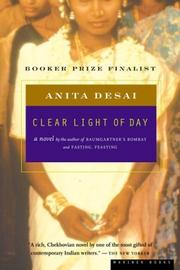
The right first book: a brother and two sisters in an Old Delhi house, circling a childhood none of them agree about, with Partition just offstage. It is the most complete statement of her subject, and it teaches you to read for the silences.
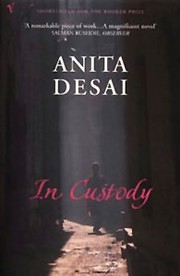
A small-town Hindi lecturer sets out to interview a great Urdu poet and finds a shambling drunk. Funnier and more plotted than Clear Light of Day, and the best single novel about the decline of Urdu in independent India.
The Third Shortlisting and the Outsider Novel
IntermediateFollow her out of India — to America and to Europe — and see the exile theme that runs under all the domestic fiction.
▸ Study plan for this stage
Pace: 3 weeks. Fasting, Feasting is 227 pages in two unequal halves — read the Indian half over several sittings and the American half in one, so the join between them lands properly. Baumgartner's Bombay is 240 pages and moves between Berlin, an internment camp and Bombay; give it about ten days and expe
- Fasting, Feasting is a diptych: a long first half about an unmarried daughter kept at home in a north Indian town, then a shorter second half about her brother eating badly and alone in suburban Massachusetts, with the two never explicitly compared
- The parents in it are treated almost throughout as a single fused unit, a small formal joke doing serious work about how that household is actually run
- Baumgartner's Bombay is the outsider novel of her career: a German Jewish man escapes the Nazis, is interned by the British in India as an enemy alien, and lives out his life in Bombay feeding stray cats
- Desai's own mother was German, and the German in this novel is not decoration — Baumgartner's mind runs partly in a language nobody around him can read, and the book prints it untranslated
- Being interned as an enemy alien because you are German, having fled Germany because you are Jewish, is the historical fact the novel is built on, and it is a real one that catches many readers off guard
- Read together the two books show that her subject was never simply the Indian family: it is people who cannot leave set beside people who cannot arrive
- This is the least claustrophobic stretch of her work — the interiors open onto other countries — which makes it the easiest continuation after the first stage
- Uma is not allowed to leave and Arun is sent away. Which of them is worse off, and does the novel let you settle it?
- What is the American family in the second half of Fasting, Feasting for? Ask what Desai wanted from a household that looks nothing like Uma's and works no better.
- Baumgartner is at home nowhere. Name the moments where he comes closest to belonging, and what ends each of them.
- The novel gives Baumgartner scraps of German verse and nursery rhyme. What are they doing that his English cannot do?
- Does Baumgartner's Bombay see India from inside or from outside? The answer is genuinely not obvious, and it is the interesting question about the book.
- Read the last page of the Indian half of Fasting, Feasting and the first page of the American half back to back before continuing. The cut between them is the argument.
- Spend ten minutes on British internment of German nationals in India during the war before you start Baumgartner's Bombay. The middle of the novel depends on it.
- Note every time Baumgartner is addressed by a name that is not his own. There are several, and each one is a different community deciding what he is.
- After these two, write one sentence on what Desai thinks a family is for. If the sentence is comforting, you have got it wrong.
Next up: Now go back to the beginning, where the same attention exists without the structures that carry it here — and go in warned about how airless the early books are.
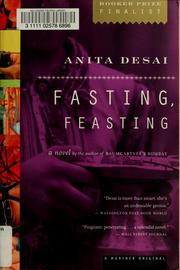
Two halves: an unmarried daughter trapped in a north Indian household, and her brother adrift in suburban Massachusetts. The parallel is the whole argument, so read both halves at one sitting if you can.
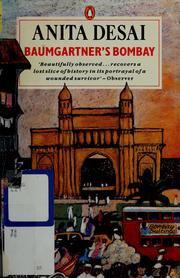
A German Jewish refugee who escapes the Nazis, is interned by the British as an enemy alien, and ends up feeding stray cats in Bombay. Her own mother was German, and this is the novel where that inheritance surfaces most directly.
The Early Novels
IntermediateGo back to the sixties and seventies work, reading it as apprenticeship rather than as an introduction, and watch the style tighten.
▸ Study plan for this stage
Pace: 3-4 weeks, ~20 pages a day. Cry, the Peacock (188 pages) and Fire on the Mountain (145) are short; Voices in the City (257) is the longest and the most diffuse. These go slower than their length suggests, because the prose is dense and the interiority is unrelieved, so plan on shorter sittings than
- The early novels are far more claustrophobic and interior than anything in the first two stages: long stretches inside one distressed consciousness, with no comedy and no relief, and readers who begin here often give up on Desai altogether
- Cry, the Peacock came out in 1963, written in her twenties, and is an image-saturated study of a young wife's disintegration — the raw version of the interiority that Clear Light of Day later disciplines
- Voices in the City is where a city first acts on the characters: Calcutta pulls three siblings apart and the city writing is the strongest thing in the early work
- Fire on the Mountain is the hinge — 145 pages, an old woman in a Himalayan hill station who wants only to be left alone, a great-granddaughter she did not ask for, and an ending that arrives with no warning
- Across the three you can watch the style tighten: the metaphors thin out, the sentences shorten, and emotion stops being described and starts being implied
- Withdrawal is already the recurring subject here — women who want to be left alone and are not — which is still what she is writing about fifty years later in the final stage
- Read these as apprenticeship and origin rather than as recommendation; if you only ever read four Desai novels, none of them is in this stage
- Maya's fear in Cry, the Peacock rests on a prophecy. How reliable is she as a narrator, and where does the novel first let you doubt her?
- What is Calcutta doing to the three siblings in Voices in the City that a different city would not do?
- Nanda Kaul wants solitude. Does Fire on the Mountain treat that as a right, as a symptom, or as a lie she has been telling about her own life?
- Most readers do not see the ending of Fire on the Mountain coming. Reread the thirty pages before it and find what was already there.
- Set a paragraph of Cry, the Peacock beside one of Fire on the Mountain. What has she stopped doing, and is the loss of the early intensity worth the control?
- Read Cry, the Peacock in short sittings of no more than forty pages. It is written to feel airless, and in long stretches it stops registering at all.
- Mark the passages in Voices in the City that are about the city rather than the family, then read just those in sequence. It is nearly a separate book and it is the better one.
- Reread the last five pages of Fire on the Mountain immediately after finishing. It is the one Desai ending that genuinely needs a second pass.
- After all three, go back to the first ten pages of Clear Light of Day and note what the mature novel does with the same material that the early ones could not.
Next up: The last stage is the loosest of her work — stories, a novel about Western seekers, and three late novellas — and it reads easily now that the range is set.
Her first novel, a young wife's disintegration told in feverish, image-saturated prose. Read it now rather than first: it is the raw version of the interiority that Clear Light of Day disciplines.
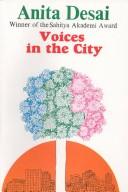
Three siblings pulled apart by Calcutta, which functions as a fourth character. The city writing here is the best thing in the early work and shows her already moving from private to social pressure.

An old woman in a Himalayan hill station, a great-granddaughter she does not want, and an ending that arrives like a slap. Short and controlled, it is the hinge between the early novels and Clear Light of Day.
The Later and Shorter Work
IntermediateFinish with the stories and the late novellas, which are looser, more international, and easier to read once the major novels have set the register.
▸ Study plan for this stage
Pace: 3 weeks. Games at Twilight is 144 pages of stories, one or two an evening. Journey to Ithaca is 311 pages and the longest book in the path; give it a fortnight, since it moves between Europe, a couple travelling in India and the biography of a woman who came decades earlier. The Artist of Disappeara
- Games at Twilight is her first story collection and shows a compression the novels do not need; the title story, about a boy who hides so well that the others forget him, is the most anthologised thing she wrote and puts the career's subject into a handful of pages
- Journey to Ithaca follows a European couple who come to India after a guru, then turns back into the history of the woman who arrived long before them
- It is her most direct treatment of Western spiritual seekers, and it neither mocks them nor endorses them, which is harder to bring off than either
- The Artist of Disappearance is three late novellas about withdrawal — a translator, a museum, a man alone in a burnt-out house — written when she was around seventy
- The later work is looser and more international than the Delhi and Bombay novels, and it assumes you already have the register from the earlier books, which is why it sits at the end
- Read in this order the arc is plain: fifty years of writing about people who want less of the world than the world insists on giving them
- This path holds ten books. Desai published more than that, including children's fiction and later work, so treat the sequence as the spine of her career rather than the complete works
- In the title story of Games at Twilight, why is the boy's discovery so devastating when nothing has actually been done to him?
- What do Matteo and Sophie each want from India in Journey to Ithaca, and does either of them get it?
- The middle of Journey to Ithaca is another woman's life story. Does knowing it change what you think of the guru, of the couple, or of both?
- The three novellas in The Artist of Disappearance all end with someone choosing not to be found. Which of the three does Desai treat as a real freedom?
- Across ten books, state Desai's subject in one sentence — and check that the sentence fits Baumgartner as well as it fits Bim.
- Read the title story of Games at Twilight twice, once at the start of this stage and once at the end of it. It is a few thousand words and it holds the whole career.
- Keep a list of the withdrawals across the last three books: who leaves, what they leave, and whether the book treats it as escape or as defeat.
- Set Nanda Kaul in Fire on the Mountain beside the recluse in The Artist of Disappearance and write down what thirty-five years changed in how Desai judges solitude.
- Choose the Desai book you would hand to someone who has read none of her, and write the two-sentence case for it. If it is not Clear Light of Day, be able to say why.
Next up: That is the spine of sixty years of work, so any Desai novel you pick up next — early, late or children's — can be placed inside the arc almost immediately.
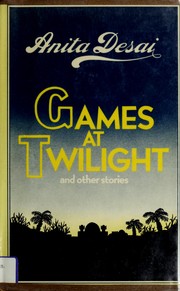
Her first story collection, and the title story — a boy hiding so well in a game that everyone forgets him — is the most anthologised thing she wrote. A good demonstration of her compression.
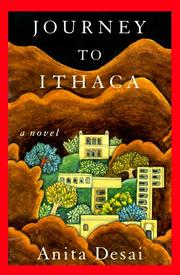
A European couple following a guru in India, and the biography of the woman who got there first. Her most direct treatment of Western seekers, and the least Indian-domestic of her novels.
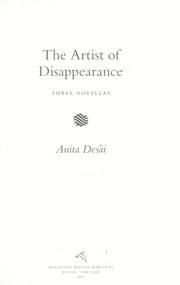
Three late novellas about people who withdraw from the world — a museum, a translator, a hermit. The right last stop: it is Desai at seventy writing about the value of not being seen.
Discussion
Keep reading
Paths that share books, cover the same subject, or open a related topic.