Angela Carter Reading Order: Where to Start
Angela Carter is easiest to enter through her short fiction, where the fairy-tale rewriting and the baroque sentence-making arrive in concentrated doses. From there the novels open out — first the early gothic ones, then the wilder picaresque late books — and the essays and journalism close the loop by showing the arguments about sex, myth and class that the fiction dramatizes. Read in this order, the strangeness stops feeling like decoration and starts reading as a coherent project.
The Short Fiction First
BeginnerGet the Carter sentence and the fairy-tale method in the smallest possible dose, so the novels' density feels familiar rather than forbidding.
▸ Study plan for this stage
Pace: 4–5 weeks. The Bloody Chamber is 163 pages of ten tales — read one a sitting over a fortnight, and reread 'The Tiger's Bride' and 'The Company of Wolves' immediately, since each is a variant of a tale told elsewhere in the book. Then Burning Your Boats (480 pages) at ~25 pages a day, taken in the co
- Carter's own account of the method: she was putting new wine in old bottles until the pressure of the new wine made the old bottles explode — the source tales are re-argued, not decorated
- The Carter sentence: piled subordinate clauses, jewelled nouns, deliberate excess. The prose flaunts its artifice instead of hiding it, and that flaunting is part of the argument
- The Bloody Chamber's structure is a set of variants, not a sequence — 'The Courtship of Mr Lyon' and 'The Tiger's Bride' tell Beauty and the Beast twice, and three separate stories work the wolf
- Bluebeard rewritten so the rescuer is the mother with a revolver: Carter's habit of removing the male saviour from the plot machinery entirely
- Heroines who bargain rather than submit — appetite, curiosity and complicity treated as feminist material, in flat refusal of the innocent-victim script
- Gothic props (mirrors, furs, automata, marriage as a transaction) used as machinery for examining looking and being looked at
- The range on show in Burning Your Boats — the early Japanese pieces, the American Gothic, the late historical monologues — which proves the fairy tales were one mode among several
- What does the mother's arrival at the end of 'The Bloody Chamber' change about the Bluebeard story, and why does Carter keep the lurid detail she inherits rather than cleaning it up?
- 'The Courtship of Mr Lyon' and 'The Tiger's Bride' end in opposite directions — what is each version arguing about what a woman becomes?
- How do the three wolf stories escalate, and at what exact point in 'The Company of Wolves' does the expected victim take control of the scene?
- Take one Carter paragraph and say what her sentences do that a plain narrator's would not — what is gained by the ornament, and what is lost?
- Reading across Burning Your Boats, what changes between the early Japanese stories and late monologues like 'The Fall River Axe Murders'?
- Read Perrault's 'Bluebeard' and the Grimm 'Little Red Riding Hood' — both very short — alongside the matching Carter versions, and list what she keeps, cuts and inverts.
- Copy out one long Carter sentence by hand and bracket its clauses, then rewrite it flat. Note precisely what disappears in the flat version.
- Read 'The Company of Wolves' and then watch Neil Jordan's 1984 film, which Carter co-wrote, and track which of her sentences survived as images.
- Start a running list of animals, mirrors, puppets and clockwork figures as they appear. You will want it when Doctor Hoffman and Nights at the Circus arrive.
Next up: You now have the sentence and the fairy-tale method in miniature; the early novels are these same devices asked to hold up a whole claustrophobic house.

The single best entry point: ten fairy tales rewritten with the sex and violence put back in. Everything Carter does at novel length is here in miniature, and it is short enough to reread immediately.

The collected stories, which lets you see the range beyond the fairy tales — the early Japanese pieces, the American Gothic, the late historical monologues. Read after The Bloody Chamber so you can hear how the voice developed.
The Early Gothic Novels
IntermediateUnderstand Carter's first mode — claustrophobic English gothic — and how she turned domestic settings into machinery for examining power.
▸ Study plan for this stage
Pace: 5 weeks, ~20 pages a day. The Magic Toyshop (200 pages) goes fastest — about a week. Give The Infernal Desire Machines of Doctor Hoffman (224 pages) two weeks, since its self-contained worlds are easy to lose the thread of, and The Passion of New Eve (191 pages) two more in short sittings: it is bri
- The domestic gothic — Uncle Philip's shop is an ordinary house reorganized into a theatre of power, with the puppets doing the arguing the characters cannot
- The puppet and automaton motif running the length of Carter's work: the made woman and the man who makes her, from Melanie's swan through Hoffman's samples to Eve
- Desire as manufactured and marketed rather than privately felt — Hoffman's machines externalize the claim so it can be looked at
- Picaresque structure: a largely passive protagonist carried through a sequence of complete worlds, which Carter prefers to plot because each world can be a separate argument
- The Passion of New Eve's literalized thesis that gender is manufactured, with Tristessa — femininity invented by Hollywood and inhabited by a man — as its sharpest complication
- Pornographic and mythic imagery deployed without endorsement: the discomfort is engineered, and reading it as endorsement is the standard misreading
- How fast Carter abandoned the mode she was first praised for, moving from cracked English realism in The Magic Toyshop to outright surrealism within five years
- In The Magic Toyshop, what work do the puppets do that dialogue could not — and what exactly has Melanie learned by the time of the fire?
- Doctor Hoffman is a chain of separate worlds; what does each one test, and what holds the book together besides Desiderio's voice?
- What does The Passion of New Eve claim about how femininity is made, and how does Tristessa block a simple reading of that claim?
- Which patterns from The Bloody Chamber are already running in these novels, and what does novel length do to them that a story could not?
- Where do these books withhold the pleasure they appear to promise, and why would Carter want that refusal?
- Chart the three protagonists side by side — Melanie, Desiderio, Evelyn/Eve — recording who acts, who is acted upon, and the point at which each one's agency shifts.
- Mark every mirror and screen in The Passion of New Eve, then write a paragraph on what Carter thinks the act of looking does to the thing looked at.
- Read the first twenty pages of The Sadeian Woman out of order now, then return to The Passion of New Eve — it is the argument the novel is dramatizing.
- Write a one-page defence and a one-page prosecution of Doctor Hoffman's excess, then decide honestly which you believe.
Next up: Having seen the machinery at its coldest, you are ready for the late novels, where the same devices are turned toward comedy and generosity.
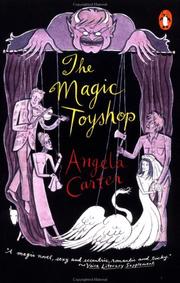
Her breakthrough novel and the most accessible of the early books: an orphaned girl in a tyrant uncle's house. The fairy-tale logic you met in the stories is already fully operational here.

The turn from gothic to full surrealism, and the first novel where Carter builds an entire unstable world. Harder than The Magic Toyshop, which is why it comes second.
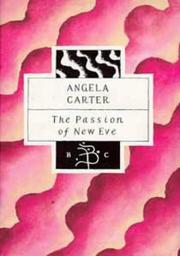
Her most confrontational book — a forced transformation across an apocalyptic America — and the clearest statement of her argument that gender is manufactured. Best read once you trust her, because it withholds comfort.
The Late Carnival Novels
IntermediateSee the mature Carter, where the same preoccupations turn generous and comic rather than punishing.
▸ Study plan for this stage
Pace: 3–4 weeks. Nights at the Circus (294 pages) in about two weeks, treating its three parts — London, Petersburg, Siberia — as three separate movements; then Wise Children (237 pages) in a week, and read it fast, because Dora Chance's patter carries best at speed.
- Carnival in Bakhtin's sense as the late organizing idea: the world upside down, the low mocking the high, bodies unruly and comic rather than punished
- Fevvers' unanswered question — is she fact or is she fiction — which makes the reader's own credulity the engine of the plot
- The arrival of the first-person comic voice: Dora's music-hall address versus the ornamented third person of the earlier novels
- Illegitimacy, twinning and doubling as a structural joke about Shakespeare, the canon, and who is permitted to inherit English culture
- The same claim about manufactured womanhood, now made through a woman who owns and profits from her own myth rather than being destroyed by it
- Comic compression of time — a whole century folded into one birthday — and why the warmest book is also the last one
- What changes when Carter's woman-on-display controls her own spectacle instead of being made into one by someone else?
- How does the London–Petersburg–Siberia movement carry the novel from artifice toward something like myth, and does the ending earn it?
- Why is Wise Children narrated by Dora rather than told from outside, and what does that voice let Carter say about high and low culture?
- Which arguments from the early novels survive into these two, and which are quietly dropped as too bleak to sustain?
- Both books end in something close to a blessing. Is that a softening, or the place the earlier work was always heading?
- Track the Shakespeare references in Wise Children and sort them into the ones played for a joke and the ones played straight.
- Read the last chapter of Nights at the Circus twice — once for the plot, once for the laughter — and write down what the laughter is doing to the story.
- Set Fevvers' self-narration in Part One beside the narration of any Bloody Chamber tale and describe the difference in who controls the telling.
- Make a two-column list: what the early novels punish, and what the late novels forgive.
Next up: With the whole of the fiction in view, the essays can finally be read as the argument the novels have spent four books staging.

A winged aerialiste, a journalist trying to debunk her, and the whole turn of the twentieth century. This is Carter at full power and the book most readers finish loving her for.
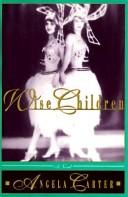
Her last novel and her warmest: illegitimate music-hall twins narrating a century of theatrical England. Placed last because its jokes about high and low culture land hardest once you know the earlier books' seriousness.
The Essays and the Argument
IntermediateRead the criticism and journalism that state directly what the fiction stages, and leave with a working account of what Carter believed.
▸ Study plan for this stage
Pace: 3–4 weeks. The Sadeian Woman is only 154 pages but argues hard — about 10 pages a day across two weeks. Shaking a Leg (641 pages) is not a cover-to-cover book: read the pieces on food, Japan and film first at ~30 pages a sitting, then keep it as a browsing companion.
- The 'moral pornographer' — Carter's claim that Sade, whatever else he is, describes sexual relations as relations of power, and that this description is usable
- Justine and Juliette as the only two scripts on offer, victim and predator, and Carter's insistence that neither is freedom
- Her distinction between myth and history: mythic versions of women are consoling lies, and a novelist's job is to demolish rather than refresh them
- Carter as a working journalist, giving food, clothes, class and cinema exactly the attention she gives to literature — the criticism has no high and low register
- How the essays retro-light the fiction: The Passion of New Eve and 'The Bloody Chamber' both read differently with the Sade argument in hand
- The materialism under the baroque surface — appetite, money and labour are always the ground of the fantasy
- What does Carter mean by 'moral pornographer', and what does she explicitly concede that Sade is not?
- Why does she reject Justine and Juliette equally, and which of her own heroines escapes both patterns?
- How does the attack on myth in The Sadeian Woman explain the specific choices she makes rewriting the tales in The Bloody Chamber?
- In the journalism, where does her attention to class and food do the same critical work as the fiction's fantasy?
- Having read the whole path, what was Carter's project — and where, concretely, do you disagree with it?
- Reread the title story of The Bloody Chamber with The Sadeian Woman open beside it, annotating the passages the essay accounts for.
- Pick three pieces from Shaking a Leg on non-literary subjects and write down the method: she is doing to a meal precisely what she does to a fairy tale.
- Write a 500-word statement of Carter's position on myth that could be defended without using the word 'feminist' once.
- Return to one story from The Bloody Chamber now, at the end of the path, and list what you did not see the first time.
Next up: That is the whole project — tales, novels and argument — and you can now say which of Carter's excesses are load-bearing and which you would cut.
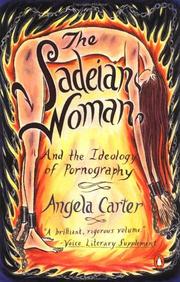
Her book-length reading of Sade as a moral pornographer — the theoretical spine under The Bloody Chamber and The Passion of New Eve. It explains the fiction's refusals.
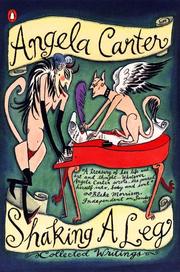
The collected journalism: food, film, Japan, class, feminism, all in the same voice as the novels. A good final stage because it shows how much of the fiction came out of reported life.
Discussion
Keep reading
Paths that share books, cover the same subject, or open a related topic.