Amos Oz Reading Order: Where to Start
Oz wrote nearly forty books across sixty years — novels, novellas, essays, journalism — and they divide cleanly into the fiction, which is domestic, and the political writing, which is argumentative. The two illuminate each other but only in one direction, so read the fiction first. The best opening is the memoir, A Tale of Love and Darkness, because it supplies the family, the city and the suicide that the novels keep circling; after that the early novels stop looking like generic Israeli realism and start looking like variations on one wound.
Start Here: The Memoir and the Early Masterpiece
IntermediateGet the biography and the historical setting in place — Jerusalem under the Mandate, the founding of the state, the kibbutz — before meeting them fictionalised.
▸ Study plan for this stage
Pace: 4 weeks. A Tale of Love and Darkness is by a wide margin the longest book in this path — give it three weeks at 30 to 40 pages a day, and expect it to circle rather than advance, because it returns to the same few scenes for hundreds of pages before it will say plainly what happened. My Michael is 2
- The memoir is the key to everything else in the path: the cramped Jerusalem flat, the scholarly father, the mother who killed herself when Oz was twelve, and the founding of a state going on in the street outside
- It is not told in order. Oz moves back and forth across four generations of a European Jewish family that ends up in Mandate Jerusalem, and the suicide is withheld almost to the last page — the delay is the structure, not coyness
- Oz was born Amos Klausner and left for a kibbutz at fourteen, taking a new name; the memoir treats that break as the founding act of the writer, which is why the kibbutz novels later read as a return to it
- My Michael is domestic on the surface and airless underneath — a 1950s Jerusalem marriage seen entirely through a wife whose inner life has turned violent while nothing outward happens at all
- The city is the same in both books, and reading them in this order makes the overlap impossible to miss: the same stone, rain, shortages, and borders a few streets away
- Oz writes about national events by keeping the camera in a kitchen. The state is nearly always present as pressure on a family rather than as subject matter
- He wrote in Hebrew and everything here is translated; several books in this path credit Nicholas de Lange, a partnership that ran for decades, so the English voice stays consistent across the whole body of work
- What does the memoir withhold about Oz's mother, and how far into the book does it hold out? Ask why that shape is more truthful than telling you at the start.
- The father and the great-uncle are scholars of a particular European kind. What does the memoir suggest that inheritance did to the boy, and what did the kibbutz offer instead?
- Hannah in My Michael has fantasies she never acts on. What are they about, and what does the novel imply she has been denied?
- Michael is decent, dull and studying rocks. Is the novel critical of him, and if so what exactly is the charge against him?
- The two books are set in the same city about twenty years apart. What has changed in Jerusalem between them, and what has not moved at all?
- Sketch the family tree on one sheet as you read the memoir — Klausners on one side, the mother's family on the other, Odessa, Vilna, Rovno, Jerusalem. Oz assumes you can hold it, and holding it unaided is genuinely hard.
- Mark the page where the memoir first mentions the mother's death and the page where it finally describes it. The distance between those two marks is the book's argument.
- After My Michael, go back to the memoir's descriptions of the flat and the neighbourhood. The novel is furnished out of the same rooms and you will recognise the furniture.
- Note the writers Oz names as his early reading and be honest about how many you know. Several are Hebrew and Russian authors with no anglophone equivalent, and the memoir assumes them.
Next up: With the family and the city in place, the three big novels can do what they actually do — put a private failure and a national argument inside the same house.

His memoir and by common consent his best book: a Jerusalem childhood, a scholarly father, a mother's suicide, and the birth of a country in the background. Read it first — every novel afterwards is legible in a way it would not otherwise be.
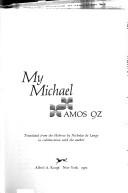
The novel that made his name: a young wife in 1950s Jerusalem retreating into violent fantasies while her geologist husband studies rocks. Read it straight after the memoir and the shared Jerusalem is unmistakable.
The Major Novels
IntermediateRead the three novels where private failure and national argument are welded together, spanning the whole length of his career.
▸ Study plan for this stage
Pace: 5 weeks, ~30 pages a day. A Perfect Peace (384 pages) is the slowest and wants two weeks. Black Box (274) goes fastest because it is all letters and you will not want to put it down. Judas (314) is short but static — mostly two or three people talking in one house — so give it ten days and do not ru
- A Perfect Peace treats the kibbutz as a working institution with a budget, a committee and a founding generation that will not hand over, rather than as a symbol of a national idea
- Oz lived on a kibbutz for around twenty-five years, writing in the mornings on a work allocation, which is why these novels get the boredom, the rotas and the small politics right
- Black Box is built entirely from letters, telegrams and lawyers' notes passing between an ex-wife, her first husband, her second and her son; the form makes every character self-serving and unreliable, and it is the funniest of the three
- Judas argues about whether the man who betrays his own side might be the one who saw furthest, and runs that argument simultaneously through Judas Iscariot, a 1948 dissenter and a student in 1959
- The 1948 strand of Judas concerns a Jewish figure who opposed establishing the state on the terms it was established; the novel puts that position at length in a character's mouth and does not settle it
- In all three, the political argument is conducted by people who are also failing at something domestic, and Oz refuses to let either one stand as a metaphor for the other
- Judas was his last novel and sits closest to the essays in the final stage — read it late and the transition is obvious
- Yonatan walks out of the kibbutz in A Perfect Peace. What is he trying to get, and does the novel think leaving gets it for him?
- In Black Box, who is telling the truth? Read each letter for what it is trying to make its recipient do rather than for what it says.
- Judas keeps asking what a traitor is. State the strongest case the novel gives for the accused, then the strongest case against — it supplies both, and neither wins.
- Shmuel has abandoned a thesis before the novel starts. Why does that particular failure make him the right listener for the old man's argument?
- Each of these novels is set in one confined space — a kibbutz, an exchange of letters, a house on a Jerusalem hillside. What does the confinement allow that a wider canvas would not?
- In Black Box, track who has actually read which letter. Several characters spend pages arguing against something they have not seen, which is both the joke and the tragedy.
- Write down the year each novel is set in — the eve of the 1967 war, the mid-1970s, the winter of 1959 — and spend ten minutes on what was happening in the country then. Oz assumes you know.
- After Judas, reread the pages where the old man first lays out his reading of Judas Iscariot, and mark honestly whether you were persuaded the first time through.
- Pick the character in each novel you liked least, then find the paragraph where Oz gives them their best case. He always does, and those paragraphs are where the books are strongest.
Next up: The next group is what Oz wrote when he took the national argument out — quieter books in stranger shapes, worth reading only once the big ones have set the register.
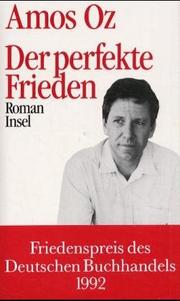
A kibbutz on the eve of the Six-Day War, a founder's son who walks out, and a newcomer who takes his place. The best of the kibbutz novels and the one that treats the collective as a real institution rather than a symbol.

An epistolary novel — letters, telegrams, legal notes — between a divorced couple, her new husband and their son. The formal constraint keeps the sentiment in check, and it is the most purely enjoyable of the novels.

His last novel: winter 1959, a student hired to talk to an old man, and an argument about whether betrayal is the same thing as seeing further than everyone else. Read it late — it is the fiction that comes closest to the political essays.
The Quieter Books
IntermediateRead the mid-career novels and the late linked stories, where the politics recedes and the writing gets stranger.
▸ Study plan for this stage
Pace: 5-6 weeks, ~25 pages a day. To Know a Woman (272 pages) and Fima (304) are conventional novels and take about two weeks each. The Same Sea is 208 pages of verse — read it in short sittings of a few pages, out loud if you can. Scenes from Village Life is a linked story collection; take one story an e
- To Know a Woman is deliberately eventless: a retired intelligence officer gives up the work, cleans the house, tends the garden, and the novel pointedly declines to hand him a mystery to solve
- Fima is the comic inversion — a man who settles the Middle East over breakfast every morning and cannot find his own keys — and it is Oz being hardest on the type of Israeli intellectual he was himself often taken for
- The Same Sea is a novel in verse with the author walking into it as a character among his own creations; it is his most formally adventurous book and the least able to stand alone
- Scenes from Village Life is eight linked stories in one invented village, each built around an absence — a person who does not arrive, a digging sound under the floor, an explanation nobody supplies
- Politics thins out across these four books and dread thickens; the late stories are closer to Kafka than to anything in the earlier realism, and readers who came for the national novels are often thrown
- The domestic detail stays exact even as the shapes get strange, which is the only thing keeping The Same Sea from reading as an exercise
- These are books to read once you already trust the writer, which is why they sit here rather than at the front of the path
- What is Yoel actually doing with his days in To Know a Woman, and why does the novel refuse to let his old profession supply a plot?
- Fima is ridiculous and the novel plainly loves him. Where is the line between the mockery and the respect, and does Oz ever cross it?
- In The Same Sea, what does putting the author among the characters get him that ordinary narration would not?
- The stories in Scenes from Village Life share a village but no plot. What accumulates across the eight, and is anything ever explained?
- Compared with the major novels, what has Oz given up in this stage, and what has he gained by giving it up?
- Read the first ten pages of The Same Sea aloud. If it does not work aloud it will not work on the page, and you will know within a quarter of an hour whether to go on.
- After Scenes from Village Life, list the thing that is missing in each of the eight stories. Seeing them side by side is the whole effect and it does not survive reading them out of order.
- Mark a scene of Fima solving the world's problems and come back to it during the final stage, when Oz is doing the same thing in his own voice and in earnest.
- Note where you got bored in To Know a Woman, then ask whether the boredom is a failure of the book or its actual subject.
Next up: Last comes the writing where Oz argues in his own voice about the country the novels have only ever shown you from inside a house.

A retired intelligence officer withdraws into gardening and domestic routine after his wife's absurd death. Quiet, static and unnervingly precise — a deliberate refusal of the big historical canvas.

A brilliant, chaotic middle-aged failure in Jerusalem who solves the Middle East every morning and cannot find his own keys. The funniest thing he wrote, and a self-portrait of a certain kind of Israeli intellectual.
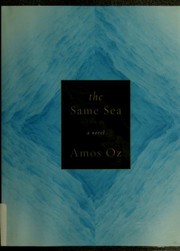
A novel in verse, with the author appearing as a character among his own creations. His most formally adventurous book; it needs the earlier novels behind it to read as anything other than an experiment.

Eight linked stories in one Israeli village, each with something missing — a person, a sound under the floor, an explanation. Late Oz at his most unsettling and least polemical.
The Political Writing
IntermediateFinish with the essays and reportage, where he argues directly for the two-state position he held for fifty years.
▸ Study plan for this stage
Pace: 2-3 weeks. All three are short. In the Land of Israel is book-length reportage best taken a chapter per sitting, since each chapter is a different set of people talking. How to Cure a Fanatic is 88 pages of two lectures and takes an evening; Dear Zealots is 152 pages of three essays and takes two.
- In the Land of Israel is reportage gathered in 1982: Oz travelled the country and the territories with a notebook and let people talk at length — settlers, Arab residents, ultra-Orthodox Jerusalemites, people in a development town — printing their arguments in their own words
- The method is most of the value. Oz largely does not rebut his interviewees inside the interview, so the book works as primary material about what people were saying in 1982 whatever you make of the author's own position
- Oz was a founding figure of Peace Now, the Israeli movement formed in 1978, and argued from shortly after the 1967 war until his death in 2018 for partitioning the land into two states; these three books are arguing for that position, not describing it neutrally
- How to Cure a Fanatic is two lectures treating fanaticism as a psychological condition rather than a doctrine — his claim is that it precedes whatever cause it attaches to, and that humour and imagination are the things it cannot survive
- Dear Zealots collects three late essays, on religious and secular zealotry, on what he took Jewishness to be, and on the conflict; it restates arguments he had been making for decades and openly says so
- This is one participant's case in a long-running and contested argument. What is here is Oz; a reader who wants the opposing positions argued at the same strength will need to go outside this path for them
- Read in this order the fiction and the essays stop looking like two separate careers: the novels put fanatics in kitchens, and the essays name what the novels were showing you
- Which interview in In the Land of Israel is hardest to dismiss, and does Oz leave it standing unanswered?
- What is Oz's actual working definition of a fanatic, and does it apply to anyone in the book he approves of?
- The reportage was gathered in 1982. Which of the arguments recorded in it are still made in almost the same words, and which have disappeared entirely?
- Dear Zealots restates positions from decades earlier. Does Oz acknowledge anywhere what has not worked, and what does he do with the acknowledgement?
- Having read the fiction first, which novel does each of these books send you back to, and what does it change about the novel?
- Read the settler chapters and the ultra-Orthodox chapters of In the Land of Israel in one sitting, then write one sentence per speaker summarising each case as that speaker would want it summarised.
- Note when each book was written — the reportage in 1982, the lectures at the start of the 2000s, the essays at the very end of his life — and what happened in between. They are responses to events and read oddly without them.
- Apply the definition from How to Cure a Fanatic to a character in Judas or A Perfect Peace and see whether it holds up against his own fiction.
- Write down one position in these books you disagree with, then find the strongest version of it Oz himself supplies. He tends to give his opponents a better run than his admirers expect.
Next up: That is Oz whole — memoir, novels, stories and argument — and it is enough to pick up anything else of his, or any of the writers he was arguing with, and know exactly where he stood.

Reportage from 1982: he travels the country and the territories and lets settlers, Arabs, ultra-Orthodox Jerusalemites and development-town residents talk at length. The single most useful book here for understanding the arguments the fiction only gestures at.
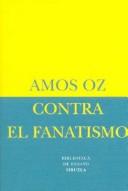
Two short lectures on fanaticism and compromise, and the most compact statement of his politics. Read it after In the Land of Israel: it is the conclusion the reportage was working toward.

Three late essays, published shortly before his death, on fanaticism, Jewishness and the conflict. The last word from a writer who had been making the same unfashionable argument for half a century, and the right place to stop.
Discussion
Keep reading
Paths that share books, cover the same subject, or open a related topic.