Amelia Peabody Reading Order: Where to Start
There are twenty Amelia Peabody mysteries and only one order that works: publication order, which is also chronological order, because the Emerson family ages in real time. A child born in book three is a young man solving cases by book nine and married by book twelve, and the running jokes, feuds and romances all accumulate. Reading out of order does not spoil a mystery so much as spoil a family. This path covers the first twelve, which take the series from 1884 to the First World War and include the stretch most readers consider its peak.
Start Here: The First Three
BeginnerMeet Amelia, Emerson and the household, and get the Victorian Egyptology setting and the arch first-person voice fixed in your ear.
▸ Study plan for this stage
Pace: Five weeks, about 28 pages a day. Crocodile on the Sandbank is 281 pages, The Curse of the Pharaohs 357 and The Mummy Case 320. Do not rush the first one: the voice takes fifty pages to click, and readers who bounce off this series almost always bounce there.
- Amelia narrates in a deliberate parody of the Victorian lady traveller's memoir — orotund, self-congratulatory, endlessly certain — and the comedy lives in the gap between what she reports and what you can plainly see
- The Egyptology is real. Peters held a doctorate in the field under her own name, and the sites, the excavation seasons, the permits and the professional feuds are researched rather than decorative
- The murder plots are the weakest part of this series and always have been. If you are reading for the mystery you will be disappointed by book four; the household is what you stay for
- The Emersons age in real time from here on, so the internal clock matters more than publication dates — a child in book three is a working archaeologist later in this path
- Emerson exists to shout and be shouted at; the marriage is written as a permanent argument between two people who are never once in doubt about each other
- Ramses arrives in The Mummy Case as a small boy who talks like a Victorian professor, and the series quietly reorganises itself around him without ever announcing that it has
- The seasonal rhythm — England in summer, an Egyptian dig in winter — is established in the second book and becomes the skeleton of every volume after it
- Where in Crocodile on the Sandbank does Amelia tell you something about herself that the scene has already disproved? Find three.
- Evelyn is a conventional Victorian heroine and Amelia is not. What is the first novel doing by putting them in the same book?
- The Curse of the Pharaohs uses a locked-room structure. Does the solution hold up, and does it matter to your enjoyment either way?
- How much of what Ramses says in The Mummy Case is a joke at his expense, and how much is the book telling you he is right?
- By the end of the third book, what do you actually know about Egyptian archaeology in the 1880s that you did not before?
- Start a one-page household chart on day one — Amelia, Emerson, Evelyn, Walter, Ramses. It will run to two pages by the end of this path and you will need it.
- Mark the page in Crocodile on the Sandbank where the voice stops being an obstacle and becomes the pleasure. Readers put it in wildly different places.
- Keep a list of the real sites and excavations named, then look one up. These books hold up to checking, which is rare in the genre.
- Write your guess at the solution to The Curse of the Pharaohs halfway through, then note whether being right or wrong changed how much you enjoyed the second half.
Next up: The household is assembled and the seasonal rhythm is set; the next three books test how much weight that formula can take.
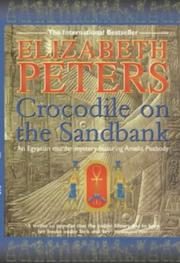
The only correct starting point: a wealthy Victorian spinster goes to Egypt, acquires a companion, and meets a shouting archaeologist she will spend nineteen more books married to. It also sets the voice — Amelia narrates her own memoirs, and is a spectacularly unreliable judge of herself.

Five years on, a haunted excavation and a genuine locked-room structure. Read it second: it establishes the seasonal rhythm — England in summer, a dig in winter — that the whole series runs on.
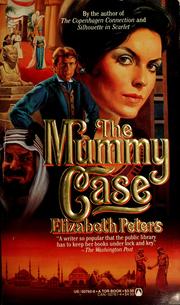
Introduces Ramses, the appalling and brilliant child who becomes the series' second centre of gravity. Skipping this book makes the next fifteen incomprehensible.
The Early Run
BeginnerSettle into the formula, meet the recurring antagonists, and follow the family through its most farcical stretch.
▸ Study plan for this stage
Pace: Five weeks, about 30 pages a day. Lion in the Valley is 360 pages, The Deeds of the Disturber 352 and The Last Camel Died at Noon 352. Three near-identical lengths, but the third is a different kind of book entirely — give it the same time and expect a different experience.
- Sethos, the Master Criminal, is both the series' running joke and its most durable device: a villain Amelia cannot see clearly, because he is the one person who will not be straight with her
- Amelia's romantic misreadings are systematic rather than occasional. She is a competent detective and a hopeless observer of anybody's feelings, including her own
- The Deeds of the Disturber moves the cast to London, which proves how much of the pleasure was the setting. Most readers rank it lowest of the early books, and it still earns its place for the relatives it introduces
- The Last Camel Died at Noon is an open pastiche of H. Rider Haggard's lost-race adventures and is not really a mystery at all. Peters is playing a genre game here, and it pays off several books later rather than in this one
- Recurring workmen, servants and rivals accumulate across this stretch into a standing cast the mysteries can draw on, which is the practical reason the household matters more than the murders
- The formula locks in here — a dig, a corpse, Amelia's belt of tools, Emerson's rage, Ramses investigating unsupervised — so notice its shape, because the next stage deliberately breaks it
- Sethos is written to be admired. What does the series get out of a villain its heroine half likes?
- In The Deeds of the Disturber, how much of the discomfort in London belongs to the characters and how much to the book?
- The Last Camel Died at Noon abandons the mystery structure completely. Does the series survive it, and did you want the structure back?
- Track one running gag across all three — the parasol, Emerson's swearing, the Egyptological feuds. What changes each time it recurs?
- Ramses is becoming the source of the plot rather than a complication in it. Where exactly in these three does that shift happen?
- Add the new relatives and dependants from The Deeds of the Disturber to your household chart. Several return much later and nothing in the text will remind you who they are.
- Read the first chapter of The Last Camel Died at Noon, then a chapter of any Rider Haggard adventure. The pastiche is exact and much funnier once you have heard the original.
- Write one sentence per book on what Amelia got wrong about somebody's feelings, and check it against what actually happened.
- If a mystery plot bores you here, keep reading and note whose scenes you were skipping ahead to. That is the series you are actually reading.
Next up: You now know the formula well enough for the next three books to land, because that is where Peters starts taking the people inside it seriously.
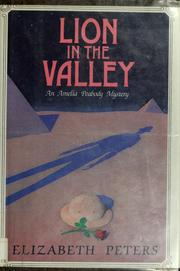
The Master Criminal plot comes to a head, and Amelia's romantic misreadings are at their funniest. It resolves a thread running from The Mummy Case, so keep the order.
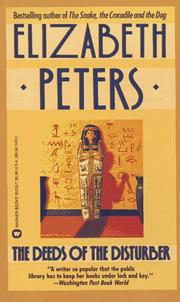
The one set almost entirely in London, with a mummy's curse in the British Museum. Often ranked the weakest of the early books, but it introduces family members who matter later.
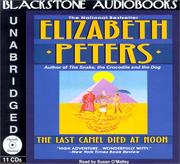
A deliberate H. Rider Haggard pastiche — a lost civilisation in the Sudan — and completely unlike the rest of the series. Peters is playing a game with the genre here, and it pays off much later in the sequence.
The Peak Years
IntermediateRead the stretch where the series stops being a comedy of manners with corpses and starts taking its own characters seriously.
▸ Study plan for this stage
Pace: Six weeks, about 30 pages a day. The Snake, the Crocodile and the Dog is 432 pages, The Hippopotamus Pool 384 and Seeing a Large Cat 472 — the longest stretch on this path. Slow down for Seeing a Large Cat in particular; it changes how the books are narrated.
- The amnesia plot in The Snake, the Crocodile and the Dog ought to be a disaster and is instead the emotional centre of the series, because it forces Emerson to fall in love with his own wife again in front of her
- That book works only because six previous volumes built the marriage, which is the clearest proof that the family chronicle rather than the mystery is the series' real form
- The Hippopotamus Pool functions as a soft restart — a jump in time, a new dig, new permanent characters — and is the only other point at which someone could reasonably begin
- Nefret's arrival permanently changes the household's arithmetic, and the books treat her as a third child rather than a guest
- Seeing a Large Cat introduces Manuscript H, third-person sections following Ramses that Amelia did not write and cannot control. At that moment the series stops being one unreliable narrator's memoir
- Manuscript H exists because Ramses' story can no longer be told through his mother's ignorance; the structure changed to accommodate a character who had outgrown the narration
- The mysteries in this stretch are no better than the earlier ones. What has changed is that you now care what happens to the people solving them
- In The Snake, the Crocodile and the Dog, what does Emerson without his memory reveal about Emerson with it?
- Amelia is at her most unreliable here. Name a point where you can see something she cannot, and work out how Peters made it legible through Amelia's own narration.
- Read the first thirty pages of The Hippopotamus Pool as if you had never met these people. What would you miss, and what would you not even notice missing?
- What can Manuscript H tell you that Amelia's narration structurally cannot?
- Nefret and Ramses are being set up years ahead of anything happening. Where do you first see it, and does Amelia?
- When Manuscript H first appears, note the page and the change of pronoun. It is the most important formal decision in the series and it is announced very quietly.
- Add an age column to your household chart. Ramses' age in a given book explains most of that book's plot.
- After The Snake, the Crocodile and the Dog, reread the first scene between Amelia and Emerson in Crocodile on the Sandbank. Seven books have made it a different scene.
- For each book in this stage write one line on the murder plot and one on what happened to the family, then compare the two columns at the end.
Next up: The household is now the engine; the last stage drives it into the twentieth century, into a war, and to the point where you can stop.
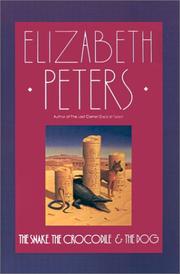
An amnesia plot that could have been ridiculous and is instead the emotional high point of the middle books. Many long-time readers name it their favourite; it depends entirely on the marriage built over the previous six.
A new decade, a new dig at Thebes, and the arrival of characters who become permanent. It functions as a soft restart, which makes it the one book you could just about begin with — but you would lose a great deal.
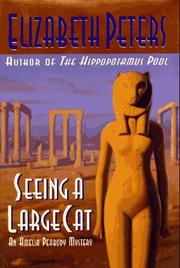
The first book to include passages from Manuscript H, giving you Ramses' point of view alongside Amelia's. That structural change drives everything in the rest of the series.
Toward the War, and Where to Stop
IntermediateFollow the family into the twentieth century and the wartime books, reaching the volume most readers consider the series' summit.
▸ Study plan for this stage
Pace: Six weeks, about 31 pages a day. The Ape Who Guards the Balance is 408 pages, The Falcon at the Portal 383 and He Shall Thunder in the Sky 528. Treat the last two as one book — The Falcon at the Portal ends on an unresolved rupture, and reading anything in between is a mistake.
- Stop here. There are twenty Amelia Peabody novels and this path covers the first twelve; He Shall Thunder in the Sky is the summit, and the remaining eight, while perfectly enjoyable, never reach it again. You are not leaving a story unfinished by putting the series down at this point
- What changes if you carry on is the ratio: the later books lean harder on wartime espionage and on a cast that keeps expanding, and the domestic comedy that made the early volumes thins out
- The Ape Who Guards the Balance contains a death the series did not have to include, and nothing after it is quite as light
- The Falcon at the Portal is the darkest volume, built on an accusation against a family member and a marriage breaking in public. It is deliberately unpleasant and it deliberately does not resolve
- He Shall Thunder in the Sky pays off roughly eight books of setup at once — Cairo in 1914, a real war, and a long deception you have been half-watching for years
- The Egyptology stays genuine even as the plots turn geopolitical; the Valley of the Kings material is tied closely to the real excavation history of the period
- Ramses is the effective protagonist of these three books, and Amelia's narration has become partly a way of not telling you what he is doing
- The Ape Who Guards the Balance kills someone it did not have to kill. What does that buy the series?
- The Falcon at the Portal spends its whole length making you uncomfortable. Is it a bad book or a book doing a hard job? Decide before you open the next one.
- In He Shall Thunder in the Sky, how far back can you trace the deception once you know it? Find the earliest scene that only makes sense in hindsight.
- The war reaches the family here. Is 1914 Cairo handled as history or as backdrop, and what is your evidence?
- Having read twelve of twenty, what would you actually be reading the remaining eight for? If you cannot answer that, you have your answer.
- Read The Falcon at the Portal and He Shall Thunder in the Sky back to back with nothing in between. The first is engineered to be close to unbearable without the second.
- After the reveal in He Shall Thunder in the Sky, go back through Seeing a Large Cat and The Ape Who Guards the Balance and mark the scenes that were doing work you could not see at the time.
- Update the household chart one last time and count how many named characters have joined since Crocodile on the Sandbank. That number is the series' actual subject.
- Write two sentences on why you would or would not read on, then put the series down for a month before deciding. Readers who continue straight away tend to feel the drop; readers who wait tend to enjoy the later books fine.
Next up: You have read the arc that makes these twenty volumes worth having, and if you do go on it should be for the family, in publication order, with no expectation of another summit.
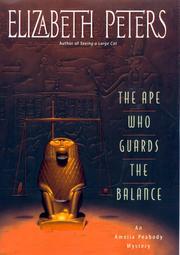
The Valley of the Kings, a stolen papyrus, and the return of an old enemy. It also contains a death that changes the tone of everything after it.
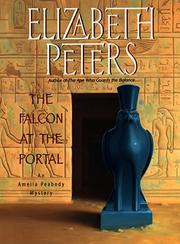
The darkest book in the series, built on an accusation against a family member and ending on an unresolved rupture. It is the setup for the next volume and should not be read alone.
Cairo in 1914, espionage, and the resolution of everything The Falcon at the Portal broke. Widely regarded as the best of the twenty, and the natural place to stop — the remaining eight books are enjoyable but never top this. If you carry on, keep going in publication order.
Discussion
Keep reading
Paths that share books, cover the same subject, or open a related topic.