All Creatures Great and Small Reading Order: Where to Start
James Herriot wrote eight books about being a Yorkshire vet, and then his American publisher combined them in pairs and gave them new titles, which is why catalogue records for this series carry baffling numbering like #1-2 and #3-4. There is nothing wrong with either edition — but you have to pick a lane and stay in it, because All Creatures Great and Small and If Only They Could Talk are not two books, they are one book and half of it. The simplest rule: the American volume All Creatures Great and Small contains British books 1 and 2, All Things Bright and Beautiful contains 3 and 4, All Things Wise and Wonderful contains 5 and 6, and books 7 and 8 — The Lord God Made Them All and Every Living Thing — are the same in both editions. This path takes the American sequence first, because it is the one most readers own and the one the series is named for, then lists the British originals for anyone who prefers the shorter volumes.
Start Here: The American Sequence
BeginnerRead the two omnibuses that made Herriot famous, and meet Siegfried, Tristan and the Dales practice.
▸ Study plan for this stage
Pace: Three to four weeks for the two omnibuses — All Creatures Great and Small is 445 pages and All Things Bright and Beautiful 384, but neither is a book you should push through. Herriot writes in three-to-six page episodes, so a chapter or two a night is the natural unit and the one the prose was built
- The edition trap first, before anything else: the American All Creatures Great and Small contains the British books If Only They Could Talk and It Shouldn't Happen to a Vet complete. If you own this omnibus, do not buy those two — you would be paying twice for the same pages
- The episodic structure. Herriot is not writing a novel with a plot; each chapter is a self-contained call-out, and the arc is cumulative rather than narrative. Judging chapter three by whether it advances anything is judging the book by the wrong standard
- Siegfried Farnon as the engine of the comedy — he contradicts an instruction within hours of giving it, and the running joke is that he never once notices he has done it
- Tristan as the second register: where Siegfried is chaotic by temperament, Tristan is idle by policy, and the exam-failure thread running through the early chapters is the closest thing the first omnibus has to a plot
- The 1937 setting matters technically, not just nostalgically. There are almost no antibiotics, so most of the veterinary drama is diagnosis and physical intervention — the arm in the cow, the calving at 3am — rather than medicine
- Herriot the narrator is a constructed persona. The real man was James Alfred Wight, the real practice was in Thirsk, and the modesty of the narrating voice is a deliberate technique, not simply the author being humble
- The class geography of the Dales: hill farmers, gentleman clients, Mrs Pumphrey and Tricki Woo. Herriot moves between all of them in a day and the comedy usually lives in the gap
- Which British volumes does each of these two American books contain, and which titles must you now avoid buying?
- What is Herriot's first impression of Siegfried on the day he arrives in Darrowby, and how quickly is it complicated?
- How does Herriot handle the fact that many of his early cases end badly — what does he do on the page when an animal dies?
- By the end of All Things Bright and Beautiful, how has the courtship and marriage of Helen changed the shape of the stories?
- Which of the Tricki Woo chapters is funny at Mrs Pumphrey's expense and which is funny at Herriot's? The distinction is the whole ethic of the book
- Before you read a page, write down which edition you are holding and which British volumes it contains. Keep that note in the book. Every purchasing mistake in this series comes from not doing this once at the start.
- Pick any single chapter and mark where the case ends and the reflection begins. Herriot uses the same two-part shape almost every time, and seeing it once makes the technique visible for the rest of the series.
- Write two hundred words on a chapter where an animal dies. Herriot is much less sentimental than his reputation suggests, and pinning down what he actually does at those moments is the fastest correction to the cosy-vet expectation.
- Keep a running list of Siegfried's contradictory instructions across the first omnibus. It is a genuine comic structure, and having it written down makes the second omnibus funnier.
Next up: With Darrowby, the practice and the marriage established, the remaining American volumes can move Herriot out of the Dales entirely and then bring him back changed.
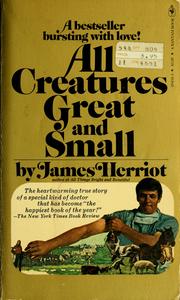
The starting point for most readers: a newly qualified vet arrives in Darrowby in 1937 and discovers his employer is a magnificent lunatic. Contains British books one and two, If Only They Could Talk and It Shouldn't Happen to a Vet — so do not buy those as well.
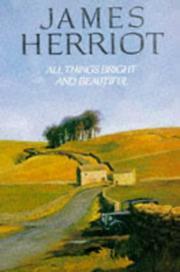
Second in the American sequence, containing British books three and four. Herriot is married, established and funnier, and the farm calls have settled into the rhythm the series is loved for.
The Rest of the Sequence
BeginnerFinish the series through the RAF years and Herriot's late career, ending with the book he wrote forty years after the first.
▸ Study plan for this stage
Pace: Four to six weeks for the remaining three — All Things Wise and Wonderful (440 pages), The Lord God Made them All (380) and Every Living Thing (364). The wartime volume is the one to slow down on, because its structure is doing something the earlier books do not. Keep the same nightly-chapter rhythm
- The frame narrative of All Things Wise and Wonderful: Herriot is in RAF training, and the Darrowby stories are told as memories from a bunk. It is the only structurally ambitious book in the sequence and the reason this volume is worth reading attentively rather than comfortably
- What the frame does to the tone — the Yorkshire material is now explicitly something that might be lost, which retrospectively colours the comedy of the earlier books
- Books seven and eight are identical in both editions. The repackaging stops here, so from The Lord God Made them All onward there is no edition decision left to make
- Post-war modernisation in The Lord God Made them All: penicillin and the new drugs arrive, and much of the heroic physical veterinary work of the 1930s simply stops being necessary. Herriot registers this as loss as well as progress
- The two long travel sections in The Lord God Made them All — the Russian and Turkish livestock voyages — genuinely divide readers, because they take the book out of the Dales entirely
- Every Living Thing was published in 1992, forty-odd years after the events and eleven years after book seven. The valedictory tone is not accidental; it is a man writing the last one and knowing it
- Olly and Ginny, the farmyard cats in Every Living Thing, are the emotional payoff the whole series has been building toward, and the restraint with which Herriot handles them is the case for him as a real writer
- Why does Herriot frame All Things Wise and Wonderful inside the RAF training, and what would the same stories lose told straight?
- What has changed about veterinary practice by The Lord God Made them All, and what does Herriot think has been lost along with the difficulty?
- Do the Russian and Turkish voyages belong in the book? Make the case both ways before deciding
- What is different about the narrating voice in Every Living Thing, written decades after the events it describes?
- Across all five American volumes, what actually changes — in the practice, in Herriot himself, in the Dales — and what deliberately does not?
- In All Things Wise and Wonderful, mark every point where the book cuts between the RAF present and the Darrowby past. Count them. The pattern is more deliberate than it feels while reading.
- Write a paragraph arguing that the travel chapters in The Lord God Made them All should have been cut, then a paragraph arguing they are the best thing in the book. Both are defensible and holding both is the honest position.
- Sketch a timeline of Herriot's life as the books present it — arrival, marriage, children, war, return, late practice — and note where the eight books fall on it. The sequence is not as continuous as it reads.
- After finishing Every Living Thing, go back and reread the first chapter of All Creatures Great and Small. The distance between the two voices is the real achievement of the series.
- List which of the eight British books you have now read inside the omnibuses. This is what stops you double-reading if you go on to stage three.
Next up: You have now read the whole series in its American form — the next two stages exist only to explain the British originals, which you may want to know about without needing to read.
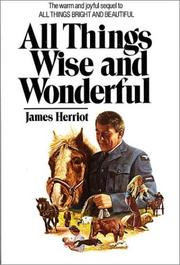
Third in the American sequence, containing British books five and six. The wartime RAF training frames the Yorkshire stories as memories, which is the most structurally interesting thing Herriot ever did.
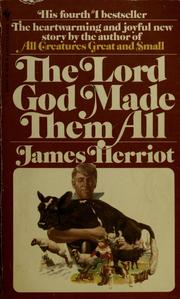
Book seven, and identical in both editions — there is no repackaging from here on. Post-war practice, the arrival of modern drugs, and two long travel sections that divide readers.
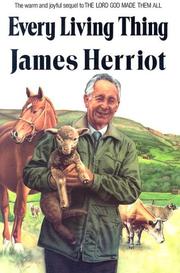
Book eight, published in 1992 and the last he wrote. Identical in both editions. The tone is valedictory and the cat Olly is the reason people cry at the end; read it last, whichever lane you took.
The British Originals, If You Prefer Them
BeginnerTake the alternative lane — eight shorter volumes in their original form — and know exactly which American omnibus each one sits inside.
▸ Study plan for this stage
Pace: This is an alternative lane, not a continuation. If you already read the American omnibuses in the first two stages, you have read every word of these four books and should skip to Beyond the Practice. If you are starting here instead, budget three to four weeks: If Only They Could Talk is 224 pages
- The mapping, which is the entire point of this stage: If Only They Could Talk plus It Shouldn't Happen to a Vet equals the American All Creatures Great and Small. Let Sleeping Vets Lie plus Vet in Harness equals All Things Bright and Beautiful
- Why anyone would prefer these: 224-page volumes finish, and each ends where Herriot originally chose to end it. The omnibus seams are invisible in the American editions, so the original pacing is only visible here
- If Only They Could Talk (1970) is the true first book, and it opens with the calving scene that establishes the entire register of the series — cold, physical, unsentimental, funny
- It Shouldn't Happen to a Vet carries the Helen courtship and the strongest run of Tristan material, which is why it is often named the funniest single volume
- Let Sleeping Vets Lie is the settling-down book: married, established, and the practice growing. Quieter than the two before it, deliberately
- Vet in Harness is where the comic writing peaks in the original sequence, before the war material changes the tone permanently
- The British titles are all veterinary puns; the American ones are all lines from the hymn. That difference in branding tells you exactly how the two publishers understood the books
- Which American omnibus does each of these four volumes sit inside, and can you state the mapping without checking?
- What is the opening scene of If Only They Could Talk, and what does Herriot establish about the job in those first few pages?
- Where does It Shouldn't Happen to a Vet end, and why is that a natural stopping point that the omnibus edition erases?
- Reading the originals separately, does the series feel differently paced than the omnibus version suggests? Where specifically?
- Why did the American publisher combine them at all, and what did that decision gain and cost?
- Before buying anything, write down the four-to-two mapping on the inside cover of whichever edition you own. This single note prevents the only real mistake available in this series.
- Find the exact page where It Shouldn't Happen to a Vet ends, then find the corresponding point inside All Creatures Great and Small. Seeing the invisible seam is the most convincing demonstration of what the omnibus did.
- Read the first chapter of If Only They Could Talk and the first chapter of Vet in Harness back to back. Four years of writing separate them and the difference in confidence is measurable.
- Write two hundred words on whether the shorter volumes are better paced than the omnibuses. There is a real answer and it is worth reaching it yourself.
Next up: Two British volumes remain before the editions converge again, and they are the ones that take Herriot out of Yorkshire and into the RAF.
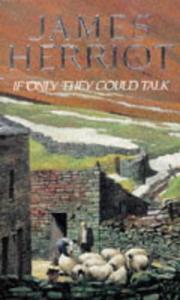
The 1970 original and the true first book. This is the first half of All Creatures Great and Small: read one or the other, never both.
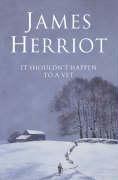
British book two, and the second half of All Creatures Great and Small. Tristan's escapades and the courtship of Helen.
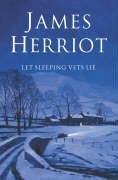
British book three, the first half of All Things Bright and Beautiful. Marriage, and the practice expanding.
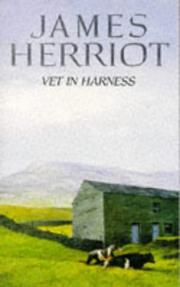
British book four, the second half of All Things Bright and Beautiful. The most consistently funny of the original volumes.
The Wartime Originals
BeginnerComplete the British sequence up to the point where the two editions converge again.
▸ Study plan for this stage
Pace: Two to three weeks for Vets Might Fly (255 pages) and Vet in a Spin (330). Read them consecutively — the RAF frame runs across both and restarting it after a gap costs you the effect. Again: if you read All Things Wise and Wonderful in the American sequence, you have already read both of these and s
- The mapping again, and this is the last one you need: Vets Might Fly plus Vet in a Spin equals the American All Things Wise and Wonderful. After these two volumes the editions converge permanently
- Vets Might Fly opens the RAF material — training in London, the physical drills, the sheer strangeness of a Yorkshire vet in uniform — with the Darrowby stories arriving as memory
- Reading the wartime material split across two volumes rather than fused into one 440-page omnibus changes the balance noticeably: the frame is more prominent per volume and harder to skim past
- Vet in a Spin carries the flight training and the medical discharge, which is the mechanism that returns Herriot to the practice and makes the last two books possible
- Herriot's war is not a combat story and never pretends to be. The tension is separation from Helen and the newborn child, and the honesty about that is what keeps the book from being a boys-own account
- After Vet in a Spin the sequence continues with The Lord God Made them All and Every Living Thing, which are the same books in both editions — so the British lane simply merges back into stage two
- What does the RAF frame do to the Yorkshire stories that a straight chronological telling would not?
- What actually happens to end Herriot's RAF service, and how does he handle the anticlimax of it?
- Read as two separate volumes, does the wartime material feel better or worse proportioned than the single American omnibus?
- Which of the remembered Darrowby chapters in these two books would you have cut, and what does your answer say about what you want from the series?
- Where exactly do the British and American editions converge, and what do you read next in either lane?
- Write out the full eight-to-five mapping from memory — all eight British volumes against the five American ones — and check it against the path. If you can do this, you cannot mis-buy this series.
- In Vets Might Fly, mark the transitions between RAF present and Dales memory, then compare how frequent they are against the second half of Vet in a Spin. The rhythm shifts and it is worth noticing where.
- Write a paragraph on what Herriot chooses not to say about the war. The omissions are consistent and they are a stylistic decision.
- Once you finish Vet in a Spin, go straight to The Lord God Made them All in stage two. Note that nothing needs re-reading — that is the convergence working.
Next up: Both lanes now end in the same place, which leaves only the one Herriot book that belongs to neither sequence.
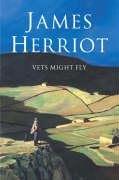
British book five, the first half of All Things Wise and Wonderful. RAF training in London, with Darrowby remembered from a bunk.
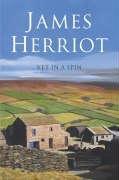
British book six, the second half of All Things Wise and Wonderful. After this the numbering stops diverging — carry on with The Lord God Made Them All and Every Living Thing above.
Beyond the Practice
BeginnerRead the one Herriot book that sits outside the sequence entirely.
▸ Study plan for this stage
Pace: An evening or two. James Herriot's Yorkshire is 224 pages and heavily illustrated — it is a book to move through slowly and look at rather than read straight. There is no reason to hurry it and every reason to save it until the Dales already mean something to you.
- This is not a memoir and not part of the numbered sequence. It is a guided tour of the country the books are set in, written between volumes and illustrated throughout
- The real geography behind the fiction: Darrowby is invented, the landscape is not, and this book is where Herriot connects the two directly
- Written in 1979, between The Lord God Made them All and Every Living Thing, which places it at the point of maximum fame — and the tone of a man showing visitors around his own county is audible
- Reading it out of order costs nothing narratively but costs everything emotionally: the places only carry weight if you have read the stories that happened in them
- The photographs change how you read the earlier books. The moors and the drystone walls stop being a generic rural backdrop and become a specific, difficult, physically real place to drive a car through at 3am
- Herriot's non-narrative prose is a different instrument — descriptive rather than anecdotal — and reading it shows how much of the series' effect came from the episodic structure rather than the sentence-level writing
- Which locations in this book do you recognise from specific chapters of the series, and does the real place match what you had imagined?
- How does Herriot write differently when there is no case, no client and no animal to organise the chapter around?
- What does seeing the actual terrain add to your understanding of the night calls in the early books?
- Would this book work at all for someone who had not read the series? What does that tell you about what it is for?
- Pick three photographs and find the chapter in the series each one belongs to. Some are direct; some require you to reconstruct the drive.
- After looking at the moorland sections, reread one night-call chapter from All Creatures Great and Small. The cold and the distance stop being figures of speech.
- Write two hundred words on the difference between Herriot describing a place and Herriot telling a story set in it. The gap is instructive about what kind of writer he actually was.
- Draw a rough map of Darrowby and the surrounding farms as you have imagined them across the series, then compare it to the real geography this book presents. What you got wrong is more interesting than what you got right.
Next up: This is the end of the path — both editions, all eight books, and the county itself — and the natural next move is to reread If Only They Could Talk, which reads completely differently once you know where it is all heading.

Not a memoir but a guided tour of the country the books are set in, written between volumes and illustrated throughout. Optional, and best saved until the Dales already mean something to you.
Discussion
Keep reading
Paths that share books, cover the same subject, or open a related topic.