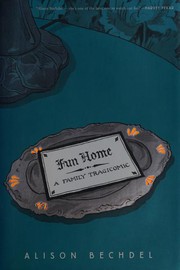
Start with Fun Home. It is self-contained, around two hundred and thirty pages, and the most achieved work she has produced: a memoir about her father Bruce, a small-town funeral director and English teacher who was closeted, who died under a truck a few months after she came out to her parents, and whose death the book circles without ever settling the question of whether it was an accident.
The alternative is to start where her career started, with the comic strip Dykes to Watch Out For, and that is the wrong order for two reasons. The strip ran for twenty-five years and amounts to a great deal of reading before it repays you, and Fun Home is the book that will tell you within twenty pages whether her method — panels stacked with textual evidence, everything routed through Joyce, Proust, Wilde and Camus — is something you want more of.
The three memoirs, in order
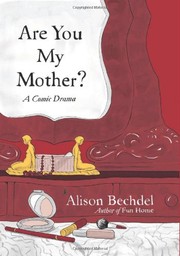
Fun Home first. Then Are you my mother?, published six years later, which does for her mother what the first book did for her father — except that where Fun Home used literature as its scaffolding, this one uses psychoanalysis, principally the work of Donald Winnicott, and it folds in the process of writing Fun Home itself. It is the most divisive of the three. Readers who loved the first book for its emotional force often find the second one airless; readers who loved it for its formal ingenuity often prefer the second. Read it if the method interested you as method.
The Secret to Superhuman Strength is the third and the easiest. It is a history of her own life through exercise obsessions — running, skiing, karate, cycling, yoga — braided with Wordsworth, Coleridge, Kerouac and Margaret Fuller, and it is in full colour, coloured by Holly Rae Taylor. It is looser and funnier than either predecessor and is a perfectly good third book.
Dykes to Watch Out For: read the omnibus
The strip ran from 1983 to 2008 and is the work she spent most of her life on. The way in is The Essential Dykes to Watch Out For, which collects the continuing storyline — Mo, Lois, Sydney, Ginger, Sparrow and the rest, ageing in something close to real time through twenty-five years of American politics — in a single volume with a new introductory strip. It is close to four hundred pages and it is the version to read.
The individual collections listed here — More dykes to watch out for, New improved! Dykes to watch out for, Spawn of dykes to watch out for, Unnatural dykes to watch out for, Hot, throbbing dykes to watch out for, Split-level dykes to watch out for, Post-dykes to watch out for, Dykes and sundry other carbon-based life-forms to watch out for and Invasion of the dykes to watch out for — are the original serial volumes, and they overlap heavily with the omnibus. Buying both means buying most of the same strips twice. Read them only if you want the standalone gag strips the omnibus leaves out, or if you want the run in its original instalments. The indelible Alison Bechdel is different in kind: a scrapbook of process material, sketches and commentary, and it is genuinely worth having once you already care.
What is missing
Her first collection, published in 1986 and simply titled Dykes to Watch Out For, has no usable record in our catalogue. That is where the earliest strips were gathered, including the 1985 strip that produced what became known as the Bechdel test — a rule Bechdel has always credited to her friend Liz Wallace, and whose attachment to her own name she has said makes her uneasy. The omnibus is the practical substitute.
Content
Fun Home deals with a probable suicide, with a father's sexual relationships with teenage boys, and with obsessive-compulsive disorder in childhood, all in plain and unsensational terms. Are you my mother? is largely about therapy and the failure of a mother to be emotionally available. More graphic-memoir reading is on Discover.
Follow the full ordered path here: Alison Bechdel Reading Order: Where to Start and What Order to Read Her Books In.