Alex Cross Reading Order: Where to Start
The Alex Cross novels run past thirty volumes, and no honest reading order pretends you should read all of them. What matters is that the early books are not interchangeable: several villains span two or three novels, and the sequence only pays off if you take those in publication order. This path covers the first twelve, which is where the recurring antagonists live and where the writing is at its strongest, and then tells you where you can safely start dipping in and out instead.
Start Here: The Two Everyone Knows
BeginnerMeet Cross, his family and Washington DC, and understand why the first two books are a pair rather than a start and a sequel.
▸ Study plan for this stage
Pace: Two weeks, about 65 pages a day. Along Came a Spider is 448 pages and Kiss the Girls 464, but Patterson writes in two-to-four-page chapters, so both read far faster than the totals suggest. Read them back to back with no gap.
- Patterson's unit of construction is the chapter, not the scene: two to four pages, one point of view, a hook on the last line, which is why a 450-page book goes down in two or three evenings
- Cross is deliberately unusual for 1993 crime fiction — a Black psychologist with a doctorate working homicide in DC and living with his grandmother — and the books never quite decide whether that is characterisation or credentials
- Both novels alternate Cross's first-person narration with third-person chapters inside the killer's head, so you always know more than he does and the suspense is waiting for him to catch up
- Gary Soneji is not disposed of at the end of Along Came a Spider, and that single decision is what turns a standalone into a series
- Kiss the Girls moves the pattern out of Washington and gives Cross a second lead in Kate McTiernan, establishing that the books work best when someone else can carry chapters alone
- The unsolved murder of Cross's wife Maria is planted early and then left alone for a decade of novels; it is the only long thread the series genuinely keeps
- Each book opens on a case already in progress — no procedural build-up, just a body and a countdown — and that is the template every later entry varies
- Along Came a Spider offers at least two competing explanations of Soneji. Which does the novel finally endorse, and which does Cross believe?
- What does the long trial section in the middle of Along Came a Spider do that a straight chase could not, and does it stall the book or set up the ending?
- Kate McTiernan gets herself out before Cross reaches her. What does the novel gain by refusing to let him rescue her?
- Count the chapters told from a killer's point of view in each book. What does that share tell you about whose story Patterson thinks he is writing?
- What is established about Cross's household — Nana Mama, Damon, Jannie, the piano, the porch — and how much of it is actually tested in these two books?
- Time yourself on the first fifty pages of Along Came a Spider and use that rate to plan the rest of the path. Patterson's pace is the biggest single variable in how long this takes.
- Keep a running list of every villain still alive on the last page. It will be short, and it is the map of the next two stages.
- Write down what you think happened to Soneji at the end of Along Came a Spider, then check it when you reach Cat and Mouse. Most readers misremember it.
- Mark the point in Kiss the Girls where you realise there are two men rather than one, then go back and find how many pages earlier the book had already told you.
Next up: Soneji is still alive, and the next stage is where the series makes you pay for having read these two in the right order.
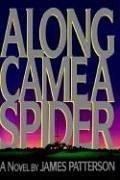
The first novel and the only correct entry point: a psychologist-detective, a kidnapping, and Gary Soneji, the villain who defines the early series. Everything about Cross's household and his standing at the department is established here.

The second, and the one that pulls Cross out of DC and gives him Kate McTiernan and a two-killer structure. Read it straight after the first — together they set the template every later book varies.
The Villains Who Come Back
BeginnerRead the arc that makes publication order non-negotiable, where an antagonist from book one returns and is not finished off quickly.
▸ Study plan for this stage
Pace: About two weeks, but check what you are buying first. Neither record in this stage carries a page count because neither is a single novel: one is a four-book paperback bundle and one is a two-novel omnibus. The two Alex Cross books you actually want here are Jack and Jill and Cat and Mouse, each a l
- Check the contents of your edition before you buy. The bundle listed here holds four Patterson paperbacks and only two of them are Alex Cross novels: Jack and Jill and Pop Goes the Weasel. Hide and Seek and When the Wind Blows are unrelated standalones with no Cross in them
- The other record pairs Cat and Mouse with 1st to Die, which is not an Alex Cross book at all — it is the first Women's Murder Club novel, a different series with a different detective. Read the Cat and Mouse half and treat the rest as a bonus you did not ask for
- Pop Goes the Weasel therefore appears twice on this path, once inside the bundle and once as its own book in the next stage. Read it in the next stage's position, where it belongs in publication order
- Jack and Jill runs two crimes in parallel — political assassinations downtown, a child-killer in Cross's own neighbourhood — and the contrast in how the city responds to each is the actual subject
- Cat and Mouse is the payoff for having read book one properly: Soneji comes back and gets roughly half the novel, which no later villain is ever given
- Cat and Mouse also introduces Mr Smith and hands long stretches to Thomas Pierce, the first time Cross has to share his own series with another investigator
- This is where publication order stops being a preference and becomes a requirement, because everything after it assumes you know how the Soneji story ends
- In Jack and Jill, why does the neighbourhood case get less official attention than the political one, and does the novel treat that as a plot mechanism or as an argument?
- Cat and Mouse splits itself between Cross and Thomas Pierce. Whose book is it by the end, and when did that become clear?
- What does Soneji want on his return, and is it consistent with the man in Along Came a Spider?
- Cat and Mouse does something to Cross's family the series never fully undoes. What is it, and what does it cost the books that follow?
- After these two, can you still call this a police procedural? If not, what has replaced the procedure?
- Before buying, read the contents listing on the edition page and confirm the novel you want is actually inside. Both records in this stage are compilations, and one of the four titles in the bundle belongs to another series entirely.
- If your copy is the Cat and Mouse pairing, stop at the end of Cat and Mouse rather than rolling on. The second half starts a separate twenty-plus-book series and will pull you off this path.
- Keep the villain list from the first stage open and mark which entries close here. Two of them do.
- Note the chapter where Cat and Mouse hands narration to Pierce, then count how many chapters pass before Cross gets it back.
Next up: Cat and Mouse leaves Cross wrecked, and the four books in the next stage are the series at full strength precisely because it never lets him recover.
A pair of assassins working through Washington while a separate killer works Cross's own neighbourhood. The two-plot structure is Patterson at his most efficient, and the personal stakes established here carry forward.

The direct continuation of the Soneji story from Along Came a Spider, plus the introduction of Mr Smith. This is the single book you most cannot read out of order, and it is the one that ends the first movement of the series.
The Nursery-Rhyme Run
BeginnerWork through the strongest consecutive stretch in the series, four books that share a title convention and an escalating personal cost.
▸ Study plan for this stage
Pace: Five weeks at about 50 pages a day — one book a week with a week spare. Pop Goes the Weasel is 418 pages, Roses Are Red 409, Violets Are Blue 393 and Four Blind Mice 404, so the arithmetic is flat. What varies is that Roses Are Red and Violets Are Blue are one story in two volumes and should be read
- The nursery-rhyme titles are a marketing convention, not a plot connection; these four are not a quartet and only two of them are continuous
- Pop Goes the Weasel is built around a role-playing game called Four Horsemen, which lets Patterson write a killer who is performing a character — the most interesting formal idea in the whole series
- The ending of Pop Goes the Weasel is the most brutal thing the books ever do to Cross, and it only lands with full force if you have read Cat and Mouse
- Roses Are Red withholds the Mastermind's identity as its entire engine and Violets Are Blue supplies it, so reading them out of order removes the only real surprise the pair has
- The vampire-cult material in Violets Are Blue is the series at its silliest; the Mastermind resolution is the reason to read it anyway
- Four Blind Mice hands the case to Sampson and swaps the serial-killer template for a military conspiracy — a deliberate reset, and a fair test of whether you are here for Cross or for the formula
- This is where the books start getting shorter and the chapters thinner; set these page counts beside the 448 and 464 of the first stage and the trend is already visible
- Pop Goes the Weasel gives you a killer with a public life and a private game. Where does the novel place the line between them, and does Cross ever see it?
- The end of Pop Goes the Weasel is not the end of its case. What does Patterson gain by letting the legal outcome and the personal one diverge?
- Halfway through Roses Are Red, write down who you think the Mastermind is and why. Then check it against Violets Are Blue.
- Four Blind Mice is Sampson's book. What does this series look like with Cross as the sidekick, and is it better?
- Across these four, has the writing changed or has your tolerance? Pick a paragraph from each and set it beside one from Along Came a Spider.
- Read Roses Are Red and Violets Are Blue on consecutive days if you can. The gap between them is where the surprise leaks out.
- Mark the page in Pop Goes the Weasel where the personal cost lands, then count how many pages of aftermath Patterson allows it. The answer says a lot about what kind of series this is.
- Keep the four page counts beside the four chapter counts. Dividing one by the other shows the series changing shape in real time.
- If you are wavering, stop after Four Blind Mice instead of pushing on. It closes cleanly and the next stage is a bigger commitment than it looks.
Next up: Four Blind Mice is a clean exit; the next stage exists for readers who want the last arc the series builds on purpose, and it tells you where to get off.
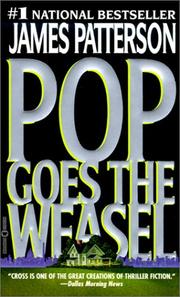
A diplomat killing prostitutes in DC, and the book with the most devastating personal consequence in the whole run. Many readers rate it the best Alex Cross novel; it will not work if you have not read Cat and Mouse.
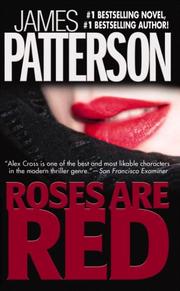
Bank robberies run by an unseen planner called the Mastermind. It opens a two-book arc, so read it immediately before the next one rather than sampling it alone.
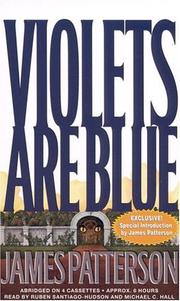
Closes the Mastermind story and reveals who he is. Reading it before Roses Are Red spoils the only genuine surprise in the pair.
A military-conspiracy case built around Cross's partner Sampson, and a deliberate change of register after the Mastermind books. A good place to pause if the series is not holding you.
The Wolf, and Where to Stop
IntermediateFinish the last multi-book arc worth reading in sequence, and learn where the series turns into standalones you can pick up at will.
▸ Study plan for this stage
Pace: Four to five weeks at about 50 pages a day. The Big Bad Wolf is 393 pages, London Bridges 391, Mary, Mary 416 and Cross 400 — the same weekly rhythm as the last stage. Read the first two as one book, then take a break before Mary, Mary if you want one.
- This path stops at twelve books. The series has run past thirty and shows no sign of ending; the twelve here are the ones with connective tissue between them, and you do not need to finish the rest — most readers who love the early run never do
- Cross's move to the FBI is a real reset — new job, new bosses, new geography — which makes The Big Bad Wolf a legitimate second entry point if the earlier stages look like too much commitment
- The Wolf is the first villain conceived as an institution rather than a man, which is why he takes two books and never quite works as a character
- London Bridges is peak late-series scale: multiple cities, multiple bombs, a plot that has stopped pretending to be a police case
- Mary, Mary is the marker for the change — shorter chapters, looser plotting, and a case that connects to nothing before or after it
- Cross goes back to the murder of Maria and closes it, and that thread has been running since page one of Along Came a Spider. Closing it is what makes stopping here clean rather than arbitrary
- From roughly this point the novels are standalones with a recurring cast, so publication order stops mattering; pick later ones by premise and skip freely without missing anything load-bearing
- The Big Bad Wolf changes Cross's job. What does the FBI let Patterson do that the DC homicide desk could not, and what does it cost in atmosphere?
- Does the Wolf work as an antagonist? Compare what you actually watch him do against what other characters say about him.
- London Bridges brings back a villain from earlier on this path. Does the revival earn itself, or is it a reunion?
- Read the first ten chapters of Mary, Mary and then the first ten of Along Came a Spider. What has changed in sentence length, chapter length, and how much time you spend inside anyone's head?
- Cross resolves the oldest thread in the series. Having read the resolution, was it worth carrying for twelve books?
- If you were going to keep reading past this point, what exactly would you be reading for? Answer honestly — it is the whole difference between continuing and stopping.
- Read The Big Bad Wolf and London Bridges as a single book, then leave a week before Mary, Mary. The break is the point: it is where you find out whether you are still enjoying this.
- When you reach the Maria resolution in Cross, note the page, then flip back to where the thread was planted in Along Came a Spider and read both passages together.
- Compare a chapter from Cross with a chapter from Kiss the Girls, matched for word count. There will not be much to match.
- Decide before you open Cross whether you are stopping there, and write down the reason. Then read it and see whether the book changed your answer.
- If you do carry on past this path, choose three later titles by premise alone and afterwards check what you missed by skipping the ones in between. The answer is close to nothing, which is the argument for stopping.
Next up: That is the part of Alex Cross that rewards being read in order; from here it is a shelf to browse rather than a sequence to follow.

Cross joins the FBI and meets the Wolf, the Russian crime boss who runs across several books. The career change resets the series, so this is a legitimate second entry point if you want a shorter run-up.
Brings back both the Wolf and an earlier villain for an international set piece. It only makes sense after The Big Bad Wolf, and it closes out the FBI arc's first phase.
A Hollywood killer sending letters to a reporter, and the book where the chapters get shorter and the plotting looser. Useful as a marker: from roughly here the novels stop depending on each other.
Returns to the unsolved murder of Cross's wife, the thread running under the entire series since book one, and resolves it. This is the natural place to stop — everything after it is largely self-contained, so read on by premise rather than in order.
Discussion
Keep reading
Paths that share books, cover the same subject, or open a related topic.