Adam Dalgliesh Reading Order and Guide
P. D. James wrote fourteen Adam Dalgliesh novels across nearly fifty years, and the sequence to use is publication order — the cases are self-contained, but Dalgliesh's private life, his poetry and his slow promotion run continuously underneath them, and the later books openly refer back. This path takes the series in that order, from the tight 1960s puzzles through the long, densely social novels of her maturity to the final case, and closes with the standalones you should read once Dalgliesh has hooked you.
Start at the Beginning
BeginnerMeet Dalgliesh in the early, compact whodunits and see what James is already doing that other Golden Age heirs were not.
▸ Study plan for this stage
Pace: Three to four weeks for Cover Her Face, A Mind to Murder and Unnatural Causes — about 760 pages, and the quickest reading in the path. These are 1960s detective novels of conventional length, roughly 250 pages each, and they go at 40 to 50 pages an evening without effort. Before you start, one hones
- The closed institution as James's real subject, established here and never abandoned — a country house, a psychiatric clinic, a writers' colony, each with its own hierarchy and its own reasons for silence
- Dalgliesh as a deliberate refusal of the eccentric detective: a published poet, a widower, courteous, cold, and given almost no comic business
- Reticence as characterisation. James tells you very little about Dalgliesh directly and expects you to assemble him from how other people react to him
- Publication order as the sequence that matters: the cases stand alone, but Dalgliesh's private life, his poetry and his rank move continuously underneath them
- The physical detail of a workplace — how a clinic runs, who holds the keys, what the rota is — used as the actual mechanism of the mystery rather than as atmosphere
- James's early prose economy, which thickens noticeably by Unnatural Causes and keeps thickening for the next forty years
- The bereavement in Dalgliesh's past, mentioned rather than dramatised, which is the engine of everything the later books do with his private life
- What do you actually know about Adam Dalgliesh at the end of Cover Her Face, and how has James told you?
- How does the psychiatric clinic in A Mind to Murder constrain the crime — what could only have happened in that building?
- In what specific ways is Cover Her Face not the conventional country-house mystery it is dressed as?
- What changes in the prose between the first novel and Unnatural Causes, and is it an improvement?
- Do you want more of this James, or are you waiting to see what she becomes? An honest answer here will decide how much of the rest of this path you read.
- Keep a single index card for Dalgliesh: rank, personal facts, anything about his poetry. Add to it as you go. By the last novel it will be the most interesting document in the path, and it will be short.
- After A Mind to Murder, sketch the floor plan of the clinic from what the book tells you. James's plots are architectural and reading her this way is a genuine pleasure.
- Note the point in Unnatural Causes where Dalgliesh's own life first interferes with a case. It is the seed of the entire late series.
- Decide now whether you are a completist or a sampler. Both are legitimate with this series and the decision will save you from stalling at book seven out of duty.
Next up: You have the detective and the method; the next stage is where James stops writing good genre novels and starts writing the books that got her taken seriously.
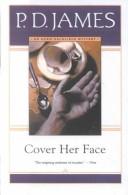
The first Dalgliesh, a country-house murder that looks conventional and is quietly not. Start here: it is short, it introduces the poet-detective, and later books assume his reticence rather than explaining it.

Set in a psychiatric clinic, and the first sign that James's real subject is closed institutions and the people trapped inside them. Read second.
A Suffolk writers' colony and a corpse in a dinghy. The prose thickens here and Dalgliesh's own life begins to intrude on the case.
The Books That Made Her Name
IntermediateRead the 1970s novels where James's institutional method — hospital, home, laboratory — is fully formed.
▸ Study plan for this stage
Pace: Allow four to six weeks. Shroud for a Nightingale is 336 pages, The Black Tower 290, and the third book in this stage is a case where our catalogue's copy needs explaining: the record is a four-novel omnibus titled after its contents, and the novel that belongs here is Death of an Expert Witness — a
- The institutional method fully formed: a nurses' training school, a home for the severely disabled, a forensic science laboratory, each rendered with the accuracy of someone who worked in hospital administration and the Home Office, because James did
- Shroud for a Nightingale as the breakthrough — the murder method is inseparable from nursing training, which is the purest version of what James does
- The Black Tower as the series' bleakest early book: Dalgliesh convalescing, half off duty, and openly considering resigning
- Illness and mortality entering the series as themes rather than plot devices, which is unusual for detective fiction of this period
- The forensic laboratory novel running the procedural and the psychological in parallel — the science tells you how, the community tells you why, and James refuses to let either dominate
- Class and professional resentment as motive. James is consistently interested in people whose competence is not matched by their status
- Dalgliesh's detachment being tested rather than admired — The Black Tower is the first book that treats his coldness as a cost
- What is the murder method in Shroud for a Nightingale, and why could it only have occurred in a nurses' school?
- What is Dalgliesh recovering from in The Black Tower, and how does being off duty change the way he investigates?
- How does the forensic laboratory setting let James stage the same event twice, scientifically and socially?
- What does James think closed institutions do to the people inside them? By the end of this stage she has made the argument three times in three different buildings.
- Has Dalgliesh changed since Cover Her Face, or only the books around him?
- Read Shroud for a Nightingale first even if you read nothing else in this stage. If you are sampling rather than completing, this is the early James to sample.
- If you are reading the omnibus edition, note where each novel starts and stops before you begin, so you do not read The Black Tower twice or start Innocent Blood by accident.
- List the staff hierarchy in each of the three institutions. James's motives almost always live in the gap between two rungs of it.
- Add to your Dalgliesh index card after The Black Tower. This is the book that gives you the most and it is still barely a paragraph.
Next up: The institutional method is now complete and repeatable, which frees James to do something larger with it — the next three books use the same machinery at the scale of a whole community.
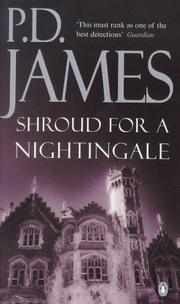
A nurses' training school, and the novel most often named as her breakthrough. If you only sample one early Dalgliesh, sample this one.

Dalgliesh convalescing at a Dorset home for the disabled, half off duty. The bleakest of the early books and the one that most tests his detachment.

A forensic science laboratory, which lets James run the procedural and the psychological in parallel. It closes the first phase of the series.
The Big Novels
IntermediateMove into the long, socially crowded books of the 1980s and 1990s, where the mystery shares the page with a whole community.
▸ Study plan for this stage
Pace: Six to eight weeks. This is a real step up in length — A Taste for Death is 513 pages, Devices and Desires 512, Original Sin 540 — and a step down in pace. The mysteries now share the page with a dozen fully written lives, and reading these at thriller speed is a category error. Thirty to forty page
- The detective novel as social novel — A Taste for Death is where James stops apologising for the genre and writes a serious novel that happens to contain a murder
- Two bodies, two classes: the paired killings in a church vestry are the structural statement of the book's whole interest in who gets investigated properly
- Kate Miskin and the settled team around Dalgliesh, which gives James viewpoint characters who are not the great man and lets the books widen
- Landscape as pressure: the Norfolk coast, the power station and the sea in Devices and Desires are as fully realised as any character, and the writing there is among her best
- The professional milieu at its most enjoyable in Original Sin — a Thames-side publishing house lets James be vicious about a world she knew intimately
- Religion and moral seriousness surfacing, particularly in A Taste for Death, in a genre that usually treats motive as mechanics
- The cost of the method: these books are slower, and some readers who love the 1970s novels find the 1980s ones over-furnished. That is a real disagreement, not a failure of attention
- Why does A Taste for Death begin with two bodies rather than one, and what does the pairing let James say about class?
- How does the nuclear power station function in Devices and Desires — as setting, as threat, or as metaphor?
- What does the addition of Kate Miskin change about how the investigation is narrated?
- Original Sin is set among publishers. What does James clearly enjoy about that, and where does the enjoyment show?
- Are these novels improved or weakened by their length? Pick one and defend it.
- Time yourself on the first fifty pages of A Taste for Death and adjust your expectations accordingly. The opening is deliberately unhurried and readers who fight it have a bad time.
- In Devices and Desires, mark three passages of landscape writing you would show someone who does not read crime fiction.
- Compare the number of viewpoint characters in Original Sin with the number in Cover Her Face. The difference is the whole story of James's career.
- If you are running out of appetite, stop after A Taste for Death rather than mid-Original Sin. It is the strongest natural exit point in the entire series.
Next up: James has now built a full world around Dalgliesh — a team, a milieu, a moral seriousness — and the late novels finally let him have a life inside it.

Two bodies in a church vestry, and the novel where James's ambition becomes explicit — this reads like a serious social novel that happens to contain a murder. Many readers' favourite.
A nuclear power station on the Norfolk coast, a serial killer, and Dalgliesh on leave again. The landscape writing here is as strong as the plotting.
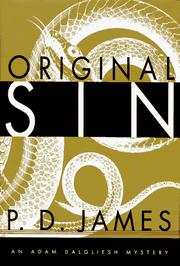
A Thames-side publishing house, which gives James her most enjoyably vicious professional milieu. Read after A Taste for Death; the team around Dalgliesh has settled by now.
The Late Cases
IntermediateFollow the last full run of investigations, and the personal thread James finally allows Dalgliesh to have.
▸ Study plan for this stage
Pace: Five to seven weeks for A Certain Justice, Death in Holy Orders and The Murder Room, roughly 1,400 pages. These are late-career books written in James's seventies and eighties: assured, cold, unhurried, and increasingly interested in institutions in decline. Read them in this order — the personal st
- A Certain Justice and the Inns of Court: James's most procedurally exact book, and the one with the least reassuring ending in the series
- Death in Holy Orders as the fullest statement of her Anglicanism — a theological college on a collapsing coastline, with the erosion doing obvious and unembarrassed symbolic work
- The late-life romance beginning here, which is the only sustained personal storyline Dalgliesh is ever given and is doled out with characteristic parsimony
- The Murder Room's central conceit — a museum of interwar murders whose exhibits start being re-enacted — as James commenting on her own genre
- Endings that refuse consolation. The late books increasingly decline to restore order, which is a deliberate departure from the form's promise
- Institutions running out of money and belief: a chambers, a college, a private museum, all of them dying, which is what these three books share
- Dalgliesh aged into his authority and, for the first time, into something like happiness — the series' quietest and slowest reward
- What does A Certain Justice refuse the reader at the end, and why does that refusal feel deliberate rather than unsatisfying?
- How does the eroding coastline in Death in Holy Orders relate to what is happening inside the college?
- How much do you actually learn about Dalgliesh's romance across these two books, and what does James's reticence achieve?
- In The Murder Room, what is James saying about murder as entertainment — and is she implicating herself?
- Have the mysteries got weaker as the novels have got better? Several readers think so; test the claim against these three.
- Read Death in Holy Orders and The Murder Room close together. The continuing personal thread is thin enough that a six-month gap erases it.
- Note every scene in which Dalgliesh's poetry is mentioned. It is a very short list across fourteen books and it is most active here.
- In The Murder Room, list which historical cases the museum's exhibits are drawn from. James expects a certain literacy in real interwar crime and rewards it.
- Update your Dalgliesh index card. If you have kept it since Cover Her Face, this is the stage where it finally gets interesting.
Next up: The personal story is now running alongside the cases, which is exactly the position the last two novels need in order to close the series rather than merely stop it.
A murdered barrister and the Inns of Court. Cold and procedurally exact, with an ending that refuses the usual reassurance.
A theological college on a crumbling coast — the fullest expression of James's Anglicanism and her fondness for enclosed communities. It also begins Dalgliesh's late-life romance.

A private museum of interwar murders, in which the exhibits start being re-enacted. Read it after Death in Holy Orders for the continuing personal storyline.
The Finale and What Else to Read
IntermediateFinish the series, then move to the standalones and the Cordelia Gray novel that share James's world.
▸ Study plan for this stage
Pace: Six to eight weeks for four books totalling about 1,500 pages. Take The Lighthouse and The Private Patient first and in that order — they are the last two Dalgliesh novels and James wrote the second as a deliberate closing. Then An Unsuitable Job for a Woman and The Children of Men, which are not Da
- The Lighthouse as deliberate isolation — an island retreat for exhausted powerful people, with Dalgliesh himself falling ill mid-investigation, which reverses the detective's usual invulnerability
- The Private Patient as a written ending: a private clinic in a Dorset manor, and a novel that closes the personal storyline James had been feeding since Death in Holy Orders
- Cordelia Gray in An Unsuitable Job for a Woman — a young woman inheriting a detective agency, and a genuine landmark in the genre's treatment of women investigators
- Dalgliesh seen from outside: Cordelia's encounters with him are the only sustained view of the character from a stranger's perspective in the whole body of work
- The Children of Men as evidence for the claim underlying this entire path — that James was a novelist who wrote detective fiction, not the reverse
- Universal infertility as a premise James uses for what she always used institutions for: to see how people behave when the future is removed
- Series completion as an option rather than an obligation. Fourteen novels across nearly fifty years is a lot, and stopping anywhere after A Taste for Death leaves you with a complete experience
- What does The Lighthouse gain by making Dalgliesh physically vulnerable, and had any earlier book risked it?
- How does The Private Patient close the series — what does it resolve, and what does it leave alone?
- What can Cordelia Gray do as an investigator that Dalgliesh cannot, and how much of that is about her age, her sex or her lack of institutional power?
- What does Dalgliesh look like from Cordelia's point of view, and does it match the man you assembled from thirteen novels?
- Is The Children of Men recognisably by the same writer? Name three things it shares with the Dalgliesh books.
- Read The Private Patient last of the two Dalgliesh novels here, and read it knowing it is the last. James wrote it that way and the book is better for the foreknowledge.
- Read your Dalgliesh index card from the beginning after finishing The Private Patient. Nearly fifty years of a character, and it fits on a card — which is the argument for how James built him.
- Read the first chapter of An Unsuitable Job for a Woman and Cover Her Face back to back. Ten years apart, same author, entirely different energy.
- If The Children of Men is the only James you would press on a non-crime reader, work out why. The answer is usually the most useful thing anyone takes from this path.
- Finally, name your own stopping point in the series and your reasons. Nobody needs to read all fourteen, and being able to say where a new reader should stop is more useful than having finished.
Next up: This is the end of the path: with the series closed and the standalones read, the next move is either Cordelia Gray's second case or a return to A Taste for Death, which reads differently once you know how the whole thing ends.
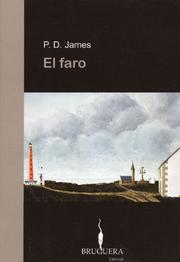
An island retreat for the exhausted powerful, with Dalgliesh himself falling ill mid-investigation. The penultimate case and a deliberately isolated one.
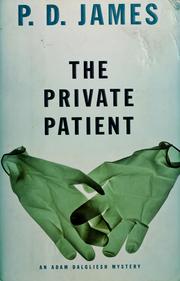
The last Dalgliesh novel, set in a private cosmetic surgery clinic in a Dorset manor. Read it last: James wrote it as a closing of the books on him.
Cordelia Gray's first case, in her own series but with Dalgliesh in it. The best route out of the main sequence and a landmark in its own right.

Her dystopia of universal infertility and the most famous book she wrote — no detective at all. Read it once Dalgliesh has convinced you that she is a novelist first.
Discussion
Keep reading
Paths that share books, cover the same subject, or open a related topic.