A Wrinkle in Time Reading Order and Guide
Madeleine L'Engle wrote the Time Quintet out of order and across thirty years, but there is a clean way in: read the five Murry books in publication order, which is also very nearly chronological for the characters. The complication is that L'Engle's books share a universe — the Murrys marry into the O'Keefes, and the O'Keefes cross paths with the Austins — so after the quintet the natural next step is the two connected families rather than anything new. This path takes the quintet first, then those two branches.
Start Here
BeginnerMeet the Murrys and L'Engle's blend of physics, theology and fairy tale in the book that defines the series.
▸ Study plan for this stage
Pace: A few evenings for A Wrinkle in Time, 212 pages. An adult reads it in one sitting; a ten-year-old will take a week. Do not rush past the first two chapters, which are much stranger and slower than the reputation suggests — the book spends a long time in a kitchen with cocoa and a difficult family be
- The tesseract as L'Engle's central device — travel by folding space rather than crossing it, explained to a child with a piece of fabric and an ant, which is why it stuck
- Physics and theology sharing a sentence without embarrassment. L'Engle quotes scripture and cosmology in the same breath and the whole series depends on your accepting that she means both
- Meg as an angry, unhappy, mathematically gifted girl who is not made nice by the plot. Her faults are the mechanism of the rescue, not obstacles to it
- The Mrs Ws — Whatsit, Who and Which — as guides who deliberately withhold, which is L'Engle's recurring position on how help actually works
- Camazotz and enforced conformity: the bouncing balls in unison, and a critique of sameness that lands differently on every rereading
- IT as an antagonist with no body, which lets L'Engle write a climax that has to be won with an emotion rather than a weapon
- The Murry family as a working scientific household, with two physicist parents and a missing father — unusual then and still unusual now
- How is the tesseract explained, and could you explain it to someone else?
- What exactly does Meg use to defeat IT, and why can nobody else do it?
- What is wrong with Camazotz, given that nothing there appears to be violent or cruel?
- How much do the Mrs Ws actually tell the children, and why so little?
- What makes Meg an unusual protagonist for a children's book of 1962?
- Do the ant-and-fabric demonstration with an actual piece of cloth. It takes a minute and it is the reason a generation understood higher dimensions before they understood algebra.
- Note the ages and abilities of the three children. L'Engle's distribution of competence — the awkward one, the prodigy, the popular one — is the engine of all five books.
- Read the Camazotz chapters twice, once for plot and once for what is being criticised. Adults and children read those pages very differently.
- If you know this book from childhood, note what you had forgotten. It is almost always the theology, and it is on nearly every page.
Next up: With the tesseract, the family and the moral rules established, the four sequels can each break the pattern in a different direction — and they only make sense because this book set one.
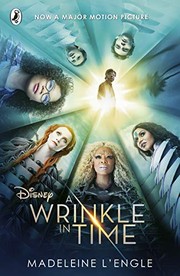
The obvious and correct entry point. Meg, Charles Wallace and Calvin tesser across the galaxy to rescue their father, and every later book assumes these three and the rules established here.
The Quintet in Order
BeginnerRead the four sequels in publication order and watch the series move from space opera to time travel to biblical retelling.
▸ Study plan for this stage
Pace: Six to eight weeks for the four sequels — A Wind in the Door (211 pages), A Swiftly Tilting Planet (278), Many Waters (310) and An Acceptable Time (358). Read them in publication order, which is also very nearly the characters' chronology. They were written across nearly thirty years and it shows: t
- A Wind in the Door's inward turn: the danger has moved into Charles Wallace's mitochondria, and the scale is microscopic rather than galactic
- Naming and Un-Naming as the series' actual cosmology, explained properly here — evil as the erasure of the particular, good as the insistence that a thing is itself
- A Swiftly Tilting Planet's structure, which is the most ambitious in the quintet: Charles Wallace rides through centuries of one family's history to change an outcome in the present
- The Welsh rune and the might-have-been. L'Engle's version of time travel is genealogical rather than mechanical, and the same faces recur across generations
- Many Waters as the deliberate outlier — the Murry twins, the only ordinary members of the family, land before Noah's flood — and the one book that could technically be read out of sequence
- An Acceptable Time as a double ending: written eleven years later and led by Meg's daughter Polly O'Keefe, it is simultaneously the last Time book and the last O'Keefe book
- The theological ramp. Each book is more explicitly Christian than the last, and how a reader feels about that is the main variable in how the quintet is received
- What does Naming mean in A Wind in the Door, and how does it define what evil is across the whole quintet?
- How does the time travel in A Swiftly Tilting Planet work, and what does it let L'Engle do that the tesseract cannot?
- Why does Many Waters use the twins rather than Meg and Charles Wallace, and what does having ordinary protagonists change?
- In An Acceptable Time, what has happened to Meg, and how does the handover to Polly feel — earned or abrupt?
- How does the theology change across the four books, and at what point, if any, does it become the point rather than the framework?
- Draw a family tree as you read A Swiftly Tilting Planet. The book runs on recurring names and faces across centuries and it is genuinely hard to follow without one.
- Note the genre of each sequel in one word — biology, history, myth, archaeology. Naming them makes the quintet's strangeness deliberate rather than confusing.
- Keep An Acceptable Time in fifth position even though its Polly material belongs later in her own life. Publication order gives the handover its intended weight and reading it earlier flattens both series.
- After A Wind in the Door, write one sentence defining Naming. It is the concept the remaining books assume you have.
Next up: An Acceptable Time hands the series to Polly O'Keefe, which is exactly why the path continues sideways rather than stopping — the O'Keefes have their own three books, and Polly's story starts long before you met her.
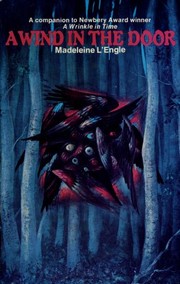
The direct sequel, and the strangest turn: the danger has moved inside Charles Wallace's cells. Read second — it is where L'Engle's cosmology of naming and unnaming is actually explained.

Charles Wallace rides through centuries of one family's history to avert a nuclear war. Often the quintet's high point, and it depends on the two earlier books for its emotional stakes.

The odd one out — the Murry twins land before Noah's flood — and the only book you could in principle read out of sequence. Keep it fourth anyway; published order gives it the right weight.

Written eleven years later and led by Meg's daughter Polly O'Keefe, so it is simultaneously the last Time book and the last O'Keefe book. Reading it fifth is what makes the handover legible.
The O'Keefe Branch
BeginnerFollow Polly and the O'Keefe family, the bridge between the Murry books and the rest of L'Engle's universe.
▸ Study plan for this stage
Pace: Four to five weeks for The Arm of the Starfish (243 pages), Dragons in the waters (293) and A House Like a Lotus (307). These are thrillers rather than fantasies and read faster than the quintet. Order is a real choice here: The Arm of the Starfish and Dragons in the waters are straightforward adven
- The universe as one connected place: Meg marries Calvin O'Keefe, so the O'Keefe books are the Murry children's adult lives seen from their own children's point of view
- The Arm of the Starfish as a genuine thriller — marine research, kidnapping and a teenage protagonist who cannot tell which adults are lying, which is L'Engle's favourite structure
- Adam Eddington and the moral test. L'Engle's real subject in these books is a young person choosing which authority to believe, and the fantasy machinery is gone entirely
- Dragons in the waters as the lightest of the three: a shipboard murder mystery, and a good demonstration of how loosely L'Engle links her series when it suits her
- A House Like a Lotus and the failed mentor — the most painful relationship L'Engle wrote, and the one that most divides readers about whether the book handles it well
- Polly as the bridge character, connecting the Murrys, the O'Keefes and eventually the Austins, which is why she ends up carrying the last Time book
- The shift from cosmic to human stakes: nothing in these three books threatens a planet, and L'Engle is noticeably more interested in the smaller danger
- What does The Arm of the Starfish ask Adam to decide, and how does L'Engle make the wrong choice look reasonable?
- How does the absence of any fantasy element change what L'Engle can write about?
- Who are Polly's parents, and how does recognising them from the quintet change the way you read her?
- What goes wrong in A House Like a Lotus, and does the book handle Polly's confusion honestly?
- Do these three feel like the same universe as A Wrinkle in Time, or like a different writer's work?
- Draw the family connections between the Murrys and the O'Keefes before starting. The books assume the relationships and do not restate them.
- In The Arm of the Starfish, list every adult and note when you stopped trusting each one. That list is essentially the plot.
- Read A House Like a Lotus yourself before recommending it to a young reader. It is markedly more adult than its shelving suggests.
- Decide deliberately where to place A House Like a Lotus relative to An Acceptable Time and note why. This is the one genuine ordering choice in the whole path.
Next up: You have followed L'Engle out of science fiction into the thriller; the last stage goes one step further into plain realism, where her other family series has been running alongside all along.
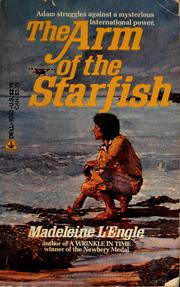
The first O'Keefe book, a thriller in which a young Polly is caught up in her father's marine research. Read it after the quintet so you recognise who her parents are.
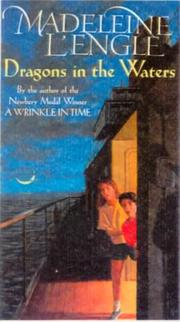
A shipboard murder mystery with the O'Keefe children aboard. Lighter than the Murry books and a good demonstration of how loosely L'Engle links her series.

Polly's own coming-of-age novel, and much more adult than anything in the quintet. Read it before An Acceptable Time if you want Polly's story in her order rather than the Time Quintet's.
The Austin Family
BeginnerRead L'Engle's other, quieter family series, which shares a world with the Murrys but almost none of their science fiction.
▸ Study plan for this stage
Pace: Four to five weeks for Meet the Austins (192 pages), A Ring of Endless Light (330) and Troubling a Star (296). These are quiet, realist family novels with no fantasy element at all, and they are shorter and gentler than anything else in the path — except emotionally, where A Ring of Endless Light is
- L'Engle without the cosmology: no tessering, no Mrs Ws, just a family absorbing a grieving orphan, which shows what her prose sounds like unassisted
- Meet the Austins as a 1960 domestic novel — a specific, dated and rather beautiful record of a particular kind of American family life
- Vicky Austin as a writer-narrator, more introspective than Meg and much less capable, which changes what her books can be about
- A Ring of Endless Light and death as the actual subject: a summer of several deaths, a dying grandfather, and a teenager working out what she believes. It is a Newbery Honor book and is generally reckoned the best thing L'Engle wrote
- The dolphins in A Ring of Endless Light as the only element that edges toward the fantastic, and L'Engle keeping it just this side of plausible
- Troubling a Star's Antarctic setting and its thriller plot, which brings Vicky into contact with characters from the O'Keefe books and closes the circuit between the series
- The whole shared universe finally visible: Murrys, O'Keefes and Austins as one loosely connected world written across thirty-four years
- What does Meet the Austins tell you about L'Engle's values, given that nothing supernatural happens in it?
- How does Vicky differ from Meg as a narrator, and what does that let A Ring of Endless Light do?
- How does A Ring of Endless Light handle death — what does it refuse to offer the reader?
- How much do the dolphins actually do, and does the book need them?
- Where do the Austins and the O'Keefes touch in Troubling a Star, and does the shared universe feel designed or improvised?
- Read A Ring of Endless Light in long sittings and preferably not in a bad week. It is a genuinely sad book and it does not flinch.
- Compare a passage of family dialogue in Meet the Austins with one in A Wrinkle in Time. Same author, same warmth, entirely different genre — it is the clearest evidence of what her fantasy was built on top of.
- In Troubling a Star, note every character who has appeared in an earlier book in this path. The list is the shared universe made concrete.
- Finally, sketch the whole connected world on one page: Murrys, O'Keefes, Austins, and who marries or meets whom. It is the best possible summary of this path and it fits on a single sheet.
Next up: This is the end of the path — five Time books, three O'Keefe novels and three Austin ones, all in one universe — and the natural next move is L'Engle's own writing on faith and craft, or a reread of A Wrinkle in Time, which is a much stranger book once you have seen where it led.

The start of the realist counterpart to the Murry books: no tessering, just a family absorbing a grieving orphan. Useful for seeing what L'Engle sounds like without the cosmology.
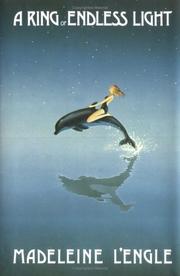
The best of the Austin books and a Newbery Honor winner — Vicky Austin, dolphins, and a summer of deaths. It stands alone but lands harder after Meet the Austins.
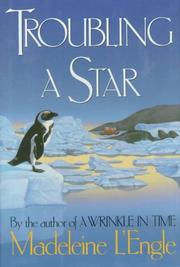
The last Austin novel, set in Antarctica, and the place where the two family series openly touch. A fitting end point once you have read both branches.
Discussion
Keep reading
Paths that share books, cover the same subject, or open a related topic.