A.S. Byatt Reading Order: Where to Start
Byatt is easy to start badly. Her first published novels are the opening volumes of a four-book sequence that took twenty-four years to finish and does not become gripping until the third, so a reader who begins at the beginning usually stops there. Begin instead with Possession, the book that made her famous and the one that shows off everything she can do, then take the shorter historical fictions, and only then commit to the Frederica Quartet — which is worth it, but only once you already trust her.
Start Here: Possession
IntermediateMeet Byatt at full power and get used to her central habit — embedding invented Victorian poems, letters and fairy tales inside a modern narrative.
▸ Study plan for this stage
Pace: 5 weeks. Possession is 528 pages and the invented Victorian material slows it on purpose — plan three weeks at about 25 pages a day and treat the poems as part of the page count rather than as overrun. The Djinn in the Nightingale's Eye is 274 pages in five stories, the last of them a novella runnin
- Possession is two novels laid over each other: a present-day academic chase, and a Victorian love affair told almost entirely through poems, letters and journals that Byatt wrote herself.
- The invented verse and correspondence are the evidence, not the atmosphere. The modern characters are reading them for clues, so a reader who skips them is skipping the plot while the detectives on the page do not.
- Skipping the poetry is the single commonest reason people bounce off this book. Decide before you start that you will read it slowly, because the alternative is abandoning the novel around page two hundred convinced it is not working.
- Every document has its own prose. Ash sounds like Browning, LaMotte like a warier Rossetti, the private journals like people writing for no reader at all. Hearing those voices apart is the pleasure the book is built on.
- The Postscript is addressed to you and not to the scholars: the novel closes by handing the reader a fact the researchers spent five hundred pages failing to recover.
- Two of the fairy tales in The Djinn in the Nightingale's Eye also appear inside Possession as LaMotte's work, so the collection is partly the Victorian poet's shelf detached from the novel that invented her.
- The title novella drops the Victorian scaffolding entirely — a middle-aged narratologist, a hotel bathroom, a djinn — and shows the plain storytelling appetite that Possession keeps folding into other machinery.
- The Fairy Melusine is about a woman who must not be watched at a certain hour. What is that poem doing inside a novel about scholars reading private letters?
- Where in the correspondence does the affair become inevitable? Name the letter.
- What do Roland and Maud never learn, and what does Byatt gain by telling you and withholding it from them?
- Blanche, Ellen and Sabine each keep a journal. What does each one conceal, and from whom?
- Set a LaMotte poem beside an Ash poem. Could you identify the author of an unlabelled passage by ear alone?
- Read the epigraph poems at the head of each chapter instead of jumping to the prose. Four chapters is enough to test whether they are decorative. They are not.
- Keep one sheet with the two Victorian households and the two modern academic camps on it. The book has four sets of names in circulation by chapter three.
- Mark the point at which you first believed the affair was real rather than a scholarly hypothesis, and see what convinced you.
- After finishing, reread The Glass Coffin in The Djinn in the Nightingale's Eye and note what changes once you know who is supposed to have written it.
Next up: You now know how she buries one text inside another; the historical fictions do the same trick with science and belief in place of poetry.
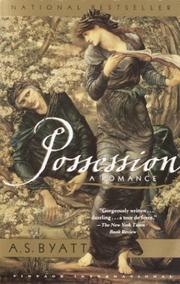
The Booker winner and the only sensible first Byatt: two present-day academics reconstruct a secret affair between two Victorian poets, whose verse and correspondence Byatt writes herself. Read the poems rather than skipping them — the plot is hidden in them, and skipping is the commonest reason people bounce off the book.

Five fairy tales, the last a novella about a middle-aged narratologist who finds a djinn in a hotel bathroom. Read it second because it isolates the storytelling instinct that Possession keeps folding into other things.
The Historical Fictions
IntermediateSee what she does with the Victorians at shorter and then at much greater length, and pick up the science-and-belief argument that runs under everything.
▸ Study plan for this stage
Pace: 6 weeks. Angels and Insects is two novellas and reads in about a week and a half — this edition has no page count on record, but each novella is a comfortable weekend on its own. The Children's Book is 624 pages and crowded with characters; give it four weeks at about 25 pages a day and expect essay
- Morpho Eugenia is a natural-history experiment run on a household: the ant colony William studies and the family he marries into are described in the same vocabulary, and the revelation is prepared entomologically rather than psychologically.
- The Conjugial Angel sets Victorian séances beside the mourning poetry of the period and asks what spiritualism was actually for, which is the question Possession asks about scholarship in another key.
- Byatt's Victorians are not moderns in costume. They believe things, and the fiction takes the beliefs seriously enough to let them lose an argument on their own terms.
- The Children's Book opens in a museum basement and closes in the trenches, and everything between is the Edwardian promise being cashed in.
- Olive writes a private ongoing story for each of her children, and the central cruelty of the novel is what happens when a mother makes literature out of the people she is raising.
- The lecture is part of the design. Byatt will halt a novel to explain pottery glazes, Fabian politics or German puppetry, and you have to decide to enjoy that rather than wait it out.
- Angels and Insects trains you for exactly that habit at a length where it stays charming, which is the reason it comes before the six-hundred-page version.
- What has the ant colony already told you about the Alabasters before the plot confirms it?
- Matty Crompton is doing something throughout Morpho Eugenia that a first reading misses. What, and where is the first sign of it?
- In The Conjugial Angel, does Byatt think anything is happening at the séances? Find the sentences that let you argue either way.
- Which of Olive's children does her writing damage most, and does the novel hold her responsible for it?
- The Children's Book kills a great deal in its final hundred pages. Was that ending implied from the first chapter, or imposed on the material?
- Read the natural-history passages of Morpho Eugenia at full attention rather than skimming toward the marriage plot. The solution is inside them.
- Start a family list for The Children's Book from the first chapter — three households, a dozen children, and names that recur across generations.
- Mark where The Children's Book leaves its characters to summarise a decade of politics, and count the pages it spends there. Knowing that ratio makes the book far easier to read at its own pace.
- After both, decide which length suits her better. Readers split on this, and your answer predicts how you will feel about the quartet ahead.
Next up: You have now taken her at novella length and at six hundred pages, which is the preparation required before committing to four long novels in a row.

Two novellas — one about a naturalist marrying into a grand family with an ant colony as its mirror, one about Victorian spiritualism. The best short demonstration of her interest in what Darwin did to belief, and a manageable step up from Possession.

Her most ambitious novel: a children's author, her tangled household, and the Edwardian world walking into 1914. It is long, crowded and essayistic, so read it once Angels and Insects has taught you to accept a lecture inside a novel.
The Frederica Quartet, in Order
BeginnerRead the four-novel sequence in its fixed order, following one woman from a 1953 school play to the end of the sixties.
▸ Study plan for this stage
Pace: Four to five months, and there is no honest way to shorten it: 432 + 384 + 625 + 429 is about 1,870 pages. At 25 pages a day that is roughly six weeks for the first two together, seven for Babel Tower and five for A Whistling Woman. Read the first two close together, and do not leave a long gap befo
- These were her first published novels, and that is precisely why they are not the place to start. The sequence ran from 1978 to 2002, took twenty-four years to finish, and the writer who completed it is not the writer who began it.
- The Virgin in the Garden is the densest and slowest of the four, and it is where nearly everyone quits. Begin it knowing that it is the setup for a sequence rather than a self-contained novel that has failed to grip you.
- The quartet does not become gripping until the third volume. That is the ordering argument this whole path is built on, and it is the reason Possession came first.
- The coronation-year verse drama about Elizabeth I is the first book's organising conceit — a virgin queen staged in the year of another one, with the Potter children arranged around the production.
- Still Life is the quieter book and contains the event the rest of the quartet is built around. It arrives without warning and Byatt refuses it any grandeur whatsoever.
- Babel Tower is the payoff: an obscenity trial, a custody fight, a violent marriage, and an entire invented novel running inside the book, which is the Possession method applied to the nineteen-sixties.
- Marcus Potter carries the strand nobody expects — mathematics, visions, a wordless dread — and it runs quietly under all four volumes.
- Read as one work, the quartet is a social history of England from 1953 to the end of the sixties, organised around one clever, frequently unlikeable, entirely convincing woman.
- What does the Elizabeth play let Byatt do in the first novel that a straight family chronicle could not?
- Stephanie and Frederica choose opposite lives. Does the quartet judge between them, and where does it come closest to doing so?
- Babel Tower runs an invented novel alongside the main narrative. What can that book say that Frederica's story cannot?
- Where does the sequence stop being a novel about a family and become a novel about language and law?
- Track Marcus across all four volumes. What is the quartet arguing through him?
- Was the first volume worth it in the end? Answer only after finishing Babel Tower.
- Read the first two volumes back to back with no gap. They were conceived as one long novel, and Still Life resolves what The Virgin in the Garden only sets up.
- Keep a running page of the Potter family plus the Blesford school circle. Four novels across sixteen fictional years reuse minor characters heavily and reintroduce almost nobody.
- Mark the page in Still Life where the accident happens and count the lines Byatt gives it. The restraint is the argument.
- If you stall in the first volume, read its final hundred pages and start Still Life rather than abandoning the sequence. Quitting at volume one is the standard way readers lose Byatt.
- After A Whistling Woman, reread the opening of The Virgin in the Garden — a scene set later than almost everything that follows — and see how much of the quartet it was already holding.
Next up: With the sequence behind you, what remains are the books where she stops holding a realist frame together at all.
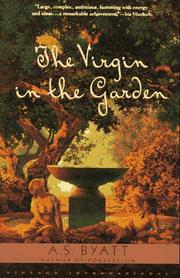
The first of four, set around a coronation-year verse drama in Yorkshire. It is the densest and slowest of the quartet and is where most readers quit, so start it knowing that the sequence is the point and this volume is the setup.
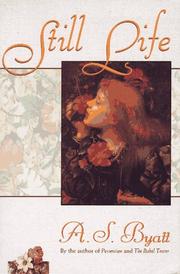
Frederica at Cambridge, her sister Stephanie married and diminished, and a death that reshapes the whole quartet. Read straight on from The Virgin in the Garden; the two are effectively one long novel.

The sixties, a violent marriage, a custody case and an obscenity trial, with a whole invented novel-within-the-novel running alongside. The strongest of the four and the payoff for the first two.
Closes the quartet with television, a commune and a university in revolt. Read it last, obviously, but also read it soon after Babel Tower, since it assumes you remember a very large cast.
The Deeper Cuts
BeginnerFinish with the odder, shorter books, where she abandons realism most completely.
▸ Study plan for this stage
Pace: 5 weeks. The Biographer's Tale is 305 pages and the hardest going on this path — two weeks in short sittings, because it deliberately breaks apart into other people's documents. Elementals is 232 pages of stories, about a week and a half. Ragnarok is 192 pages and reads in two evenings.
- The Biographer's Tale is a deliberate anti-Possession: the same appetite for documents, but no romance and no solution, and the researcher ends with less the harder he works.
- It fragments into other people's papers — accounts of Linnaeus, Galton and Ibsen, boxes of index cards, a bag of marbles — which puts you in exactly the position of the narrator, holding evidence that will not cohere.
- She is testing whether a life can be written at all, and the honest answer the book arrives at is what makes it her most difficult novel rather than her most obscure one.
- Elementals is arranged around the two elements of its subtitle, so the stories read best one at a time against their opposite rather than front to back.
- The short forms are where her prose is most concentrated. She does not need six hundred pages to be Byatt, which is worth discovering immediately after the quartet.
- Ragnarok refuses the novelistic move entirely: the gods do not develop, they simply end, and the closing essay states plainly why she thinks a myth should not be turned into a novel.
- The thin child reading a German book about the Norse gods while evacuated in wartime is as close to autobiography as Byatt gets, and it reframes the childhood reading standing behind everything else on this path.
- What does the narrator want at the start of The Biographer's Tale, and has he any of it by the end?
- Why three lives in fragments rather than one whole one, and does the book ever let them connect?
- In Elementals, which story would survive being told at novel length, and which one depends entirely on being short?
- Ragnarok denies the gods interior lives. Read the closing essay: do you accept the argument, and does the retelling actually demonstrate it?
- Across these three books she leaves realism in three different directions. Which one is she best at?
- Read the inserted documents in The Biographer's Tale at the same attention as the narrative. Skimming them makes the book incoherent, which is a self-inflicted version of its own subject.
- Read Elementals in pairs, one hot story and one cold, rather than in printed order.
- Read the closing essay of Ragnarok first if the flat mythic register frustrates you. It tells you what she is refusing to do and why.
- Set the Postscript of Possession beside the last page of The Biographer's Tale. Same writer, same materials, two opposite verdicts on whether the past can be recovered.
- Choose the Byatt you would hand a friend and write the two-sentence case. If it is still Possession, you have confirmed the ordering argument this path was built on.
Next up: You have read her long and short, realist and mythic, so the remaining novels and story collections can be picked up in any order without a wrong entry point.
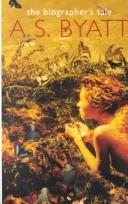
A graduate student abandons literary theory to write a biography and finds his subject dissolving into fragments. The most difficult of her novels, and a deliberate anti-Possession — read it only after Possession has earned your patience.
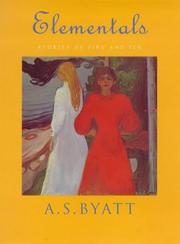
Stories of ice and fire, including one about a Norwegian woman who cannot bear the heat of Provence. Short, cold and among her best prose at any length.

The Norse end of the world retold by a thin child reading in wartime England, and the closest thing she wrote to autobiography. A short, strange last stop that reframes the childhood reading behind everything else on this path.
Discussion
Keep reading
Paths that share books, cover the same subject, or open a related topic.