Philosophy has a hazing problem. Ask where to start and someone will hand you Kant's Critique of Pure Reason — one of the most difficult books ever written — and a week later you've concluded philosophy isn't for you. It is. You were just handed the final exam on day one.
Where to start with philosophy (without drowning)
July 6, 2026 · 2 min read
Story before system
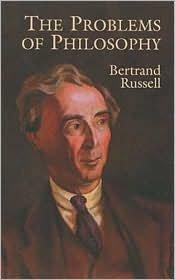
The right first move is a book that teaches the shape of philosophy before the rigor. That's why our philosophy path opens with Sophie's World — a novel that walks the entire history of Western thought — alongside Russell's short, sharp The Problems of Philosophy. One gives you the map; the other shows you what a philosophical argument actually feels like.
The path, stage by stage
First steps — Sophie's World, The Problems of Philosophy, and Blackburn's Think: the vocabulary and the cast of characters.
The Western canon — now the originals, chosen for readability: Plato's The Last Days of Socrates (philosophy as drama), Aristotle's Nicomachean Ethics, and Descartes' Discourse on Method and Meditations. These are far more approachable than their reputations suggest — Plato especially reads like a courtroom thriller.
The core branches — Hume's Dialogues Concerning Natural Religion, Kant's Groundwork of the Metaphysics of Morals (the short one — this is where Kant belongs, not at the start), and Mill's Utilitarianism.
Modern movements — Sartre's Existentialism Is a Humanism, Wittgenstein, and Chalmers' The Conscious Mind on the puzzle of consciousness.
The frontier — Rawls' A Theory of Justice and MacIntyre's After Virtue: philosophy as a live, unfinished argument.
The habit that makes it stick
Philosophy rewards slow reading and arguing back. After each book, write one paragraph: what is this philosopher's strongest claim, and where do I think it fails? That single exercise converts reading into thinking — which is the entire point.
Fourteen books sounds like a lot; at a relaxed pace it's a year of the best conversation of your life. Follow the path, or start narrower with the Stoics in the right order.
FAQ
- Is Sophie’s World too basic for adults?
- No — it’s a genuinely good history of philosophy that happens to be wrapped in a novel. Plenty of philosophy departments recommend it as a first map of the field.
- When should I read Kant?
- After the canon stage, and start with the Groundwork — it’s short and self-contained. The Critique of Pure Reason is a summit, not a trailhead.
Get the books
- 1Sophie's worldAmazon ↗Jostein Gaarder
- 2The Problems of PhilosophyAmazon ↗Bertrand Russell
- 3ThinkAmazon ↗Simon Blackburn
- 4Amazon ↗
- 5Nicomachean EthicsAmazon ↗Aristotle
- 6Amazon ↗
As an Amazon Associate we earn from qualifying purchases. Some book links are affiliate links; you pay the same price and we may earn a small commission.
Follow the full reading path


How to learn Philosophy
Beginner14books74 hrs5 stages
Ready to learn something deeply?
Build a reading path — free