Wittgenstein is the rare philosopher who produced two bodies of work so different that scholars speak of an early and a late Wittgenstein. Read them out of order or without context and you get either mystical logic or gnomic aphorisms. Read them in sequence and you watch one of the century's sharpest minds turn against its own earlier self.
The path here begins with his extraordinary life and world, moves through the early logic, then the later thought, closing with the interpreters who make both intelligible.
The life and its world
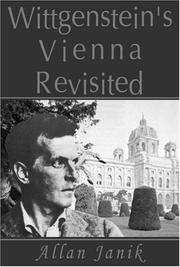
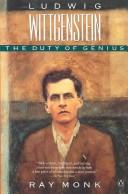
Start with Wittgenstein: A Life, Brian McGuinness's account of the early years, and Wittgenstein's Vienna Revisited, Allan Janik's study of the culture that shaped him, to understand the moral and artistic pressures behind the philosophy. For the essential single volume, Ludwig Wittgenstein, Ray Monk's celebrated biography subtitled The Duty of Genius, is one of the great philosophical biographies and the best doorway of all.
The early philosophy
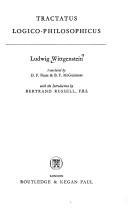
Now the first system. Tractatus logico-philosophicus, Wittgenstein's austere early masterpiece on the limits of language and logic, claims to solve philosophy's problems and then fall silent. It is short and forbidding, so read it beside Wittgenstein, Anthony Kenny's clear guide to the whole development, which explains what the Tractatus is doing.
The later turn
The later Wittgenstein rejected much of that early picture. Preliminary studies for the "Philosophical investigations", the so-called Blue and Brown Books dictated to his students, is the most approachable entry into his mature ideas about meaning as use. From there the interpretation deepens: Wittgenstein on Rules and Private Language, Saul Kripke's influential reading, poses the famous rule-following puzzle, while The claim of reason, Stanley Cavell's ambitious study, draws out the ethical and skeptical stakes. For rigor, Wittgenstein : Meaning and Mind , Part 1, P. M. S. Hacker's detailed commentary, is the scholar's reference, and The New Wittgenstein, Alice Crary's edited collection, presents the resolute reading that reshaped recent debate.
Read in this order, the two Wittgensteins become one continuous struggle with the same question about language and sense. Follow the full path from the life to both philosophies.
Follow the full reading path →
Ready to learn something deeply?
Build a reading path — free