Hannah Arendt is easy to quote and hard to read well, because her most famous phrase, the banality of evil, has been stripped of the careful argument that produced it. Her thought runs from an analysis of how tyranny becomes total to a hopeful theory of human action, and the two halves need each other.
The order below sets her life first, then works through the dark diagnoses, then the constructive philosophy, so her optimism reads as earned rather than naive.
The life and the entry point
Begin with Hannah Arendt: A Life in Dark Times, Ann Heberlein's accessible biography, to meet the refugee philosopher inside her century. Then Why Arendt Matters, Elisabeth Young-Bruehl's short introduction by her foremost biographer, frames the core themes and why they still bite.
The diagnosis of the century
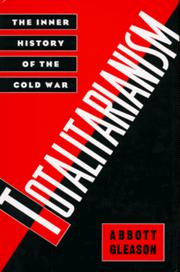
Now the heavy books. The Origins of Totalitarianism, Arendt's massive study of Nazism and Stalinism, argues that total domination was a genuinely new political form; read it alongside Totalitarianism, Abbott Gleason's history of the concept, to see how the term itself was contested. Then Eichmann in Jerusalem, her controversial report on the trial of the Nazi organizer, introduces the banality of evil, best understood as a claim about thoughtlessness, not a softening of guilt. Pair it with The Anatomy of Fascism, Robert Paxton's comparative history, to ground the political science beneath her philosophy.
The constructive philosophy
Arendt did not stop at horror. The Human Condition, her central work, distinguishes labor, work, and action and defends politics as the space where humans appear to one another as free. On revolution, her comparison of the American and French upheavals, tests those ideas against real founding moments. The Life of the Mind, her final, unfinished study of thinking, willing, and judging, returns to the question that haunted the Eichmann book: what does it mean to think? Close with Hannah Arendt and the limits of philosophy, Lisa Jane Disch's scholarly reading, which draws the threads together.
Read in this order, Arendt becomes a thinker of both catastrophe and renewal. Follow the full path from the dark times to her defense of political freedom.
Follow the full reading path →
Ready to learn something deeply?
Build a reading path — free