Adam Smith is claimed by everyone and understood by few. Reduced to a slogan about the invisible hand, he is imagined as a champion of pure selfishness, when his first great book was a treatise on sympathy and moral judgment. To grasp him you have to read the moral philosopher before the economist.
The order below opens with a biography and his own moral theory, then reaches The Wealth of Nations, and finally places him in the story of economic thought so you can weigh his real argument.
Meet the philosopher first
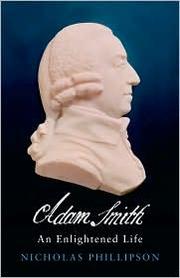
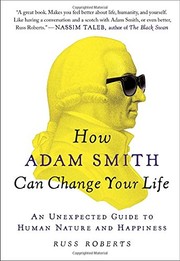
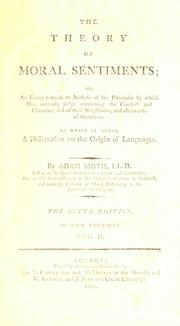
Begin with Adam Smith: an enlightened life, Nicholas Phillipson's biography, which sets him firmly in the Scottish Enlightenment and its questions. Then How Adam Smith can change your life, Russ Roberts's friendly primer, uses his ethics to show that the popular image of Smith is nearly backwards. Now read the man himself: The theory of moral sentiments, Smith's first book, on how our sense of right and wrong grows from imagining ourselves in others' shoes. It is the moral foundation everything else rests on.
Reach the economics
Only now approach the famous work. To ease in, The worldly philosophers, Robert Heilbroner's beloved history of the great economists, puts Smith in a line of thinkers and explains why his ideas mattered. Then read The Wealth of Nations, Smith's founding text of modern economics, on labor, markets, and the division of labor, keeping in mind the moral vision behind it. Adam Smith's Marketplace of Life, James Otteson's study, argues directly for reading the two books as one coherent project rather than a contradiction.
Place him in the argument
Round out the picture with interpretation and legacy. The Authentic Adam Smith, James Buchan's short study, separates the real thinker from the political mascot. Grand Pursuit, Sylvia Nasar's history of economic genius, carries the story forward through the discipline he launched. And Economics: the user's guide, Ha-Joon Chang's accessible overview, shows how contested that discipline remains, a healthy reminder that Smith started a debate, not a doctrine.
Read this way, Smith becomes a moral philosopher of commercial society, not its cheerleader. Follow the full path from his ethics to his economics.
Follow the full reading path →
Ready to learn something deeply?
Build a reading path — free