The single most useful thing to know before reading Chomsky is that there are two of him, and he has said repeatedly that the connection between them is thinner than people assume. One transformed linguistics in the late 1950s by arguing that human language capacity is innately structured. The other has spent six decades writing about American foreign policy, media ownership and state power. Treating these as one continuous argument produces confusion; treating them as two tracks makes both far more readable.
The political writing has its own sequencing problem. Much of it is topical, tied to a specific decade's conflicts, and the early books assume events readers under fifty may not remember. Starting with the anthology rather than a single campaign book solves most of that.
A single doorway
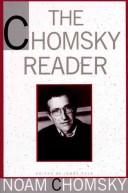
The Chomsky reader is the efficient opening, sampling both careers in one volume with introductory material to place each piece. It gives you enough of the linguistics to know whether you want more, and enough of the politics to see the method — heavy documentation, comparison of official statements against the record, and an insistence on applying the same standards to one's own state as to its adversaries.
The linguistics track
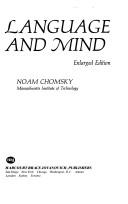
Language and mind is the accessible statement of the case: that the speed and uniformity with which children acquire language, from evidence that badly underdetermines the result, points to innate structure rather than general-purpose learning. It is philosophical rather than technical, which is what makes it the right entry point.
Then read Steven Pinker's The Language Instinct. Pinker is broadly in the nativist camp and writes far more entertainingly than Chomsky does, but he is not a Chomsky expositor — the two have disagreed substantially, including on how much language owes to natural selection. Reading Pinker after Language and mind shows you the tradition arguing internally, not a single position restated. The generative programme itself remains contested; usage-based and connectionist accounts of acquisition are live alternatives, and the honest summary is that the field has not settled.
Problems of knowledge and freedom is the bridge, delivered as the Russell lectures and reaching from the theory of mind to political liberty — the closest Chomsky comes to arguing that his two careers share a foundation.
The political track
Necessary illusions introduces the argument about how media in a free society can nonetheless produce a narrow range of acceptable opinion without any formal censorship. Manufacturing consent, written with Edward S. Herman, is the systematic version: the propaganda model, with its five filters of ownership, advertising, sourcing, flak and ideology, tested against paired case studies. It is the most cited and most argued-over book on this path, and critics have long charged that the model is functionalist and hard to falsify. Read the case studies and judge the method against them.
Hegemony or Survival and Failed States apply the framework to post-2001 American policy, and Who Rules the World? is the later restatement — the three overlap considerably, so pick one rather than reading all three unless the subject grips you.
Chomsky On Anarchism is the closing text and the one that names his actual position: anarcho-syndicalism, a libertarian socialism with a genuine intellectual lineage that most coverage of him never mentions. It reframes the criticism as coming from somewhere rather than from generalised opposition.
Browse more reading paths on Discover, or follow the full path to keep these in order.
Follow the full ordered path here: How to Read Chomsky, in Order.