The Crusades are constantly invoked and rarely understood. Read them in a careful order and the cartoon of noble knights versus fanatical foes collapses into something far stranger: a two-century collision of faith, greed, idealism, and brutality that neither side remembers the same way.
Order matters especially here because perspective is everything. Read only Western sources and you get half a war. This path deliberately alternates viewpoints, setting the medieval scene, then telling the campaigns from European and Arab eyes, so you finish with a genuinely three-dimensional picture.
Set the scene
Start with Middle Ages by Miri Rubin, a concise orientation to the medieval world the crusaders came from, then read Holy war by Karen Armstrong, which frames the Crusades within the long history of religious violence and its consequences down to the present.
The campaigns, from both sides
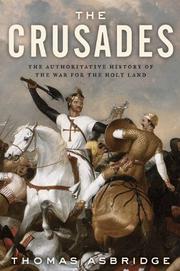
For the full narrative, The Crusades by Thomas Asbridge is the outstanding modern single-volume history, vivid and even-handed. Pair it with GOD'S WAR: A NEW HISTORY OF THE CRUSADES by Christopher Tyerman, a heavier, deeply researched account that questions the romantic myths.
Now flip the perspective, the essential move most readers skip. The Crusades Through Arab Eyes by Amin Maalouf retells the whole saga from the Muslim side, and it is a revelation. Saladin by John Man brings the great Muslim leader into focus as a human being rather than a legend.
Go deeper on the pivotal moments
For the campaign that started it all, The First Crusade: A New History by Thomas Asbridge reconstructs the improbable, blood-soaked march to Jerusalem in gripping detail. Broaden the frame with The Crusades: A History by Jonathan Riley-Smith, from the historian who reshaped how scholars understand crusaders' actual motives.
Finish with two immersive accounts: Armies of heaven by Jay Rubenstein on the apocalyptic mindset that drove the First Crusade, and Crusaders: An Epic History of the Wars for the Holy Lands by Dan Jones, a sweeping, character-driven narrative that makes a fine capstone.
Read the path in this order, and from both directions, and the Crusades become what they truly were, a long and ambiguous tragedy whose meaning still depends on who is telling it. Follow the full sequence to see all sides.
Follow the full reading path →
Ready to learn something deeply?
Build a reading path — free