Simone de Beauvoir is too often reduced to one famous line about becoming a woman, which flattens a thinker who worked across philosophy, fiction, and memoir. To understand her you have to see how her existentialist ethics, her feminism, and her lived choices formed a single project.
A helpful order starts with a modern biography and the intellectual milieu, moves into her core philosophical and feminist writing, then lets her memoirs and novels show the ideas in motion.
Set the stage
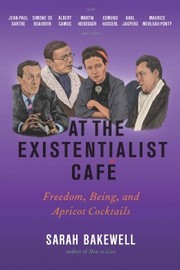
Begin with Becoming Beauvoir, Kate Kirkpatrick's recent biography, which recovers her as an original philosopher rather than Sartre's companion. Then At the Existentialist Café, Sarah Bakewell's group portrait of the existentialists, gives the warm, readable context, who these thinkers were and what they were arguing about.
The philosophy and the feminism
Now go to the ideas. The ethics of ambiguity, Beauvoir's own accessible statement of existentialist ethics, is the best short entry into her philosophy of freedom and responsibility. Pair it with Existentialism Is a Humanism, Sartre's famous lecture, to hear the shared vocabulary she both used and pushed against. Her landmark feminist analysis is the heart of the path; approach it through Nature of the second sex, drawn from her monumental study of how women are made into the Other. To see how her ideas traveled and were challenged, Feminist theory, bell hooks's argument for an inclusive feminism, offers a later, sharper vantage on questions of race and class that Beauvoir underplayed.
The life and the fiction
Beauvoir insisted that philosophy and living were inseparable, so read her that way. My Life Volume 1 Memoirs Of A Dutiful Daughter, the first volume of her autobiography, shows the making of the thinker. THE MANDARINS A NOVEL, her Goncourt-winning novel of postwar intellectuals, and The Woman Destroyed, her trio of stories about women in crisis, dramatize freedom and constraint far more intimately than any treatise. Finally, Simone de Beauvoir and the politics of ambiguity, Sonia Kruks's scholarly study, ties the strands into a coherent political philosophy.
Read in this sequence, Beauvoir emerges as a systematic and daring thinker. Follow the full path from her life to her philosophy and back.
Follow the full reading path →
Ready to learn something deeply?
Build a reading path — free