The ocean covers most of the planet, holds nearly all of its living space, and we have mapped less of its floor in detail than we have the surface of Mars. That is what makes marine biology so seductive and so hard to self-teach: it stitches together geology, chemistry, animal behavior, and climate, and most popular books drop you into one corner of it with no map of the whole.
Which is exactly why order matters here. Read a deep-sea book first and the chemistry and food webs feel like trivia; read a jellyfish memoir before you understand ocean circulation and you miss why any of it is arranged the way it is. A good path gives you the system before the specimens.
Start with the whole ocean
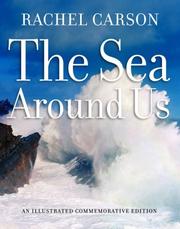
Begin with The Sea Around Us by Rachel Carson. It is old, but it remains the best single-volume feel for the ocean as one connected body — tides, currents, the deep, the chemistry of seawater — written by the scientist who later launched modern environmentalism. It gives you the frame everything else hangs on.
Then meet the animals
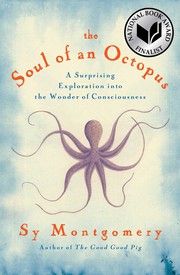
Now go to the creatures, because they are what pull most people in. The Soul of an Octopus by Sy Montgomery is the gateway drug: a vivid, rigorous account of octopus intelligence that makes you take invertebrate minds seriously. Follow it with Spineless by Juli Berwald, a jellyfish-focused book that quietly teaches you invertebrate biology and ocean chemistry through one obsession.
Kraken by Wendy Williams is the third of the invertebrate books and the most efficient. It uses the squid — the giant squid of legend, but mostly the ordinary ones that neuroscience has depended on for a century — to cover camouflage, nervous systems, and the animal's odd central place in the history of biology. Read it after the octopus book, because the two animals are close cousins with very different lives, and the contrast teaches more than either alone.
Then Reef Life by Callum Roberts moves you to coral reefs — the ocean's most diverse and most threatened ecosystems.
Go deep
With the shallows understood, descend. The Brilliant Abyss by Helen Scales is the clearest recent tour of the deep sea — how life survives crushing pressure and darkness, and why the deep is suddenly an industrial frontier for seabed mining. Deep by Alex Rogers is its companion from inside the science: Rogers is a deep-sea biologist writing about the expeditions themselves, the hydrothermal vents, and the policy fights over who gets to exploit the abyss. Read them together; they cover overlapping ground from the science-writer and the scientist sides, and the pairing is more interesting than either on its own.
For a philosophical turn, Other Minds by Peter Godfrey-Smith uses the octopus to ask how consciousness could evolve twice, independently, on the same planet.
Then the ocean under pressure
The last stage is the hardest reading and the reason the subject matters. The Ocean of Life, again by Callum Roberts, pulls back to the whole system under human pressure and ties the science to the stakes. Seasick by Alanna Mitchell is the reporter's version, built around going to sea with working scientists, and it is the clearest short account of ocean acidification and deoxygenation you will find — the chemistry story rather than the fisheries one.
A sea in flames by Carl Safina is the narrowest and angriest book here: a marine ecologist's account of the 2010 Deepwater Horizon blowout, written close to the events. It is a case study rather than a survey, and it is valuable precisely because it shows what an industrial accident does to a specific body of water and the people around it.
Close with The ends of the world by Peter Brannen, which is not strictly a marine biology book — it is about the five mass extinctions in Earth's history — but it belongs here, because most of them were ocean events driven by carbon, warming, and anoxia. It supplies the deep-time context that makes the present chemistry alarming rather than merely interesting.
How to actually read this
- Read The Sea Around Us slowly and let it set the vocabulary; everything after is easier for it.
- Keep a running list of the zones (intertidal, pelagic, benthic, abyssal) and place each new animal you meet into one. The geography is the skeleton.
- Pair the wonder books with the system books deliberately — one of each — so you never drift into pure anecdote.
- After each book, write two sentences: what surprised you, and what it changed about how you picture the ocean.
This is a subject where reading and curiosity feed each other; a tide pool or an aquarium visit will make any of these books land harder.
For the full staged sequence with a study plan per stage, follow the full reading path, or start at the ocean subject hub. If the animal-cognition thread grabs you most, browse more paths from there.