Every June, Supreme Court decisions reorder American life, and most of us process them through a scoreboard: which side won. That framing hides everything interesting — why the Court has this power at all, how justices actually reason, and why smart people disagree about what the Constitution means. You do not need law school to understand any of it. You need the right books in the right order.
A note on balance: the Court is now one of the most polarizing institutions in American life, and this path deliberately includes advocates of rival judicial philosophies and critics of the institution itself. Read them as a debate you are refereeing, and expect your own conclusions to stay provisional.
Stage one: the founding design
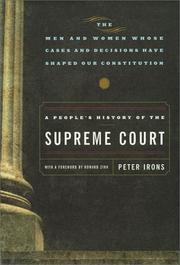
Start at the source. The Federalist Papers by Alexander Hamilton, James Madison, and John Jay is the founders' own argument for the constitutional design — including the case for an independent judiciary as the least dangerous branch. Read selectively rather than cover to cover; the famous numbers repay close attention. Then get the sweep of what the Court became with A people's history of the Supreme Court by Peter H. Irons, which tells the story through the ordinary litigants behind the great cases — and is candid about the Court's failures as well as its heroics.
Stage two: cases as human stories
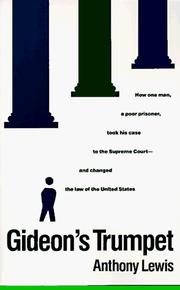
Two classics show constitutional law as lived experience. Gideon's trumpet by Anthony Lewis follows a Florida prisoner's handwritten petition to the ruling that guaranteed a lawyer to every criminal defendant — still the best single-case book ever written. Simple justice by Richard Kluger does the same at epic scale for Brown v. Board of Education, tracing the decades-long legal campaign against segregation. After these, you will never read a case name as an abstraction again.
Stage three: the interpretation wars
Here is the heart of the path — a paired debate between two sitting justices. A matter of interpretation by Antonin Scalia makes the case for originalism: judges should apply the text's original public meaning, lest they become unelected legislators. Active Liberty by Stephen G. Breyer answers with a rival vision: reading the Constitution in light of its democratic purposes. Read them back to back and notice something the scoreboard hides — each philosophy is a serious answer to a real problem, and each has uncomfortable implications its advocates underplay.
Stage four: the modern Court, inside and out
The Nine by Jeffrey Toobin is the standard inside account of the Rehnquist and early Roberts Courts — personalities, politics, and how cases are really decided. His follow-up The oath carries the story into the Obama-era collisions between the White House and the Roberts Court. Then give the critics the floor: The case against the Supreme Court by Erwin Chemerinsky argues the institution has failed at its core job of protecting the vulnerable, and The most dangerous branch by David A. Kaplan contends the modern Court has seized questions that belong to democratic politics. Agree or not, they sharpen the question stage one raised: what is this institution for?
How to actually study this
After stage three, pick one current controversy and write out how a Scalia-style and a Breyer-style judge would each decide it — the exercise reveals more than a month of commentary. Read one actual opinion along the way; they are freely available and more readable than expected. And track your own view of the Court's legitimacy as you go. It will move. That is the path working.
The staged sequence with study plans is at the full reading path. Related civic paths live at the subject hub, or browse all paths.
Ready to learn something deeply?
Build a reading path — free