Timber framing looks like carpentry scaled up, but it is really joinery scaled up — cutting mortises, tenons, and braces so precisely that a building holds together largely through the wood itself. Beginners who jump straight to raising a frame skip the two things that make it possible: understanding how wood behaves and mastering the hand tools and joints. This path builds in the order the craft is actually learned, from material and tools to technique to design and structure.
Get the foundations first and the ambitious projects later become achievable. Rush them and you cut expensive joints that do not fit.
Stage 1: wood and tools
Start with Understanding wood by R. Bruce Hoadley, the essential science of how wood grows, moves, and behaves — the knowledge that explains why timber frames are built the way they are. Pair it with The Anarchist's Tool Chest by Christopher Schwarz, which builds real fluency with the hand tools timber framing depends on, and a hand-tool philosophy to go with it.
Stage 2: learn the joinery
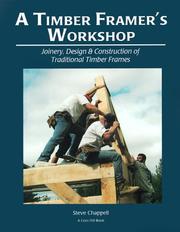
Now the craft itself. A Timber Framer's Workshop by Steve K. Chappell is a superb, thorough introduction to layout and joinery — the standard first book for many framers. Timber frame construction by Jack Sobon is a clear, practical guide to building a frame from the ground up, and Timber Framing for the Rest of Us by Rob Roy offers approachable methods using modern fasteners for those easing in.
Stage 3: design and structure
Framing well means designing well. Building the timber frame house by Tedd Benson is the influential book that revived the craft in North America, and his The timber-frame home goes deeper into designing and living in one. Timber Frame Design According to the National Design Specification by Benson Woodworking connects the craft to the structural engineering that keeps a frame standing and code-compliant.
Stage 4: the tradition and the fine edge
Finally, deepen the craft. The Craft of the Japanese Joiner by Kiyosi Seike shows joinery at its most refined, a source of inspiration and technique. Hewing to a Line by Steve Chappell and Mortise & Tenon Magazine Issue 11 by Joshua Klein connect you to the traditions and ongoing conversation of hand-tool woodworking.
How to study it
This is a hands-on craft, so read and cut in parallel. After the wood-science and tools stage, practice sharpening and make sample joints in scrap before committing to a frame — a mortise and tenon that fits is worth more than three chapters read twice. Start small: a shed, a bent, or a workbench before a house. Mind the structural and code side seriously, since a frame is a building people stand under; complex or occupied structures need an engineer and permits. These books teach the craft, not a license to skip code or professional review.
The staged version, with a study plan per stage, is the full reading path. Browse the subject hub, or build your own list.
Ready to learn something deeply?
Build a reading path — free