The collapse of the Weimar Republic is the twentieth century's most studied cautionary tale, and understanding it means resisting the temptation to jump straight to Hitler. The Nazi rise only makes sense against Weimar's culture, crises, and structural weaknesses. Start with the endpoint and you get a villain; start at the beginning and you get an explanation.
The path moves from the republic itself, to the man and movement that destroyed it, to the mechanics of how power was actually seized, and finally to the hardest interpretive questions about why it happened.
Understand Weimar first
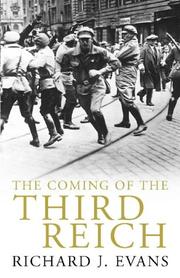
Start with The coming of the Third Reich, Richard Evans's authoritative account of how the republic fell — the ideal spine for the whole subject. Then step back into Weimar's remarkable culture and fatal instabilities with Weimar Germany by Eric Weitz, which shows a society of dazzling creativity and deep fracture. To read the era in its own words, however uncomfortable, Mein Kampf and The Weimar Republic by Detlev Peukert reveal the ideology and the strains from inside.
Trace the rise of Hitler
Now the central figure. Hitler: 1889-1936 Hubris, the first volume of Ian Kershaw's landmark biography, is the definitive study of how an unremarkable man became Fuhrer. Set against the longer sweep of Germany, 1866-1945, Gordon Craig's classic national history, you see how deep the roots ran.
Study the seizure of power
The final stage is mechanism and meaning. The Nazi seizure of power is a brilliant microhistory of how one town went Nazi, making the abstract concrete. Then the debates: Hitler's willing executioners argues a controversial thesis about ordinary Germans and the Holocaust — read it critically and alongside its critics — and The Anatomy of Fascism by Robert Paxton generalizes the whole story into a rigorous account of how fascist movements gain and use power.
Follow the full path and Germany's descent stops being a mystery and becomes a process you can trace. The related history paths apply the same analytical care to other turning points.
Follow the full reading path →
Ready to learn something deeply?
Build a reading path — free