The Manhattan Project is one of history's great convergences — of physics, industry, war, and conscience. To grasp it you need all four, and the books that cover it are best read in an order that mirrors the project itself: first the science and its making, then the people, then the human consequences, and finally the shadow it cast over the decades that followed.
Read out of order, you get the mushroom cloud without the equations that made it, or the moral horror without the choices that led there. In order, the whole thing coheres.
Start with the definitive history
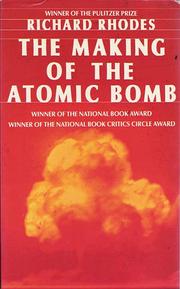
Begin with The making of the atomic bomb. Richard Rhodes's Pulitzer winner is the foundation of the entire subject — the physics, the personalities, and the politics woven into a single narrative that later books assume you know. If its length is daunting, the compact and gripping Bomb by Steve Sheinkin is a superb shorter on-ramp that also covers the espionage.
Meet the people
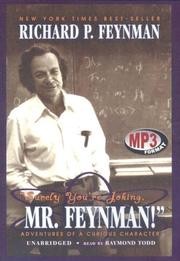
The project was made by extraordinary individuals. American Prometheus is the definitive biography of Oppenheimer, the brilliant, doomed director at its center. The Martians of Science profiles the Hungarian emigres — Szilard, Teller, von Neumann, Wigner — whose warnings started it all, and 109 East Palace tells the daily life of secret Los Alamos. For the era's spirit at its most human and playful, Surely You're Joking, Mr. Feynman lets you sit beside one of its youngest geniuses.
Face the consequences
Then the weight. Hiroshima — John Hersey's spare, unforgettable account of six survivors — is essential and should be read slowly. Downfall examines the fraught decision to use the bomb against Japan, and Dark Sun carries Rhodes's story into the hydrogen bomb and the arms race.
Close with the long reckoning. The fate of the earth confronts what nuclear weapons mean for human survival, and Command and Control reveals how terrifyingly close accident has repeatedly brought us to catastrophe. Read these last, when you understand exactly what was built.
Follow the full path and the bomb becomes not a symbol but a history you can hold — science, people, and consequence together. The related twentieth-century history paths deepen the world it was born into.
Follow the full reading path →
Ready to learn something deeply?
Build a reading path — free