The wars that convulsed Europe for over a decade are easy to admire in fragments — Austerlitz, the retreat from Moscow, Waterloo — and hard to grasp as a whole. There are too many coalitions, too many marshals, too many maps. The way in is to start with the man and the shape of the wars, then follow the campaigns in sequence, then read the theory that the wars themselves produced.
This path builds from a commanding biography outward, so that by the time you reach the individual battles you understand why they mattered.
The man and the whole war
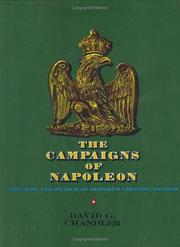
Start with Napoleon, Andrew Roberts's acclaimed, readable biography that ties the political and military life together and gives you a spine for everything else. Then turn to The campaigns of Napoleon, David Chandler's monumental operational history — the definitive account of how Napoleon actually fought, campaign by campaign. Together they supply both the character and the machine.
Into the campaigns
Now the battles themselves. Austerlitz: Napoleon and the Eagles of Europe dissects his masterpiece, the victory that announced a new kind of warfare. Waterloo — Bernard Cornwell's gripping narrative — carries you through the final day with novelist's clarity and a historian's care. Between them lie the grinding fronts: The Peninsular War covers the long, brutal Spanish campaign that drained the empire, and Moscow 1812 recounts the catastrophic Russian invasion that broke it, one of history's great military disasters told with unforgettable force.
Strategy, context, and theory
The final arc widens the lens. The Struggle for Europe sets the wars in their long diplomatic and continental context, and Napoleon's Wars: An International History, 1803-1815 treats them as the interlocking international conflict they really were, not a series of duels. The Age of Napoleon offers Alistair Horne's elegant synthesis of the era's politics and culture. Close with On War, Clausewitz's enduring theory of conflict — written by a soldier who fought these very campaigns, and the intellectual residue the whole period left to the world.
Read in this order, the Napoleonic Wars become a single legible arc from ambition to overreach to fall. Follow the full path to march through it campaign by campaign.
Follow the full reading path →
Ready to learn something deeply?
Build a reading path — free