The Rubik's Cube looks like raw genius territory, but it is really a learnable skill with a clear progression. The people who solve it in seconds did not out-think the puzzle; they learned a method, drilled it, and then optimized. The trouble is that jumping straight to advanced speedcubing material is overwhelming before you can solve the cube at all. The right order — get your first solve, then adopt a real speed method, then explore the mathematics and culture — takes you from stuck to genuinely fast without the frustration.
Read it in sequence and the cube goes from an intimidating object on the shelf to a puzzle you can solve reliably, then quickly.
Get your first solve
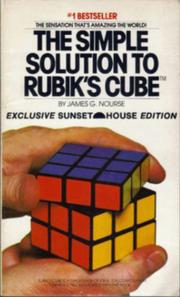
Start with You Can Do the Cube by Patrick Bossert, the famously kid-friendly guide that got a generation to their first solve. Then reinforce it with The Simple Solution to Rubik's Cube by James G. Nourse, the classic bestseller that lays out a clear beginner's method. The goal here is simple but transformative: solve the cube completely, on your own, from any scramble. Everything after this is optimization.
Learn to go fast
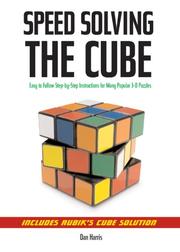
Now build speed. Speedsolving the Cube by Dan Harris is the key book on this path, introducing the efficient methods and finger-tricks that speedcubers actually use, including the leap from a beginner's method to a proper layer-by-layer speed system. This is where casual solvers become fast ones, and it rewards patient, repeated practice of each algorithm set.
Understand the puzzle deeply
With solving well in hand, widen your view. Cracking the cube by Ian Scheffler is an engaging journey into the competitive speedcubing world, blending the author's own quest to break a time barrier with the culture of the sport — it will motivate your practice and show you where the ceiling is. This is the human and cultural context around all those algorithms.
Explore the mathematics
Finish by understanding why the cube works. Adventures in group theory by David Joyner reveals the beautiful mathematics — group theory — that underlies the puzzle and explains why certain sequences do what they do. And Winning Solutions by Erno Rubik, from the cube's own inventor, ties the mathematical and solving perspectives together. These turn a memorized method into real understanding.
How to actually get fast
Learn one method well rather than dabbling in several, and drill its algorithms until your fingers know them without thought. Practice look-ahead — planning your next move while executing the current one — because that, more than raw speed, separates fast solvers. Time yourself to track progress, but do not obsess over single best times; consistency matters more. And solve a lot: cubing is a motor skill, and the reps are the whole game.
Ready to solve it fast, in order? Follow the full reading path, explore the subject hub, or browse related paths.
Ready to learn something deeply?
Build a reading path — free