Irish history is deceptively deep. Behind the familiar images — saints, famine, rebellion — lies a long, layered story of invasion, colonization, catastrophe, and eventual independence, still argued over today. Read the dramatic episodes in isolation and you get emotion without understanding. Read in order and the modern struggle emerges naturally from a millennium of buildup.
This path begins with broad overviews, moves through the medieval and early-modern shaping of the island, and ends with the famine, the rising, and the fight for independence.
The long view
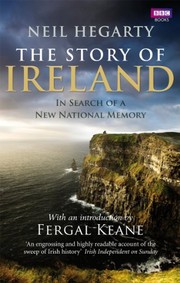
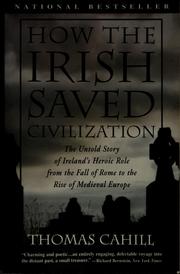
Start with The story of Ireland, Neil Hegarty's readable companion to the sweep of Irish history, and set it beside A short history of Ireland, a compact, reliable survey that gives you the timeline to build on. For the early period, How the Irish saved civilization tells the vivid story of Irish monasteries preserving learning after the fall of Rome, and Strongbow recounts the twelfth-century Norman invasion that began England's long entanglement with the island.
Land, life, and catastrophe
Now the human ground. The Islandman is a classic memoir of hard, traditional life on the Blasket Islands, preserving a world that was vanishing. The heart of the modern tragedy comes with The great hunger, Cecil Woodham-Smith's landmark account of the Famine, and Ireland before and after the famine, an economic history that explains the catastrophe's causes and its shattering demographic legacy. Together they convey both the lived experience and the structural forces behind it.
Rebellion and independence
The final arc is the fight for freedom. Easter 1916: The Irish Rebellion narrates the rising that reshaped Irish politics, and Guerilla days in Ireland offers a combatant's memoir of the War of Independence. The Irish Civil War covers the bitter conflict that followed independence, and Say Nothing, Patrick Radden Keefe's acclaimed book, carries the story into the Troubles with unforgettable narrative force. Close with Modern Ireland 1600-1972, R. F. Foster's magisterial synthesis of the whole modern period — the analytical capstone for everything before it.
Read in this order, Ireland's history becomes a continuous story rather than a set of disconnected griefs and triumphs. Follow the full path to work through it stage by stage.
Follow the full reading path →
Ready to learn something deeply?
Build a reading path — free