The periodic table looks like a chart to memorize, but it is really one of the great intellectual achievements in history: a single grid that predicts how every kind of matter behaves. Read about it in the right order and the table shifts from a wall poster into a map of reality, organized by the hidden logic of the atom.
Order matters because the elements can be approached from many angles, story, culture, deep theory, and each is more powerful once the others are in place. This path starts with the human and historical, moves into real chemistry, then reaches the theoretical and the frontier of freshly created elements.
Fall in love with the elements
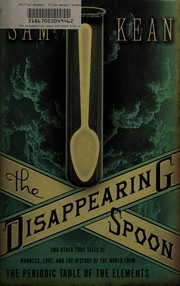
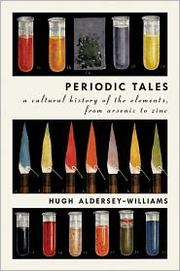
Start with The Disappearing Spoon by Sam Kean, a book of irresistible stories that hangs the history of science on individual elements. It is the ideal doorway. Continue with Periodic Tales by Hugh Aldersey-Williams, which explores the cultural life of the elements, from gold to phosphorus, and Atom by Piers Bizony, which traces how we discovered what matter is actually made of.
For a more visual and reflective pair, The Periodic table by Bill Woodrow and The Elements by Theodore W. Gray let you see and handle the elements as physical, photographed things, which fixes them in memory better than any list.
The chemistry underneath
Bring in real chemistry with Napoleon's Buttons by Penny LeCouteur, which shows how specific molecules changed history, then step up to Chemistry The Central Science AP 14th Edition by Theodore L. Brown, the standard textbook that gives you the actual mechanics of bonding and reactivity behind the table's patterns.
The theory and the frontier
Now go deep on the table itself. A tale of seven elements by Eric R. Scerri tells the story of the last natural elements to be found, and The periodic table, also by Scerri, is the definitive account of how and why the table is arranged as it is, including the surprisingly unsettled question of its "correct" form.
Push to the extremes with The making of the atomic bomb by Richard Rhodes, the towering history of what happens when we split heavy elements, and Superheavy by Kit Chapman, which follows the modern scientists racing to synthesize elements that have never existed in nature.
Read this path in order and the periodic table becomes what its creators meant it to be, a compressed theory of all ordinary matter. Follow the full sequence from stories to superheavy elements to see it whole.
Follow the full reading path →
Ready to learn something deeply?
Build a reading path — free