Black holes are the rare physics topic that captures everyone — a place where gravity wins so completely that space and time break down. That fascination is a gift for learning, but it comes with a hazard: pop science tends to leave you with striking images and a vague sense that you understand, when the real physics is both stranger and more precise than the metaphors suggest.
The way through is a reading order that starts with wonder and ends with rigor. Begin with vivid, accurate popular accounts, then work through the conceptual puzzles that black holes raise, then reach the actual general-relativity mathematics. Each stage earns the next, so the equations arrive as a payoff rather than a wall.
Start with wonder
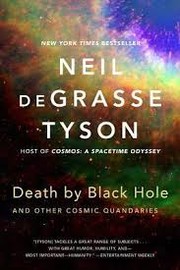
Begin with Death by black hole : and other cosmic quandaries by Neil deGrasse Tyson, a lively, accurate tour that hooks you on the physics. Then Black holes and baby universes and other essays and A Brief History of Time, both by Stephen Hawking, introduce the deep ideas — event horizons, singularities, and the arrow of time — in his famously accessible voice. The Elegant Universe by Brian Greene places black holes in the broader story of relativity and quantum theory.
Grapple with the puzzles
Black holes are not just objects; they are paradoxes. Black Holes, Hawking's Reith Lectures, distills his mature thinking concisely. The Black Hole War by Leonard Susskind narrates the decades-long debate over whether information can truly be destroyed — the puzzle that reshaped theoretical physics. Black hole blues by Janna Levin tells the human story of detecting gravitational waves, connecting the theory to a real, hard-won observation.
Reach the mathematics
For the genuine article, step into the physics. Gravitation by Misner, Thorne, and Wheeler is the monumental, comprehensive treatment of general relativity that specialists live inside, and The large scale structure of space-time by Hawking and Ellis is the rigorous mathematical account of singularities and the geometry of spacetime.
Follow the path in order and black holes become something you understand rather than just marvel at — a natural continuation of the Einstein's-relativity path.
Follow the full reading path →
Ready to learn something deeply?
Build a reading path — free