Statistics is the subject people most often "learn" without understanding — they can run the test but can't say what it means, and so they misuse it. The fix is to build intuition before formulas: understand what statistics is for and how it deceives, then learn the methods, then the mathematical machinery. In that order, the formulas illuminate; in reverse, they just intimidate.
Learn statistics from books: intuition before formulas
July 6, 2026 · 1 min read
The path, stage by stage
Our statistics path builds understanding before computation.
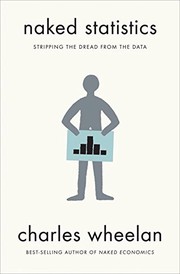
Foundations — statistical intuition. Huff's How to Lie with Statistics (a tiny classic on how numbers mislead), Spiegelhalter's The Art of Statistics, and Wheelan's Naked Statistics. Learn to smell a bad statistic before you learn to compute a good one.
Core methods — doing statistics. OpenIntro Statistics (free, excellent) — the real methods, worked properly.
Going deeper — probability and mathematical statistics. Introduction to Probability and Mathematical Statistics with Applications — the theory underneath the methods.
Modern practice — regression and inference. Gelman's Regression and Other Stories and The Elements of Statistical Learning — statistics as it's actually practiced on data.
Mastery — Bayesian thinking. Bayesian Data Analysis and Statistical Inference — a different, powerful way to reason about uncertainty.
The habit: simulate, don't just derive
The modern shortcut to statistical intuition is simulation. Rather than only deriving a result, write a few lines of code to simulate it — flip 10,000 virtual coins, resample your data, watch the distribution emerge. Seeing the law of large numbers happen beats memorizing it, and it turns abstract theorems into things you've watched with your own eyes.
Around 128 hours. Follow the path or browse the statistics hub. It's the backbone of data science and leans on mathematics.
FAQ
- Do I need to be good at math for statistics?
- For the intuition and methods stages, surprisingly little — they run on clear thinking and a bit of arithmetic. The deeper stages need calculus and probability, but by then you’ll have the motivation that makes the math worth doing.
- Frequentist or Bayesian — which should I learn?
- Both, in the path’s order: the classical methods first (they’re the lingua franca), then Bayesian thinking as a powerful complement. Understanding the contrast is itself part of statistical maturity.
Get the books
- 1How to Lie with StatisticsAmazon ↗Darrell Huff
- 2The Art of StatisticsAmazon ↗David Spiegelhalter
- 3Naked StatisticsAmazon ↗Charles J. Wheelan
- 4OpenIntro statisticsAmazon ↗David M. Diez
- 5Introduction to ProbabilityAmazon ↗Dimitri P. Bertsekas
- 6Mathematical statistics with applicationsAmazon ↗Dennis D. Wackerly
As an Amazon Associate we earn from qualifying purchases. Some book links are affiliate links; you pay the same price and we may earn a small commission.
Follow the full reading path


How to learn Statistics
Beginner10books128 hrs5 stages
Ready to learn something deeply?
Build a reading path — free