Scala is really several languages in one: you can write it like a tidier Java, like a pure functional language, or like something in between. That flexibility is powerful for teams and bewildering for learners, because two tutorials can look like they are teaching different languages entirely. The mistake is diving into a functional-effects library before you can read basic Scala idioms.
The order that works establishes the language first, then the functional core that most serious Scala rests on, and finally the ecosystem libraries and effect systems that production codebases use. Each layer clarifies choices the previous one left open.
Learn the language
Start with Programming in Scala, co-written by the language's creator and the definitive, patient introduction to the whole language. Scala for the Impatient is the faster on-ramp for experienced programmers who want the essentials without ceremony. Between them you can pick the pace that suits you; both leave you able to read and write idiomatic Scala across its object-oriented and functional sides, which is the prerequisite for everything after.
The functional core
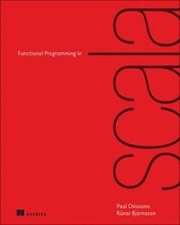
Scala's identity leans functional, and Functional Programming In Scala — the famous "Red Book" — is the rigorous, exercise-driven text that teaches you to build abstractions from first principles. It is challenging and worth every hour. Scala with Cats then grounds those ideas in the Cats library, showing how typeclasses like functors and monads become practical tools. The Type Astronaut's Guide to Shapeless goes further into generic and type-level programming for readers who want to see how far the type system reaches.
Ecosystem and effects
The final arc is how modern Scala is actually written. Practical FP in Scala and Effect-Oriented Programming teach the effect-system style — using types like IO to make side effects explicit and testable — that dominates current functional Scala. Scala Design Patterns and Optimizing Scala cover architecture and performance for larger systems, while Scala Cookbook is the reference to keep open for the concrete "how do I do X" questions that come up daily.
Read in this order and Scala's many faces resolve into a coherent set of tools you know when to use. Follow the full path to go from your first case class to effect-oriented systems.
Follow the full reading path →
Ready to learn something deeply?
Build a reading path — free