Embedded programming is uniquely unforgiving because a bug is not a stack trace on a screen; it is a device that quietly locks up in the field. You have to understand the hardware, the constraints of C on a tiny chip, and the timing discipline of real-time code all at once, which is why jumping straight to a microcontroller datasheet leaves most beginners stuck.
The order that works layers the discipline from the physical up. Get comfortable with electronics and embedded C, absorb the professional habits that keep firmware reliable, then learn a specific processor family and finally the real-time operating systems that coordinate everything. Each step reduces the surface area of the next.
Foundations: hardware and C
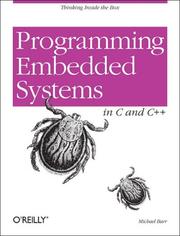
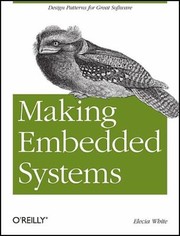
Start with The art of electronics, the beloved reference that gives software people enough real circuit intuition to stop treating the hardware as a black box. Then Programming Embedded Systems in C and C ++ and Making Embedded Systems teach how C actually behaves against registers, interrupts, and memory-mapped I/O — the mental model embedded work is built on. Making Embedded Systems in particular is prized for teaching how to think about architecture on constrained devices, not just syntax.
Firmware discipline
Reliability in embedded systems comes from habits, and these books instill them. Embedded C Coding Standard is a short, enforceable set of rules that prevent whole classes of bugs. Test-driven development for embedded C shows how to test firmware despite the hardware, which sounds impossible until this book makes it routine. Developing Reusable Firmware and Better Embedded System Software round out the craft, covering portable driver design and the systemic failure modes that separate hobby code from products that ship.
Processors and real-time
Finally, get specific. The Definitive Guide to ARM Cortex-M3 and Cortex-M4 Processors and Embedded Systems with ARM Cortex-M Microcontrollers in Assembly Language and C teach the dominant embedded architecture down to the register level. For coordinating tasks under hard timing constraints, MicroC/OS-II: The Real-Time Kernel explains a real-time kernel from the inside, and Using the FreeRTOS Real Time Kernel is the practical guide to the most widely deployed RTOS in the world.
Read in this order and embedded development stops feeling like fighting the hardware and starts feeling like engineering it. Follow the full path to go from first principles to shipping reliable firmware. These books complement hands-on work with real boards; nothing replaces flashing a device and watching it run.
Follow the full reading path →
Ready to learn something deeply?
Build a reading path — free