Learn Scala: the best books in order
This curriculum takes an intermediate programmer from Scala's core syntax and type system through functional programming principles and into advanced design patterns and the broader JVM/Typelevel ecosystem. Each stage builds directly on the vocabulary and mental models of the previous one, so the progression feels natural rather than jarring. By the end, the learner will be equipped to design production-grade, purely functional Scala systems.
Core Scala Foundations
BeginnerGet fluent in Scala's syntax, type system, collections, and object-functional hybrid model — building the vocabulary needed for everything that follows.
▸ Study plan for this stage
Pace: 8–10 weeks, ~40–50 pages/day (mix of reading and active coding). Start with "Programming in Scala" (Chapters 1–15, ~4–5 weeks), then "Scala for the Impatient" (Chapters 1–14, ~3–4 weeks) for reinforcement and practical speed.
- Scala syntax fundamentals: variables, functions, control flow, and expression-oriented programming
- Type system: static typing, type inference, generics, and variance (covariance/contravariance)
- Collections API: immutable and mutable collections (List, Map, Set, Array), transformations (map, filter, fold), and pattern matching
- Object-oriented features: classes, traits, inheritance, abstract members, and composition
- Functional programming basics: first-class functions, higher-order functions, closures, and anonymous functions
- The hybrid model: seamlessly mixing OOP and FP paradigms in the same codebase
- Case classes and pattern matching: structural decomposition and exhaustiveness checking
- Scala's standard library conventions: immutability by default, method chaining, and idiomatic style
- What are the key differences between var, val, and def in Scala, and when should you use each?
- Explain Scala's type system: how does type inference work, and what are generics and variance?
- How do traits differ from classes, and how does multiple inheritance via traits work in Scala?
- What is pattern matching, and how does it relate to case classes and sealed traits?
- Describe the difference between mutable and immutable collections, and give examples of common operations (map, filter, fold).
- How do higher-order functions and closures enable functional programming in Scala?
- Write a small program using var, val, and def; refactor it to use val and immutability wherever possible.
- Create a generic class or method (e.g., a Stack[T]) and experiment with type inference and explicit type annotations.
- Design a trait hierarchy (e.g., Animal, Dog, Cat) and use multiple traits to compose behavior; verify that you can instantiate mixed-in types.
- Implement a function that takes a List[Int], uses pattern matching to handle empty and non-empty cases, and returns a computed result.
- Transform a collection using map, filter, and fold; then rewrite the same logic using for-comprehensions and compare readability.
- Write a higher-order function that accepts another function as a parameter (e.g., applyTwice: (Int => Int) => Int => Int) and test it with different closures.
Next up: Mastery of Scala's syntax, type system, and hybrid OOP-FP model provides the foundation for advanced topics like implicit conversions, monads, and functional abstractions that unlock Scala's full expressive power.

Written by Scala's creator, this is the definitive reference for the language. It covers every core feature with precision and is the canonical starting point for any serious Scala learner.

A concise, example-driven complement to Odersky's book that reinforces syntax and idioms quickly. Reading it second solidifies the foundations with a faster, more practical lens.
Functional Programming in Scala
IntermediateInternalize pure functional programming — referential transparency, higher-order functions, type classes, and effect management — using Scala as the vehicle.
▸ Study plan for this stage
Pace: 8–10 weeks, ~40–50 pages/day with active coding practice
- Referential transparency and pure functions: understanding why side effects break composability and how to structure programs around pure computations
- Higher-order functions and function composition: passing functions as arguments, returning functions, and building abstractions through composition
- Immutability and persistent data structures: why immutable state eliminates entire classes of bugs and enables safe parallelism
- Type classes and ad-hoc polymorphism: using implicit parameters and type classes to extend behavior without modifying existing code
- Monads and effect management: abstracting side effects into monadic structures (Option, Either, IO) to maintain referential transparency while handling real-world concerns
- Lazy evaluation and infinite streams: understanding non-strict evaluation and how to work with potentially infinite data structures safely
- Property-based testing with ScalaCheck: verifying program correctness through generative testing rather than example-based tests
- What is referential transparency and why does it matter for reasoning about programs?
- How do higher-order functions enable abstraction, and what are practical examples of function composition in Scala?
- Explain the relationship between monads and effect management—how do they help you write pure code while handling side effects?
- What is a type class, and how does Scala's implicit system enable ad-hoc polymorphism without inheritance?
- How do immutable data structures and persistent data structures prevent bugs and enable safe concurrent programming?
- What is the difference between strict and lazy evaluation, and when should you use each in Scala?
- Implement pure versions of common functions (map, filter, fold) on custom data structures without side effects; verify referential transparency by substituting function calls with their results
- Write a small domain model (e.g., a shopping cart or bank account) using only immutable data and pure functions; refactor imperative code into functional equivalents
- Build a simple parser combinator library using higher-order functions and function composition; test it on real input
- Implement custom type classes (e.g., Monoid, Functor) for your own data types and use them with generic functions
- Refactor code that uses Option and Either to handle errors functionally; chain operations using flatMap and for-comprehensions
- Create a lazy stream (similar to the Stream type in the book) and implement operations like take, drop, and filter on infinite sequences
- Write property-based tests using ScalaCheck for your pure functions; generate random inputs and verify invariants hold
- Implement a simple IO monad or use the book's approach to separate pure logic from side effects; structure a small program (e.g., reading input, processing, printing output) using this pattern
Next up: This stage establishes the foundational mindset and tools for functional programming in Scala—pure functions, immutability, and effect abstraction—which become the building blocks for advanced topics like concurrent and parallel programming, where these principles enable safe, composable, and efficient code.
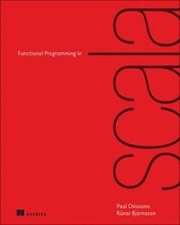
Known as 'the Red Book', this is the most rigorous FP curriculum available in Scala. It builds every abstraction from scratch, giving the learner deep intuition rather than surface-level API knowledge.
Type System Mastery & Advanced Patterns
IntermediateLeverage Scala's advanced type system features — implicits, type classes, GADTs, and compile-time programming — to write expressive, safe, and reusable code.
▸ Study plan for this stage
Pace: 4–5 weeks, ~40–50 pages/day with 2–3 days per week for hands-on exercises and pattern implementation
- Scala's type system fundamentals: variance, bounds, and type constraints that enable safe abstraction
- Implicit parameters and implicit conversions: how they enable type class patterns and extension methods
- Type classes as a design pattern: defining, implementing, and using type classes for ad-hoc polymorphism
- Generalized Algebraic Data Types (GADTs): encoding type-safe heterogeneous collections and domain-specific languages
- Structural types and refinement types: expressing precise type requirements at compile time
- Compile-time metaprogramming with macros and shapeless: generating code and performing type-level computation
- Design patterns adapted for Scala: how classical patterns leverage type system features for elegance and safety
- Practical composition: combining implicits, type classes, and advanced types to build reusable, expressive libraries
- How do implicit parameters and implicit conversions work in Scala, and what are the key differences between them?
- What is a type class, and how does it differ from traditional object-oriented inheritance? Provide a concrete example.
- How can you use variance annotations (covariance and contravariance) to make your generic types more flexible and type-safe?
- What are GADTs, and how can they be used to encode type-safe operations that would be unsafe with standard generics?
- How do you implement and use structural types and refinement types to express precise compile-time constraints?
- What are the benefits and pitfalls of using implicits in Scala, and how can you write implicit code that is maintainable and debuggable?
- Implement a type class for a custom data structure (e.g., a Serializer type class) with multiple instances and use it to serialize different types polymorphically
- Create a GADT-based expression evaluator that ensures type safety: e.g., an Expr[T] that can only be evaluated to a value of type T
- Write a library using implicit parameters to provide context-dependent behavior (e.g., a logging framework that uses implicit Logger instances)
- Refactor a piece of code using classical design patterns (e.g., Strategy, Factory) to leverage Scala's type system and implicits for cleaner syntax
- Build a small DSL using structural types and refinement types to enforce compile-time constraints on a domain-specific problem
- Implement a generic container that uses variance annotations correctly to be both covariant and contravariant where appropriate, then verify type safety with edge cases
Next up: This stage equips you with the advanced type system tools and design patterns needed to architect large-scale, type-safe Scala systems; the next stage will focus on applying these patterns to concurrent programming, functional abstractions, and building production-grade libraries.

Translates classic and FP-specific design patterns into idiomatic Scala, helping the learner recognize and apply recurring architectural solutions in real codebases.
The Typelevel Ecosystem & Effect Systems
ExpertBuild production-ready, purely functional applications using Cats Effect, FS2, and the broader Typelevel stack for concurrency, streaming, and resource management.
▸ Study plan for this stage
Pace: 8–10 weeks, ~40–50 pages/day with 2–3 days per week dedicated to hands-on exercises and refactoring existing code
- Effect systems and IO monad as the foundation for pure functional programming in production
- Cats Effect fundamentals: fiber-based concurrency, resource safety with Resource, and bracket patterns
- FS2 streaming abstractions: Streams, Pipes, and Pull for composable, resource-safe data processing
- Practical error handling and recovery strategies in effect-based systems
- Building production applications with dependency injection, configuration, and testability in mind
- Concurrency patterns: fiber spawning, cancellation, timeouts, and safe resource cleanup
- Composing effects with Cats type classes (Monad, MonadError, Concurrent) for reusable abstractions
- How does Cats Effect's IO monad enable safe, composable concurrency compared to imperative threading?
- What is the Resource type and how does it guarantee resource cleanup in the presence of errors and cancellation?
- How do you design and compose FS2 Streams and Pipes to handle backpressure and resource safety?
- What are the key differences between bracket, Resource, and finalizer patterns, and when should you use each?
- How do you structure a production application using Cats Effect that is testable, configurable, and maintainable?
- What strategies exist for error handling and recovery in effect-based systems, and how do you implement them?
- Refactor an existing imperative Scala application to use Cats Effect IO, replacing mutable state and callbacks with pure functions and effect composition
- Build a multi-threaded file processing pipeline using FS2 Streams that reads from multiple sources, transforms data, and writes to multiple destinations with proper resource management
- Implement a concurrent HTTP client wrapper using Cats Effect that handles timeouts, retries, and cancellation safely
- Create a production-ready configuration loader that uses Resource to manage file handles and environment variable parsing with error recovery
- Write a test suite for an effect-based service using cats-effect's testing utilities, covering happy paths, error cases, and cancellation scenarios
- Design and implement a simple job queue or worker pool using Cats Effect fibers with proper shutdown semantics and error handling
Next up: Mastering the Typelevel ecosystem and effect systems provides the architectural foundation and composable abstractions needed to tackle advanced topics like distributed systems, advanced type-level programming, and production optimization patterns in subsequent stages.

Shows how to wire together Cats Effect, FS2, Http4s, and Skunk into a real application architecture. It is the most practical advanced Scala book available and directly applies everything learned in prior stages.
JVM Ecosystem & Performance
ExpertUnderstand how Scala runs on the JVM, how to tune performance, and how to interoperate with the broader Java ecosystem for production deployments.
▸ Study plan for this stage
Pace: 4–5 weeks, ~40–50 pages/day, focusing on recipes related to JVM performance, Java interoperability, and deployment patterns
- JVM memory management, garbage collection tuning, and heap profiling for Scala applications
- Java interoperability patterns: calling Java from Scala, exposing Scala code to Java, and managing type conversions
- Scala collections performance characteristics and choosing the right data structures for production workloads
- Concurrency on the JVM: threads, locks, and atomic operations in Scala
- Profiling and benchmarking Scala code using JVM tools (JProfiler, YourKit, JMH)
- Packaging, deployment, and building Scala applications for production environments
- Working with Java libraries and frameworks from Scala (Spring, Hibernate, etc.)
- Compiler optimizations and tail recursion, inlining, and specialization in Scala
- How do you profile a Scala application to identify memory leaks and performance bottlenecks on the JVM?
- What are the key differences between mutable and immutable collections in Scala, and how do they affect performance in production systems?
- How do you call Java methods from Scala and expose Scala code to Java callers, including handling of generics and null values?
- What JVM tuning parameters (heap size, GC algorithm, etc.) are most relevant for Scala applications, and how do you set them?
- How do you use Java Microbenchmark Harness (JMH) or similar tools to benchmark Scala code accurately?
- What are the best practices for packaging and deploying a Scala application as a JAR or containerized service?
- Select 3–4 recipes from the Cookbook related to Java interoperability and implement a Scala wrapper around a Java library (e.g., Apache Commons, Google Guava) that exposes a functional API
- Profile a simple Scala application using a JVM profiler (JProfiler, YourKit, or built-in JDK tools) to identify heap usage and GC pauses; document findings and propose optimizations
- Write a micro-benchmark using JMH comparing the performance of Scala's List, Vector, and Array for a specific workload; analyze results and explain trade-offs
- Create a Scala application that spawns multiple threads using Scala's concurrency primitives; measure contention and optimize using atomic operations or lock-free techniques
- Build a complete Scala project with a build configuration (sbt) that includes JVM tuning flags, profiling hooks, and packaging for deployment; test locally and document the setup
- Implement a Scala class that wraps a mutable Java collection (e.g., HashMap) and provide both mutable and immutable interfaces; test interoperability from both Scala and Java code
Next up: Mastering the JVM ecosystem and performance tuning equips you to build production-grade Scala systems that integrate seamlessly with Java libraries and scale efficiently, preparing you for advanced topics like distributed systems, actor-based concurrency, or functional reactive programming.
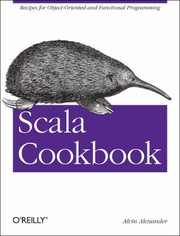
A comprehensive recipe-style reference covering interoperability, tooling, testing, and real-world patterns. Serves as an ideal capstone reference to consult as the learner builds and ships real systems.
Discussion
Keep reading
Paths that share books, cover the same subject, or open a related topic.