Russian cooking confuses newcomers because the flavour logic runs the opposite way to most Western European cooking. The defining moves are souring, salting, culturing and pickling — smetana, kvass, brined cucumbers, rye, dill, and preserved everything — and they exist because of a growing season that used to end hard in September. Approach it as a variation on French or Italian technique and the food reads as bland and heavy. Approach it as a preservation cuisine and it snaps into focus.
The other complication is scope. "Russian" in most cookbooks means the wider former-Soviet table: Georgian walnut sauces, Ukrainian borshch, Central Asian plov. That breadth is a feature, but it is worth knowing which book is doing which job.
The survey, then the classic
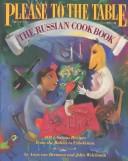
Start with Please to the Table by Anya Von Bremzen and John Welchman. It is the widest-angle book on this path, covering the full Soviet republics with hundreds of recipes and enough headnote context to explain what you are making. Its scope is also its weakness — you will not master any single region from it — but as a first year of cooking it is the most useful single volume.
Then narrow to A taste of Russia by Darra Goldstein, the book that taught a generation of English-speaking cooks the core Russian repertoire: zakuski, soups, pies, and the fasting-and-feasting rhythm of the traditional table. It is the more focused counterpart to the survey above.
Go deeper on the north and the classics
Goldstein's Beyond the North Wind is the mature version of the same project — sharper on the far-north ingredients, on fermented and cultured foods, and on why the cuisine looks the way it does. If you buy only one Goldstein, buy this one and treat A taste of Russia as the earlier draft.
The art of Russian cuisine by Anne Volokh is the encyclopedic old-school text, long on technique and on the pre-revolutionary repertoire that other books summarise in a paragraph. It is where to go when you want to make the pastry, the aspic, or the elaborate zakuski table properly rather than approximately.
Neighbours, technique, and the story behind it
Mamushka by Olia Hercules is a Ukrainian cookbook, and it should be read as one — the author has been clear about that, and the distinction matters. It sits on this path because it is a superb, vividly written source for the shared dishes of the region, and because it is the most cookable book here.
For the technique that underpins the whole cuisine, The Noma Guide to Fermentation is the unexpected but correct pick. It is not remotely Russian, but it explains lacto-fermentation, kvass-style ferments, and koji with a precision no regional cookbook attempts. Read the lacto-fermentation and vinegar chapters and your pickles get dramatically better.
Close with Mastering the Art of Soviet Cooking, Von Bremzen's memoir of a century of Soviet food told decade by decade through her family. It is not a recipe book in any practical sense. It is the book that explains why the recipes are the way they are — scarcity, propaganda, communal kitchens, and nostalgia — and it is the best writing on this list.
If you want other preservation-heavy cuisines next, Lebanese cooking shares more technique with this table than you would expect. Follow the full path to cook these in order.
Follow the full ordered path here: The Best Russian Cookbooks, in the Order to Cook Them.