Start with A Fine Balance. Rohinton Mistry published four books in total — three novels and one story collection — so this is one of the shortest author paths you will find anywhere, and it is short by necessity rather than by selection. There is no fifth book being held back.
The alternative would be to read chronologically, beginning with the stories and working up. It is a defensible instinct and this path rejects it, because A Fine Balance is the book people come to Mistry for and everything else reads better as an approach to it or a recovery from it. The collection in particular is far richer once you can recognise it as the prototype for the apartment blocks in the novels.
A warning that is not a spoiler
A Fine Balance is one of the most emotionally punishing novels in modern literature. Saying so plainly is the single most useful preparation available, and it costs you nothing that matters.
The mechanism is worth understanding. The book is warm and funny for long stretches — genuinely funny, not grimly so — and that warmth is precisely what makes the last two hundred pages so hard. It builds small domestic kindnesses patiently and then removes them, and it does not offer the redemption most readers keep expecting right up until the final pages. Nothing in it is gratuitous: every catastrophe has an administrative cause, and the bureaucratic ordinariness is the point.
Read it 30 to 40 pages a sitting, in daylight, and do not try to finish it in a weekend. Many readers need a day or two away from it somewhere in the final quarter. Taking that break is sensible rather than weak.
Start with the masterpiece
A Fine Balance is 719 pages and follows four strangers — a widow, two tailors from a village and a student — sharing one small flat during the Emergency of the mid-1970s. The Emergency is the novel's first engine: suspended civil liberties, slum clearances, forced sterilisation campaigns, and a state that reaches into ordinary rooms. Caste is the second, and the tailors' backstory is where the cruelty is most historically specific.
The title is a real argument rather than an irony. The book keeps asking what balance between hope and despair a person can actually hold.
The other two novels
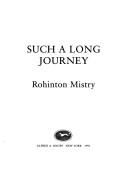
Such a long journey, then Family matters — first novel, then last. Both are considerably easier going than A Fine Balance, in length and in what they ask of you, and reading them in this order shows you a whole career in two books.
Such a long journey is his debut: a bank clerk drawn into a political scandal during the 1971 war with Pakistan. It is the same technique at a smaller scale, with national politics arriving through one family's post and one man's job. Family matters puts an elderly Parsi widower with Parkinson's at the centre and divides his care between two households in 1990s Bombay. Caregiving is the site of moral pressure: who takes the old man, at what cost, and what the answer reveals about each household.
Bombay's Parsi community is the constant across all four books — a small, declining minority with its own rituals, anxieties and internal snobberies.
Back to the stories
Tales from Firozsha Baag closes the path, and it is the lightest reading here: eleven linked stories set in one Bombay housing complex, published before any of the novels. Read them in the printed order rather than skipping around, because the block's residents accumulate and the final story reads very differently once you have met everyone.
Firozsha Baag is the prototype for every apartment building in the later work, which is the whole reason this collection sits last rather than first. The linked-story form also lets Mistry give minor characters their own centre, which the novels cannot afford to do, and emigration to Canada enters here as a subject for the first time.
Where to stop
If you read one book, read A Fine Balance. If you read two, add Family matters. Four books is the entire published fiction, so unlike most author paths this one genuinely ends rather than being cut off.
More world literature paths are on Discover.
Follow the full ordered path here: Rohinton Mistry Reading Order: Where to Start.