Polymer chemistry studies molecules built from long chains of repeating units, and the striking thing is how much of their behavior comes from that sheer length rather than from any single bond. A good reading order respects that: first what polymers are and how they are made, then the physics of how chains tangle and flow, and finally the specialized materials that exploit both.
Reading out of order is tempting because the field spans synthesis, physics, and engineering, but each layer depends on the last. Polymer physics assumes you know how chains are built; functional materials assume you know how they behave. So the path moves from chemistry to physics to application.
Learn what polymers are and how they form
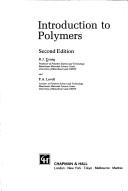
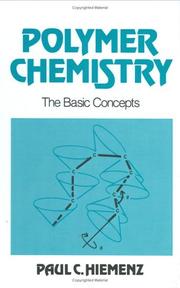
Introduction to polymers by Robert Young and Peter Lovell is the balanced starting text, covering synthesis, characterization, and properties in one accessible arc. Polymer chemistry by Paul Hiemenz and Timothy Lodge deepens the physical-chemistry side. For the reactions themselves, Principles of polymerization by George Odian is the definitive synthesis reference, and Controlled and living polymerizations edited by Axel Muller and Krzysztof Matyjaszewski covers the modern methods that give precise chain control.
Understand the physics of chains
Properties emerge from how chains move and interact. The structure and rheology of complex fluids by Ronald Larson connects molecular structure to flow behavior, and POLYMER PHYSICS by Michael Rubinstein and Ralph Colby is the standard modern text on chain conformation, dynamics, and networks. Read these once the synthesis picture is solid.
Reach into functional and advanced materials
With chemistry and physics in hand, the specialized volumes pay off. Functional Polymers in Food Science edited by Giuseppe Cirillo shows one applied frontier, Block copolymers in nanoscience edited by Massimo Lazzari covers self-assembly into nanostructures, and Polymer Materials Science and Engineering by Joel Fried ties the science to real engineering practice.
Follow the sequence and the leap from a monomer to a material stops feeling like a jump. Follow the full path to keep the thread.
Follow the full reading path →
Ready to learn something deeply?
Build a reading path — free