Almost every family that sets out to raise a bilingual child hits the same two walls. The first is the minority language losing ground once school starts, because school, friends, and screens all arrive in the majority language and the arithmetic of exposure hours turns against you overnight. The second is the child who understands everything and answers in the majority language anyway — passive bilingualism, which is common and reversible but demoralizing if nobody warned you.
Reading order matters here because the practical books give you strategies you can start this week, while the research books explain why those strategies work and stop you from panicking at normal developmental stages. Do the practical ones first; a screaming toddler is not the moment for a literature review.
The practical starting point
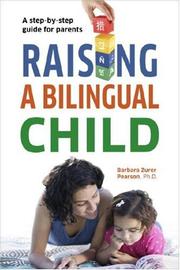
Begin with Raising a bilingual child by Barbara Zurer Pearson, which is the best single first book. Pearson is a researcher who writes plainly for parents, and she covers the major family strategies — one parent one language, minority language at home, time or place based approaches — with honest discussion of what each demands. Crucially, she quantifies exposure: roughly a quarter to a third of a child's waking input in a language is the rough threshold researchers associate with active use, which reframes the problem from motivation to logistics.
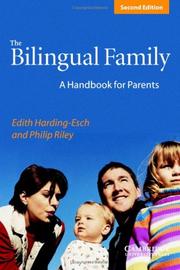
Then The bilingual family by Edith Esch-Harding and Philip Riley, a handbook built around case studies of real families in different configurations. Its value is that it shows how differently this goes depending on which languages, which community, and which parental attitudes are involved, so you stop measuring yourself against an idealized version.
Maximize Your Child's Bilingual Ability by Adam Beck is the tactical book, written by a father who ran a long-standing blog on the subject. It is strongest on the daily-habit layer that determines outcomes: books in the minority language, a reading routine, deliberate community, and how to respond when your child answers in the wrong language without turning it into a fight.
Then Growing up with two languages by Una Cunningham-Andersson and Staffan Andersson, which follows the child from infancy through the teenage years. It is particularly useful on the later stages — literacy in the second language, adolescent resistance, and the identity questions that show up around school age — that the early-years books skip.
The research underneath
Now the explanatory layer. Bilingual by Francois Grosjean is the best general book on what bilingualism actually is, from one of the field's leading researchers. His central point is that a bilingual is not two monolinguals in one head: languages are used in different domains, dominance shifts across a lifetime, mixing is normal and rule-governed rather than a sign of confusion, and accents mean very little. This single reframing removes most parental anxiety.
Raising bilingual-biliterate children in monolingual cultures by Stephen Caldas is a longitudinal case study — a linguist documenting his own three children across years, including the adolescent stretch where the minority language nearly collapsed and what pulled it back. It is unusually candid about what did not work.
Close with The Multilingual Mind by Tracey Tokuhama-Espinosa, which surveys the research across neuroscience, education, and linguistics. A useful honesty note as you read it and the popular coverage around it: the claim of a general bilingual advantage in executive function has been the subject of serious replication disputes over the past decade, and the effect looks smaller and less consistent than early reports suggested. The well-supported benefits are the straightforward ones — you can speak to more people, read more, and maintain family and cultural ties.
One plain caution: these books are not diagnostic tools. Bilingual exposure does not cause language disorders, but if you have concerns about your child's speech or language development, see a speech-language pathologist, ideally one experienced with bilingual children, rather than trying to settle it from a parenting book.
The raising bilingual children hub links the related family and child-health paths. Follow the full reading path to take these in order.
Follow the full ordered path here: Best Books on Raising Bilingual Children, in Order.