Quantum field theory is where quantum mechanics and special relativity are forced to coexist, and the result is the framework behind particle physics and much of modern theory. It has a reputation for being punishing to learn, and part of the reason is that students often pick one book and get stuck. The cure is a deliberate order that pairs intuition with computation before reaching for the definitive references.
The subject rewards seeing the same idea from several angles. A single formalism can feel arbitrary until a second author motivates it differently. So the path moves from a friendly overview to a computational workhorse, then to the more demanding and comprehensive treatments.
Start with intuition, then learn to compute
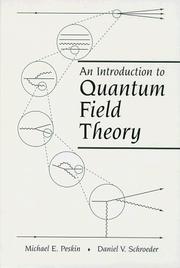
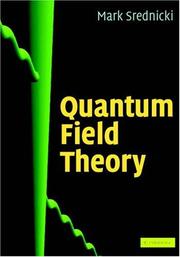
Quantum Field Theory in a Nutshell by A. Zee is the book that makes QFT feel motivated rather than imposed, full of physical reasoning and worth reading first even though it is not a complete course. Then An introduction to quantum field theory by Michael Peskin and Daniel Schroeder is the standard workhorse, the book that actually teaches you to calculate cross sections and loop diagrams. Alongside it, Quantum Field Theory by Mark Srednicki offers a cleanly organized, spinor-first path that many students prefer.
Build toward the definitive treatment
The Quantum Theory of Fields, Vol. 1: Foundations by Steven Weinberg derives the framework from symmetry and consistency with a rigor the introductory books skip; it is demanding but foundational. The Quantum Theory of Fields, Vol. 2 by Steven Weinberg carries this into gauge theories and the Standard Model.
For the gauge-theory core specifically, Gauge theory of elementary particle physics by Ta-Pei Cheng and Ling-Fong Li is an accessible complement.
Go deeper: critical phenomena, symmetry, and beyond
Quantum field theory and critical phenomena by Jean Zinn-Justin connects QFT to statistical physics and the renormalization group at depth. Aspects of symmetry by Sidney Coleman collects legendary lectures on non-perturbative physics that repay any serious student. The Quantum Theory of Fields, Vol. 3 by Steven Weinberg reaches supersymmetry, and Mirror symmetry by Kentaro Hori and coauthors opens the door to the mathematical frontier.
Read in this order and the wall becomes a staircase. Follow the full path to keep your footing.
Follow the full reading path →
Ready to learn something deeply?
Build a reading path — free