Electromagnetism is the subject where physics students first meet the full weight of vector calculus, and the classic mistake is to fight the math and the physics at the same time. Read in the right order, you can learn the mathematical machinery just before you need it, so Maxwell's equations arrive as a triumph rather than a wall.
The path rises from a first survey, through the standard undergraduate synthesis, into the graduate canon — with a short detour to shore up the vector calculus that the whole subject stands on.
Build the foundation
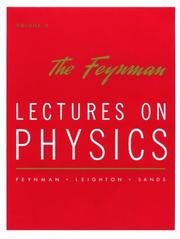
Start with University physics. Its electromagnetism chapters give you the phenomena — charge, field, potential, current, induction — with enough math to be honest but not so much that you drown. Then, for the conceptual why behind the formulas, read The Feynman Lectures on Physics, Vol. 2, which explains fields with a physical clarity no other text matches.
Master the core
The heart of the path is Introduction to electrodynamics. Griffiths is the book most physicists learn EM from, and for good reason — it develops electrostatics, magnetostatics, and induction cleanly, then assembles Maxwell's equations and electromagnetic waves. If the vector calculus slows you down, pause for Div, grad, curl, and all that, a short, friendly book that makes gradient, divergence, and curl finally click. For the applied side of waves, Electromagnetic waves and radiating systems connects the theory to antennas and transmission lines.
Reach the graduate canon
When Griffiths feels comfortable, step up to Classical electrodynamics. Jackson is famously hard, but it is the reference every physicist eventually owns — radiation, relativistic electrodynamics, and the full mathematical apparatus. Finish with The Classical Theory of Fields, Fourth Edition, Landau's elegant, relativity-first treatment that reframes electromagnetism as a field theory and points toward everything modern physics builds next.
Read the path in order and Maxwell's equations stop being four lines to memorize and become something you can derive and feel. The related nuclear-physics and fluid-dynamics paths share the same mathematical spine, so the fluency you build here carries over.
Follow the full reading path →
Ready to learn something deeply?
Build a reading path — free