A nuclear medicine technologist works at the meeting point of physics, radiopharmacy, and hands-on patient care, administering radioactive tracers and running the imaging that reveals how organs function. That breadth is exactly why reading order matters: the physics underpins the instrumentation, the instrumentation underpins the clinical work, and only then does board review make sense. Start with the study guide and you memorize; start with the physics and you understand.
These books complement, not replace, an accredited nuclear medicine technology program, supervised clinical training, and certification through the NMTCB or ARRT.
Start with the physics
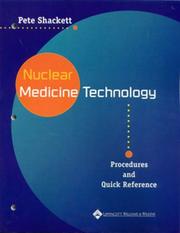
Begin with Physics in nuclear medicine by Simon Cherry, the foundational text on radiation, detection, and imaging instrumentation. It is dense, but everything downstream assumes it. Pair it with Nuclear Medicine Technology by Pete Shackett, a technologist-focused text that connects the physics to the procedures you will actually perform, so the two books reinforce rather than repeat each other.
Learn the clinical science
Next, move toward the patient. Essentials of Nuclear Medicine and Molecular Imaging by Mettler is a widely used, accessible clinical reference covering the studies and their interpretation. Because the field runs on tracers, Radiopharmaceuticals in nuclear pharmacy and nuclear medicine teaches the drugs themselves — how they are prepared, handled, and used safely. And Workbook for Radiation Protection in Medical Radiography drills the safety practices that protect you, your patients, and your colleagues; treat it as non-optional.
Deepen and then certify
For a richer clinical picture, Clinical Nuclear Medicine by Ahmadzadehfar broadens the range of studies and disease contexts you will encounter. Then turn to the boards: Nuclear Medicine Technology: Study Guide for the Board Examination by Hinkle organizes the tested material, and Review of Nuclear Medicine Technology gives you additional practice in the exam format. Used after the science texts, they confirm knowledge rather than cram it.
Read in this order — physics, radiopharmacy and safety, clinical, boards — and a genuinely technical field becomes navigable. If radiation and cancer care interest you, the radiation therapist path is a close neighbor. Follow the full path to enter the department competent, not just credentialed.
Follow the full reading path →
Ready to learn something deeply?
Build a reading path — free