Natural language processing has reinvented itself several times: hand-written rules gave way to statistical models, which gave way to neural networks, which gave way to transformers and large language models. Each era built on the last, and reading in roughly that historical order is the clearest way to understand why modern systems look the way they do.
The path starts with foundations that span the whole field, moves through classic Python-based practice, and then climbs the neural ladder to transformers and building a language model from scratch. Follow it and today's LLMs stop looking like magic and start looking like the current step in a long progression.
Build the foundations
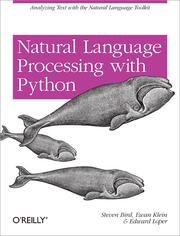
Start with Speech and language processing, the comprehensive reference that covers everything from linguistics to statistical and neural methods — the book most NLP courses are built around. Make it concrete with Natural Language Processing With Python, which teaches core techniques hands-on using the NLTK toolkit, and Natural Language Processing with scikit-learn and Python, which frames text as a machine-learning problem. Text Analytics with Python: A Practical Real-World Approach to Gaining Actionable Insights from your Data rounds out the classical toolkit with applied, end-to-end pipelines.
Climb into neural methods
The neural era begins with Neural Network Methods for Natural Language Processing, the clearest bridge from classical NLP to deep learning for text — embeddings, recurrent networks, and the ideas that led to what came next. Put it into practice with Natural Language Processing with PyTorch, which implements these methods in a modern framework.
Reach transformers and LLMs
Now the current era. Natural Language Processing with Transformers teaches the architecture behind nearly every state-of-the-art system, using the Hugging Face ecosystem to make it practical. Transformers for Natural Language Processing deepens that with more architectures and applications. And Build a Large Language Model (from Scratch) pulls back the curtain entirely, walking you through implementing a working LLM step by step — the best way to truly understand the models reshaping the field.
Read in this order and NLP stops being a grab-bag of techniques and becomes a coherent story ending at the models you use today. Follow the full path from tokenizing text to building a language model yourself.
Follow the full reading path →
Ready to learn something deeply?
Build a reading path — free