It is tempting to treat computer vision as a subfield of deep learning and start with neural networks. But images have structure — geometry, light, and signal — that classical methods handle explicitly, and understanding that structure makes the deep learning era far less mysterious. Reading order is how you get both halves.
The path builds from image and signal fundamentals, through the geometry and classical techniques that still power real systems, and into the deep learning that now sets the state of the art. Follow it and you can reason about a vision problem from pixels to predictions, not just call a pretrained model.
Learn the classical foundations
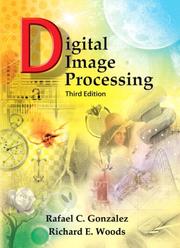
Start with Digital image processing, the standard text on how images are represented, filtered, and transformed — the signal-processing bedrock of everything that follows. Then Computer Vision offers a broad, rigorous survey of the whole field, from features to reconstruction. Get hands-on with Learning OpenCV 4, which turns those concepts into working code with the most widely used vision library, and pair it with Programming Computer Vision With Python for accessible, from-scratch implementations that demystify the algorithms.
Master geometry
Much of real vision is geometry — recovering 3D structure from 2D images. Multiple view geometry in computer vision is the definitive treatment of the math behind stereo, structure-from-motion, and camera calibration. It is demanding, but it underpins everything from robotics to augmented reality, and nothing else covers it as thoroughly.
Move into deep learning
Now bring in modern methods. Deep Learning is the foundational theory text for neural networks, and Hands-On Machine Learning with Scikit-Learn, Keras, and TensorFlow grounds that theory in practical, runnable code. Deep Learning for Vision Systems focuses the techniques specifically on images — classification, detection, and beyond — and Programming PyTorch for Deep Learning gives you fluency in the framework most vision research now uses. Finish with Dive into Deep Learning, an interactive, code-first book that ties the whole modern toolkit together.
Read in this order and computer vision stops being a black box of imported models and becomes a field you can reason about end to end. Follow the full path from raw pixels to state-of-the-art systems.
Follow the full reading path →
Ready to learn something deeply?
Build a reading path — free