Data engineering is a field where the tooling churns constantly but the underlying problems — moving data reliably, modeling it well, and keeping it trustworthy — stay remarkably stable. Read tool-first and you learn a stack that may be obsolete in two years; read principles-first and every new tool slots into a framework you already understand.
The order that lasts is to start with the shape of the whole field, then classic data modeling, then the practical craft of building pipelines and streams, and finally the deep systems theory that explains why the reliable designs are reliable. Each book below is placed for durability, not fashion.
Get the lay of the land
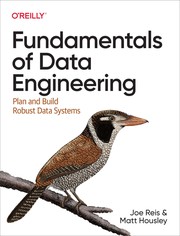
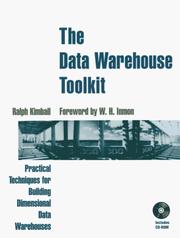
Start with Fundamentals of Data Engineering, which maps the entire lifecycle — ingestion, storage, transformation, and serving — and gives you vocabulary for everything that follows. Then The data warehouse toolkit teaches dimensional modeling, the decades-old discipline of structuring data for analysis that still underpins modern warehouses. These two give you the mental map before you touch a specific tool.
Build pipelines
With the map in place, get concrete. Data Pipelines Pocket Reference is a compact, practical introduction to building and orchestrating data flows. Data Pipelines with Apache Airflow goes deep on the most common orchestration tool, teaching how to schedule and monitor complex workflows. Analytics Engineering with SQL and DBT covers the modern transformation layer, where SQL and dbt turn raw data into clean, tested models analysts can trust.
Stream and understand the systems
Real-time data is now table stakes. Kafka is the definitive guide to the streaming platform at the heart of most event-driven architectures, and Streaming Systems explains the concepts — windowing, watermarks, exactly-once processing — that make streaming correct rather than just fast. Finally, Designing Data-Intensive Applications is the field's essential text on the tradeoffs behind every distributed data system, and Database Internals takes you under the hood of the storage and replication engines you have been relying on all along.
Read in this order and data engineering stops feeling like an endless tool chase. Follow the full path to go from moving your first dataset to designing pipelines and systems you can trust at scale.
Follow the full reading path →
Ready to learn something deeply?
Build a reading path — free