New learners fixate on the clicks, and they are the wrong thing to worry about. Zulu has three click consonants, written c, q, and x, and with a few weeks of practice most people produce them adequately. The genuine difficulty is elsewhere.
Zulu is a Bantu language with fifteen or so noun classes, each marked by a prefix, and nearly every other word in the sentence must agree with the class of the noun it relates to — verbs, adjectives, possessives, demonstratives, relatives. Umuntu omkhulu uyahamba and isitsha esikhulu siyawa share a structure but almost no surface agreement material. On top of that Zulu is agglutinative, so a single verb can carry subject, object, tense, aspect, negation, and mood in one word, and it is tonal, with pitch distinguishing meanings that spelling does not.
None of that is beyond a determined learner, but it does mean audio and, ideally, a speaker to practise with are not optional extras. This is a short list; treat it as a foundation rather than a complete programme.
The course, and its twin
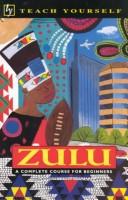
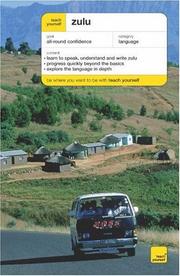
This path lists two books by Arnett Wilkes — Zulu and TEACH YOURSELF ZULU — and you should know before buying that they are essentially the same course under different imprints and editions rather than two complementary texts. Buy one, not both.
What that course does well is take the noun class system seriously from the start instead of hiding it behind phrasebook dialogues. It works through the classes and their concords systematically, covers verb structure and the tense system in an orderly progression, and includes exercises with answers so self-study is viable. The Teach Yourself edition typically comes with audio, which is the deciding factor for most learners — given the tonal system and the clicks, take whichever version includes recordings.
Work it slowly. Zulu punishes moving on before the concords are automatic, because every later structure builds on them. A useful discipline is to write out full agreement paradigms for each new noun class rather than trusting recognition.
The dictionary
English and Zulu Dictionary by C. M. Doke is the reference half of this list. Doke was the foundational scholar of Zulu linguistics, and the dictionary work associated with him — most famously the Doke and Vilakazi Zulu-English dictionary — remains the standard scholarly treatment, notable for marking tone, which almost no learner dictionary does. Two honest caveats: the editions are old, so contemporary urban vocabulary and post-1994 terminology are absent, and the linguistic apparatus assumes some familiarity with Bantu grammatical description. It is the right dictionary for serious study and the wrong one for looking up a word while ordering coffee, where a modern pocket dictionary or app serves better.
What to add
Because the list is short, plan supplements from the start: recordings of natural speech, isiZulu-language broadcast media from South Africa, and a conversation partner or tutor. Zulu is spoken as a first language by roughly a quarter of South Africans and understood far more widely, so speakers are not scarce — and the agreement system becomes intuitive through use far faster than through drills alone.
One course, one dictionary, and steady listening. Browse the related language paths to see how comparable languages are sequenced.
Follow the full ordered path here: Best Books to Learn Zulu (isiZulu), in Order.
Ready to learn something deeply?
Build a reading path — free