Thai humbles casual learners for two reasons: it is tonal, so the same syllable means five different things depending on pitch, and it uses its own script with no spaces between words. Try to wing it with a phrasebook and you will mispronounce your way into confusion. The escape is a book order that tackles the script and the sound system early, then layers grammar and reading on a solid base.
Good news hides behind the difficulty: Thai grammar is simple — no verb conjugation, no plurals, no tenses in the European sense. Once you own the script and tones, the language moves quickly.
Crack the script and the sounds
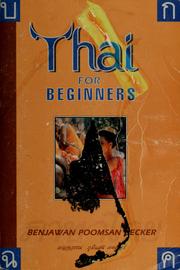
Start with Read Thai in 10 Days by Benjawan Poomsan Becker, a focused primer that gets you decoding the script and its tone rules fast — the single highest-leverage first step. Then move to her Thai for beginners, the standard course that pairs pronunciation with practical vocabulary and everyday phrases. Keep Thai by Lexus and the Smyths as a compact companion for quick reference on the go.
Build grammar and method
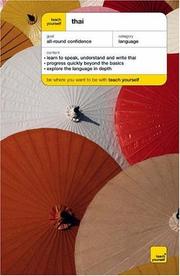
Now systematize. Teach Yourself Thai by David Smyth is a complete, well-structured self-study course that carries you from basics toward real competence. Alongside your Thai study, Fluent forever by Gabriel Wyner is not about Thai specifically but teaches the memory and pronunciation techniques — spaced repetition, minimal pairs — that make a tonal language actually stick. For the fine points, Thai Reference Grammar by Richard Noss is the deep reference when a construction puzzles you.
Read and understand Thailand
Once the mechanics hold, start reading. Thai Graded Readers Level 1 by Wanpen Khanittanan offers texts pitched for early learners, the bridge from textbook to real language. And to understand the culture your Thai lives inside, A History of Thailand by Chris Baker gives the context — kingdoms, Buddhism, modern politics — that makes the language feel like a place rather than a puzzle.
Set expectations honestly: books build your reading, tones, and vocabulary, but Thai is a spoken, tonal language, so real fluency needs listening and speaking practice with native speakers. Use this path for the durable base, then get talking. Follow the full reading path, or browse the subject hub.
Ready to learn something deeply?
Build a reading path — free