Books about spaceflight tend to fall into three piles: misty-eyed Apollo history, breathless startup coverage, and Mars speculation. Read at random, they feel disconnected. Read in order, they tell one continuous story: how a government moonshot became a commercial industry, and where that industry says it is going next.
Order matters because the new space race only makes sense against the old one. You cannot appreciate what SpaceX changed until you understand what NASA built, what it cost, and why the model stalled.
Stage 1: the first space age
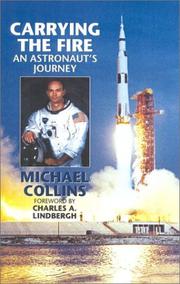
Start with The Right Stuff by Tom Wolfe, still the definitive portrait of test-pilot culture and the Mercury program, written with a swagger that matches its subject. Then read Carrying the Fire by Michael Collins, widely considered the best astronaut memoir ever written: precise, funny, and honest about what riding to the Moon actually felt like from the pilot's seat. For a modern counterpoint on what long-duration spaceflight does to a human body, Endurance by Scott Kelly recounts a year on the International Space Station without romanticizing any of it.
Stage 2: the commercial turn
How to make a spaceship by Julian Guthrie covers the Ansari X Prize, the scrappy contest that proved private spaceflight was possible at all. Then Liftoff by Eric Berger tells the near-death early years of SpaceX with real reporting depth, and his follow-up Reentry carries the story through Falcon 9 reusability, the innovation that actually changed the economics of orbit. For the wider field, The space barons by Christian Davenport puts Musk, Bezos, and their rivals side by side.
Stage 3: the destination arguments
The case for Mars by Robert Zubrin is the classic engineering argument that Mars settlement is feasible with near-term technology; read it as a passionate brief from an advocate, not a neutral assessment. Balance it with Packing for Mars by Mary Roach, which is very funny and quietly devastating about the biological realities of keeping humans alive out there, and The Sirens of Mars by Sarah Stewart Johnson, a scientist's lyrical account of the search for Martian life. Finish with The high frontier by Gerard K. O'Neill, the 1970s vision of orbital habitats that Bezos still cites; it is the road not yet taken.
How to actually study this
Alternate narrative and argument. After each stage, write down what problem was solved and what problem it exposed: Apollo proved we could go but not affordably; reusability fixed cost but not destination; Mars advocates have a destination but contested economics. If you want the harder technical layer, Rocket propulsion elements by George Paul Sutton is the standard engineering text, better skimmed for concepts than read cover to cover.
The staged sequence with study plans is in the full reading path. Related topics live on the subject hub, or you can browse all paths.
Ready to learn something deeply?
Build a reading path — free