Climate change may be the worst-taught important subject in public life. Most people assemble their understanding from headlines, which supply an oscillation of doom and greenwash but no working model. The result is either paralysis or misdirected effort. A deliberate reading order fixes this: the science first, then honest stakes, then the unforgiving energy math, then — and only then — the solutions and the politics, because you cannot evaluate a solution without the arithmetic underneath it.
Climate change books: understand it, then act
July 11, 2026 · 2 min read
Stage 1: how we know
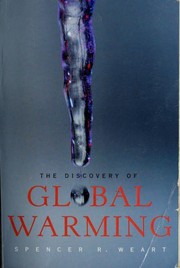
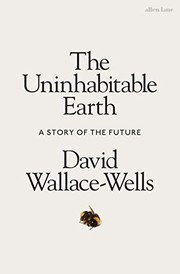
Start with The Discovery of Global Warming by Spencer R. Weart, a compact history of the science itself — 150 years of measurements, competing hypotheses, and accumulating evidence. Reading how the conclusion was earned inoculates you against both denial and caricature. Then The Uninhabitable Earth by David Wallace-Wells lays out the stakes across heat, food, water, and conflict. It is deliberately the scariest book on the list; read it for range-of-outcomes honesty, noting that its emphasis falls on the grimmer tail of the projections.
Stage 2: the energy math
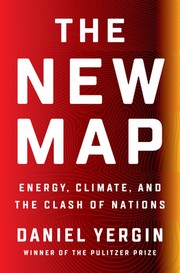
Sustainable Energy - Without the Hot Air by David J.C. MacKay is the path's spine: a physicist's back-of-envelope accounting of how much energy we use and what each alternative can physically supply. Its numbers-not-adjectives discipline will restructure how you read every climate claim afterward. Pair it with The New Map by Daniel Yergin to see the geopolitics — who has the oil, gas, minerals, and leverage, and why the transition is a power struggle as much as an engineering project.
Stage 3: the solution catalogs
Drawdown by Paul Hawken ranks climate solutions by modeled impact, and its consistent surprises (refrigerants, food waste, education) recalibrate intuitions. How to Avoid a Climate Disaster by Bill Gates contributes the "green premium" framing — what clean alternatives cost versus dirty incumbents — and an innovation-first argument. Speed and Scale by John Doerr turns the whole agenda into a measurable OKR plan, useful precisely because it is concrete enough to check. These books share optimism about technology; keep MacKay's arithmetic beside you as the audit.
Stage 4: the politics of delay
The New Climate War by Michael E. Mann documents how the battleground shifted from denying the science to deflecting responsibility onto individual behavior — a contested but important argument about where leverage actually lies. Finish with Field Guide to Climate Anxiety by Sarah Jaquette Ray, a practical manual for staying functional and engaged, because burnout is the failure mode of everyone who reads this far.
How to actually study this
Keep a numbers notebook: every time a book cites a quantity — gigatons, terawatts, dollars per ton — write it down and reconcile it against the others. Where authors disagree (nuclear, degrowth, individual action), note the disagreement explicitly; the live debates are the curriculum, not a bug in it. Then pick one lever — your household, your work, your vote — and go one layer deeper on it.
The staged plan with study notes is the full reading path. Adjacent routes live on the subject hub, or browse Discover.
FAQ
- What is the best book to understand climate change?
- For the science and its history, The Discovery of Global Warming by Spencer Weart; for solutions with numbers attached, Sustainable Energy - Without the Hot Air by David MacKay.
- Are climate solutions books too optimistic?
- Some lean techno-optimist, which is why reading them after the energy-math and stakes books matters — you can then audit their assumptions instead of absorbing their mood.
Get the books
- 1The discovery of global warmingAmazon ↗Spencer R. Weart
- 2The Uninhabitable EarthAmazon ↗David Wallace-Wells
- 3New MapAmazon ↗Daniel Yergin
- 4Sustainable Energy - Without the Hot AirAmazon ↗David J.C. MacKay
- 5DrawdownAmazon ↗Paul Hawken
- 6How to Avoid a Climate DisasterAmazon ↗Bill Gates
As an Amazon Associate we earn from qualifying purchases. Some book links are affiliate links; you pay the same price and we may earn a small commission.
Follow the full reading path
Climate change: understand it, then act
Beginner9books67 hrs4 stages
Ready to learn something deeply?
Build a reading path — free